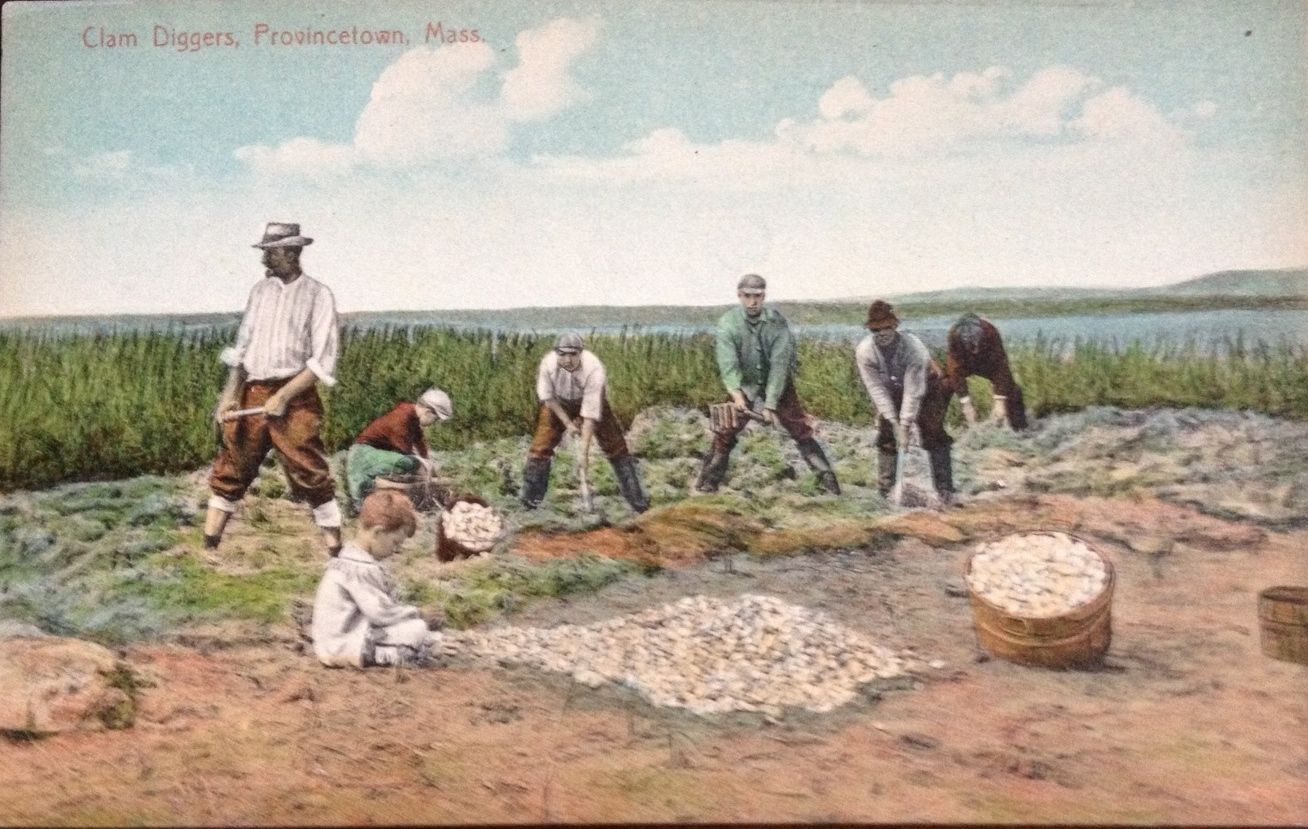
This rare antique postcard shows clam diggers using rakes to gather bushels of clams in Provincetown, Massachusetts on the tip of Cape Cod. Clam chowder, stuffed quahogs, and fried clams are some of the favorites visitors enjoy when they dine, as do the characters in the novel Remaining in Provincetown by S.N. Cook, at Sally’s Chowder Bowl (a fictitious place that may bring back memories). Quahogs, also known as cherry stones and little necks, along with steamers (soft-shell clams), sea clams, and razor clams were once exceedingly plentiful in Provincetown Harbor. They were an important source of food for the Indians and the purple portion of the quahog shells were used as a trading exchange referred to as wampum. The early American colonists took advantage of this easy to access food source and developed a taste for shellfish stews and chowders. During the Great Depression in the 1930s, shellfish provided sustenance when jobs were few and families were struggling to put food on the table. The result was a depleted shellfish population, overfished almost to extinction. The one exception is mussels, which live on rocks and benefitted from the construction of breakwaters. Today efforts are being made, with some success, to restore the shellfish population because their presence helps to filter the Bay’s water and maintain an ecological balance. Take note that the gathering of clams and oysters requires a license and is under strict regulation. There are, however, plenty of opportunities to go fishing. There are a number of boats that take off from Provincetown harbor. To see another vintage postcard, just posted, visit our new face book page and like it to be entered in the drawing to win a FREE copy of the new mystery coming out later this month. Thank you.
Category Archives: Antiques & Collectibles
Gay Provincetown friendly to pets
Is this young lady saying she has no chance in Provincetown because none of the men in town are interested in her or because she is walking with a dog? When did Provincetown first get its reputation as a gay town? Lest you think this postcard is of recent manufacture, here is the back of the card.
Provincetown has long had a reputation for not following society’s conventions. The fishing village at the very tip of the Cape was known as “Hell Town” back in the 19th century. Whatever your sexual orientation, religious beliefs, or philosophical perspective, the small town on the tip of Cape Cod has long been the place you get away to not be deterred or influenced by what everyone else thinks. And as for that very cute dog, being walked on a leash, well Provincetown is also quite dog friendly and a great place to visit if you have a pet. There are many dog friendly inns and hotels in the area and placse to eat outside looking towards the bay you can sit with your favorite four legged honey. And of course everyone with dogs know they love to run across the sand bars when the tide is low. The characters in the new novel Remaining in Provincetown, due to be released April 15th, like to walk along the beach with or without a dog. It’s a great place to think and reflect on just who the murderer in town might be. Want to find out more about the book? Visit our new facebook page, just launched, to see the cover. (click on it to see the entire image). Like the page. We’ll be giving away some FREE copies to our facebook fans. So keep following.
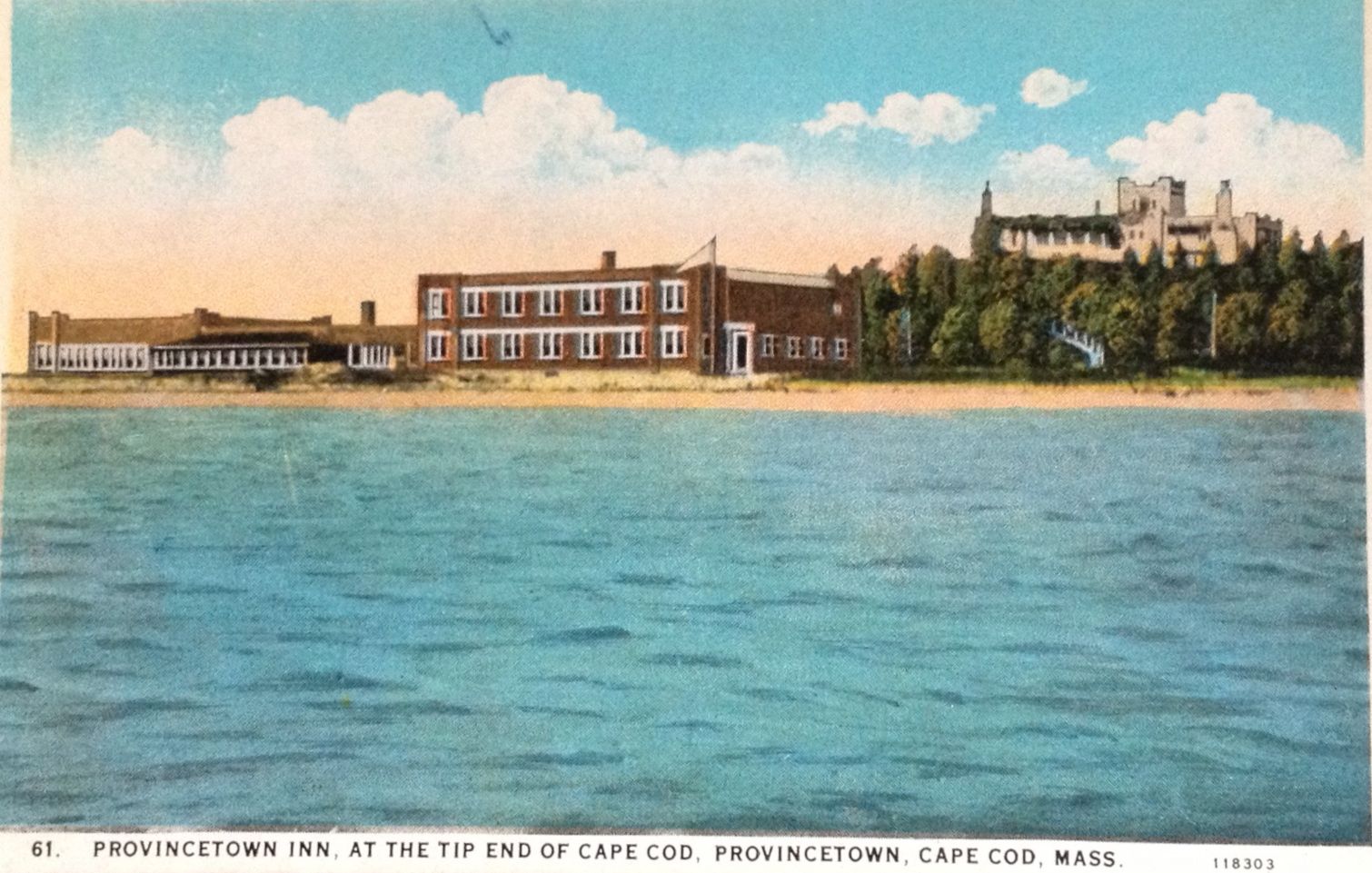
The originial Provincetown Inn on the tipe of Cape Cod
Looking out across Cape Cod Bay, the Provincetown Inn was built back in 1925 and initially had 28 guest rooms. Shown in this vintage postcard, it is located at the very end of town near the Breakwater and today looks quite different than it did at the start of the 20th century. Purchased by Chester Peck in 1935, in the 1950s a beach was “created” using sand from the nearby dune and four additional acres (according to the Inn’s website) were created. Hmm that is not something that would be allowed today, with concerns about retaining existing coastline and drainage, but the result was a spacious resort with night club, three dining rooms, gift shop, barber and beauty shops and more. Thirty-two more rooms were also added. In 1972 the inn was sold to investors and in 1977 was sold to the Evans family. During the mid 1970s Marvin Hagler started coming to Provinetown to train at the Provincetown Inn and jogged across the sand dunes to get into shape. He set up his very own ring by the indoor swimming pool. Hagler was world middleweight boxing champion from 1980-1987.
While the indoor swimming pool is no more as the Inn has continued to be refurbished through the years one thing that does remain are the hand-painted murals that were painted by Don Aikens that were inspired by old photographs, postcards, and paintings showing how the town looked in the late 19th century. It’s a favorite spot for the Carreiro family children to visit (the Carreiro’s being a fictitious family in the novel Remaining in Provincetown). They’ve got a lot on their minds with their father being murdered. Will they catch who did it? Stay tuned for more information and more vintage pictures.
Provincetown Cape Cod once had a Peter Hunt Lane
The caption on this vintage postcard says “Peter Hunt Lane”. The east end street today goes by a different name– Kiley Court, home of Ciro & Sal’s Restaurant and various art galleries. But once upon a time this real estate was frequented by the multi-talented Peter Hunt who could take a beat up piece of old furniture and turn it into an decorative and functional item of beauty. His store and studio were known as “Peter Hunt’s Peasant Village.” He was inspired by Pennsylvania Dutch design motif styles, but gave his creations their own unique twist. Hunt was a successful entrepreneur in Provincetown, Massachusetts during the 1930s and 40s and developed a following of collectors and imitators. By 1960 he had sold his Provincetown real estate and moved his studio and business Up Cape to Orleans where he opened Peacock Alley. Peter Hunt products with his original signature are valuable collectors items but when he died in 1967, his style of decorating had fallen out of favor. The novel Remaining in Provincetown takes place in approximately 1990 and Guest House owner Bruno does have one of his rooms, “The Yellow Room” decorated in the Peter Hunt style, because just a few decades after Hunts death, antique and design buffs recognized the significance of his artistry and Bruno is a character who appreciates the finer things in life.