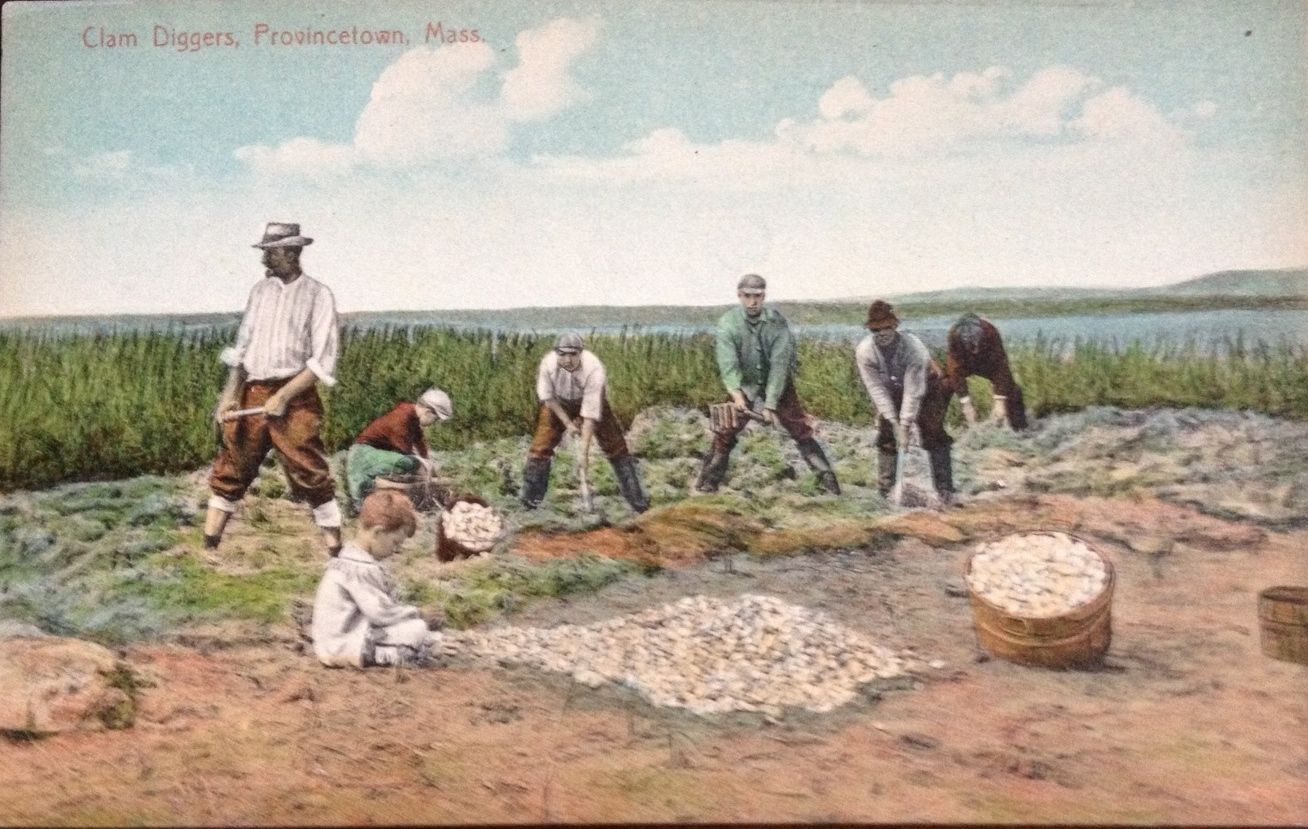
This rare antique postcard shows clam diggers using rakes to gather bushels of clams in Provincetown, Massachusetts on the tip of Cape Cod. Clam chowder, stuffed quahogs, and fried clams are some of the favorites visitors enjoy when they dine, as do the characters in the novel Remaining in Provincetown by S.N. Cook, at Sally’s Chowder Bowl (a fictitious place that may bring back memories). Quahogs, also known as cherry stones and little necks, along with steamers (soft-shell clams), sea clams, and razor clams were once exceedingly plentiful in Provincetown Harbor. They were an important source of food for the Indians and the purple portion of the quahog shells were used as a trading exchange referred to as wampum. The early American colonists took advantage of this easy to access food source and developed a taste for shellfish stews and chowders. During the Great Depression in the 1930s, shellfish provided sustenance when jobs were few and families were struggling to put food on the table. The result was a depleted shellfish population, overfished almost to extinction. The one exception is mussels, which live on rocks and benefitted from the construction of breakwaters. Today efforts are being made, with some success, to restore the shellfish population because their presence helps to filter the Bay’s water and maintain an ecological balance. Take note that the gathering of clams and oysters requires a license and is under strict regulation. There are, however, plenty of opportunities to go fishing. There are a number of boats that take off from Provincetown harbor. To see another vintage postcard, just posted, visit our new face book page and like it to be entered in the drawing to win a FREE copy of the new mystery coming out later this month. Thank you.
Category Archives: Nature
Provincetown Cape Cod railroad
Wouldn’t it be nice to take a train to Provincetown? The last train that provided service to Cape Cod as far as Hyannis, shut down operations in 1986. Yet the railroad was an important mode of transportation to Provincetown businesses, residents and tourists 100 years ago. It was by train that the fresh fish caught by Provincetown fisherman packed in ice was delivered directly to New York City and it was by train that summer tourists and weekend visitors from Boston and New Bedford could conveniently get to Cape Cod vacation resorts and beaches.
As recently as 1960, the freight train was still running all the way down to the end of Cape Cod. When you visit Provincetown and go for walks along the trails, you can walk along the old railroad track bed. The railroad ties left behind when the tracks were removed and have been put to other practical uses by local folk in gardens and landscaping projects, but if you close your eyes you can imagine the sounds of the train chugging through the woods.
The railroad station shown in the 1920 vintage postcard above, was located on Bradford Street in the center of town between Alden and Standish Streets. It opened in 1873 and shut down in 1938. Initially operating as part of the Old Colony Railroad, the New Haven Railroad served the community from 1893 to 1960.
These days, you can get to Provincetown by airplane, car, bus, and boat. Sarah Carreiro (a character in Remaining in Provincetown) takes the small plane from Boston to come back to Provincetown for her husband’s funeral. Looking down from a small plane is a great way to see the unique geography of the Outer Cape, but that’s another story.
Visiting the Sand Dunes in Provincetown, Cape Cod
Before there was a National Seashore, four wheel drive vehicles could traverse the sand dunes at the tip of Cape Cod, traveling back and forth to visit dune shacks and go fishing. Tourists would pull over to the side of the highway and get out of their cars to run up and down the dunes as they approached Provincetown. This postcard from the 1960s shows a Dune buggy tour on the sand dune above Pilgrim Lake, which you see as you approach Provincetown from Truro. Initially the National Seashore built a parking lot near Pilgrim Lake to provide a safe spot for visitors to park but quickly realized all the erosion damage taking place and closed the area. Dune grass has been extensively planted to help prevent more loss of the dunes. In 1946 Art Costa started Art’s Dune Tours and his son Bob Costa has continued the tradition of providing interesting educational tours that explain some of the historic highlights of the sand dunes that span from the back side of the town out to Race Point and the Outer Shore. You can walk the across the dunes by taking the path at Snail Road and hiking across the sand or you can enjoy the bicycle trails that cross the sand dunes as the Carreiro children do in the soon-to-be released mystery novel Remaining in Provincetown.
Atlantic House or A-House, a historically gay place
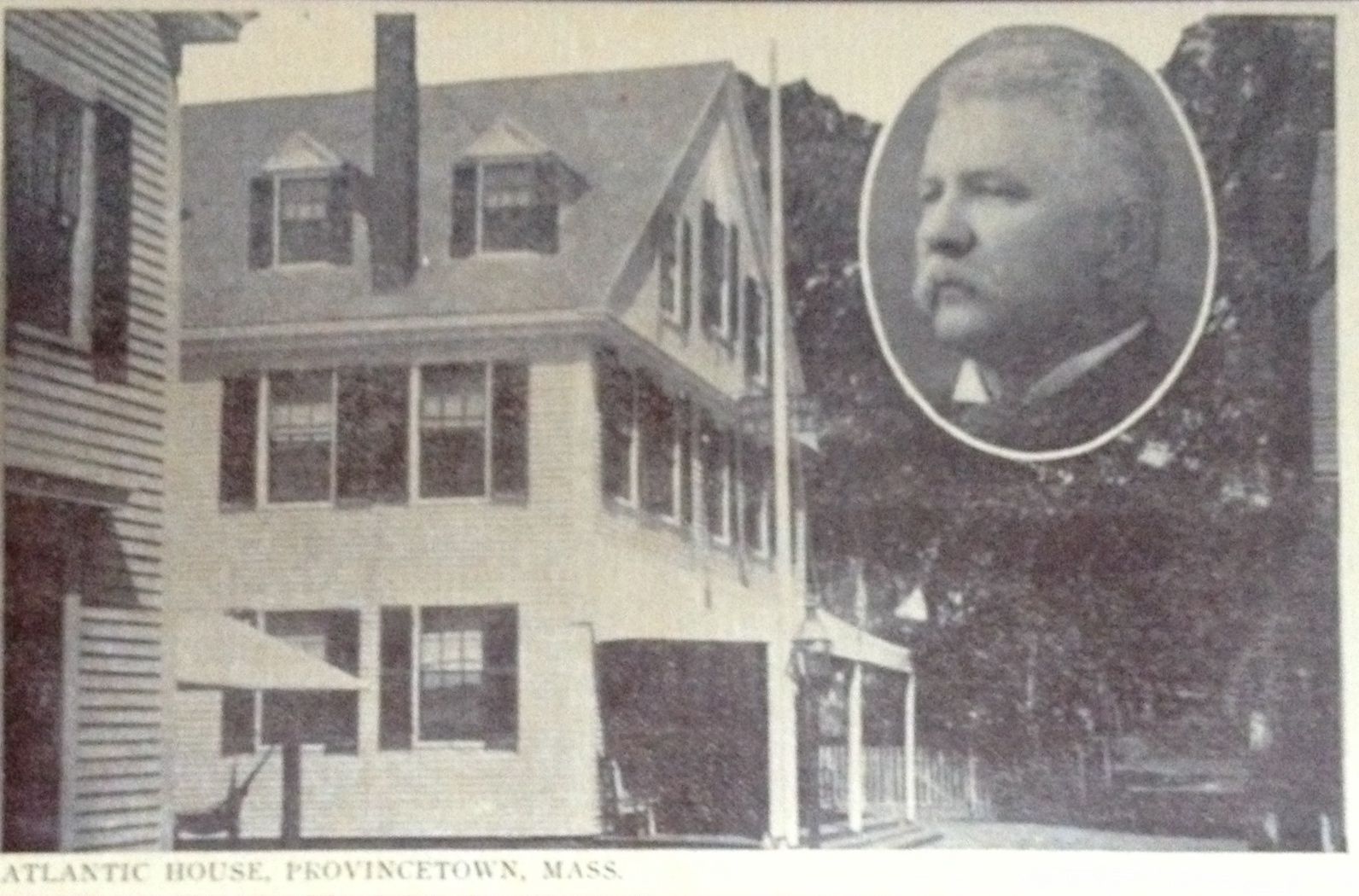
The Atlantic House, now affectionately known as the A-House, was given its current name by Portuguese sailor Frank Potter Smith, pictured in this antique postcard printed in the late 19th century. Smith (probably not his original family name) purchased the tavern in the early 1870s. Provincetown’s first Postmaster Daniel Pease built the historic building at 5 Masonic Place in 1798.
Before trains ran out to Provincetown you could reach the small town on the tip of Cape Cod by stagecoach. You could get on the stagecoach in Orleans and arrive in the center of Provincetown to be let off at what was then called the Alllstrum House (now the A-House). You had literally reached “the end of the line.”
Considered by many social historians to be the oldest Gay Bar in the United States, among the memorabilia and art that grace the walls is a nude photograph of Tennessee Williams strolling on the beach. Williams was one of many famous patrons in the 1940s.
Under the management of Reggie Cabral, who purchased the building with his sister and brother-in –law Mr. And Mrs. Frank Hurst in 1950 and subsequently took over full ownership, the business continued to become a favorite gathering place for locals and visitors, with its several intimate bars and happening dance floor. Having a good time is definitely on the mind of several of the characters in Remaining in Provincetown. Will it cloud their judgment? When you live in a small town its hard to remain anonymous.
The originial Provincetown Inn on the tipe of Cape Cod
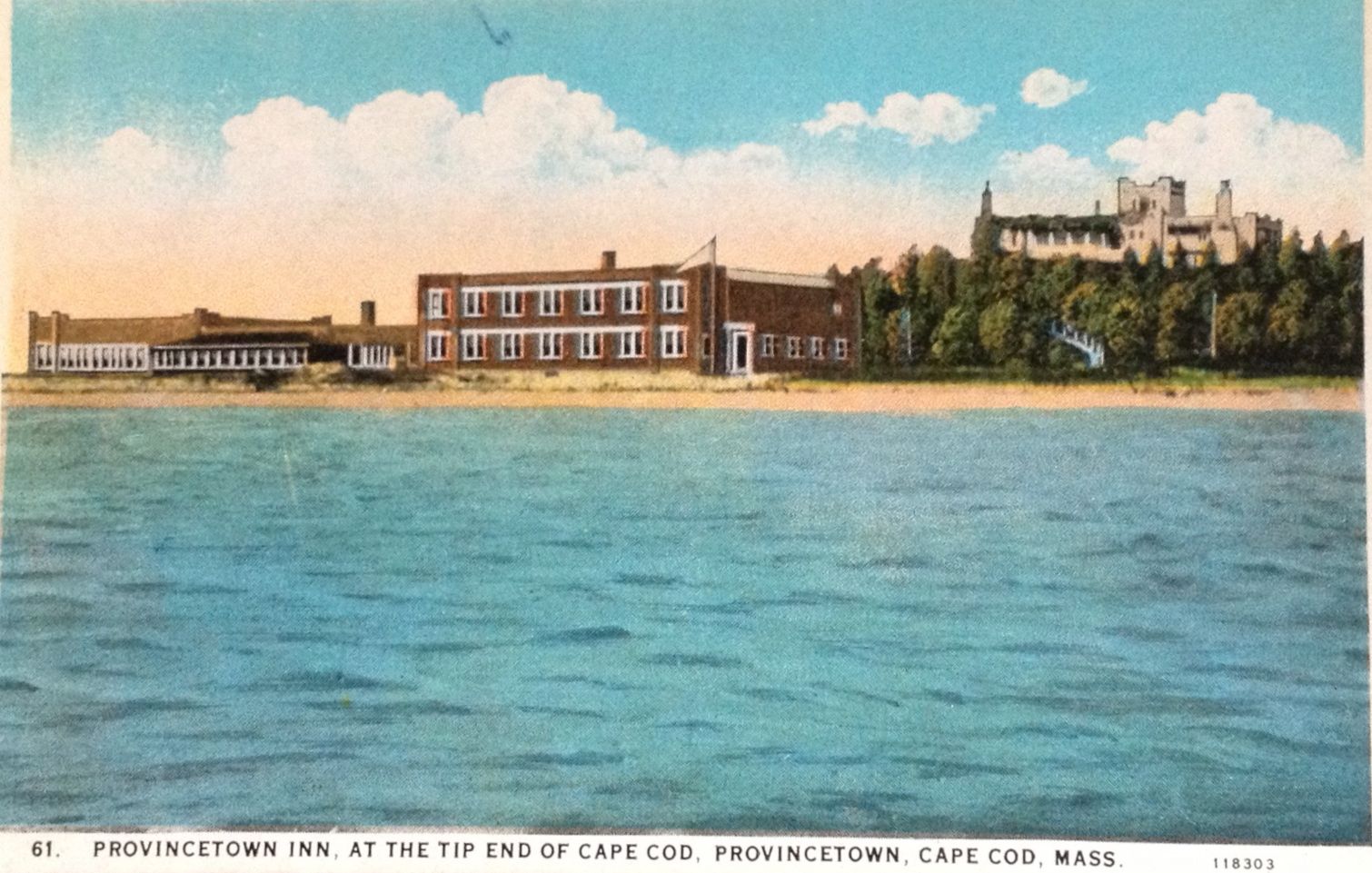
Looking out across Cape Cod Bay, the Provincetown Inn was built back in 1925 and initially had 28 guest rooms. Shown in this vintage postcard, it is located at the very end of town near the Breakwater and today looks quite different than it did at the start of the 20th century. Purchased by Chester Peck in 1935, in the 1950s a beach was “created” using sand from the nearby dune and four additional acres (according to the Inn’s website) were created. Hmm that is not something that would be allowed today, with concerns about retaining existing coastline and drainage, but the result was a spacious resort with night club, three dining rooms, gift shop, barber and beauty shops and more. Thirty-two more rooms were also added. In 1972 the inn was sold to investors and in 1977 was sold to the Evans family. During the mid 1970s Marvin Hagler started coming to Provinetown to train at the Provincetown Inn and jogged across the sand dunes to get into shape. He set up his very own ring by the indoor swimming pool. Hagler was world middleweight boxing champion from 1980-1987.
While the indoor swimming pool is no more as the Inn has continued to be refurbished through the years one thing that does remain are the hand-painted murals that were painted by Don Aikens that were inspired by old photographs, postcards, and paintings showing how the town looked in the late 19th century. It’s a favorite spot for the Carreiro family children to visit (the Carreiro’s being a fictitious family in the novel Remaining in Provincetown). They’ve got a lot on their minds with their father being murdered. Will they catch who did it? Stay tuned for more information and more vintage pictures.
Sand dunes entering Provincetown Cape Cod a memory
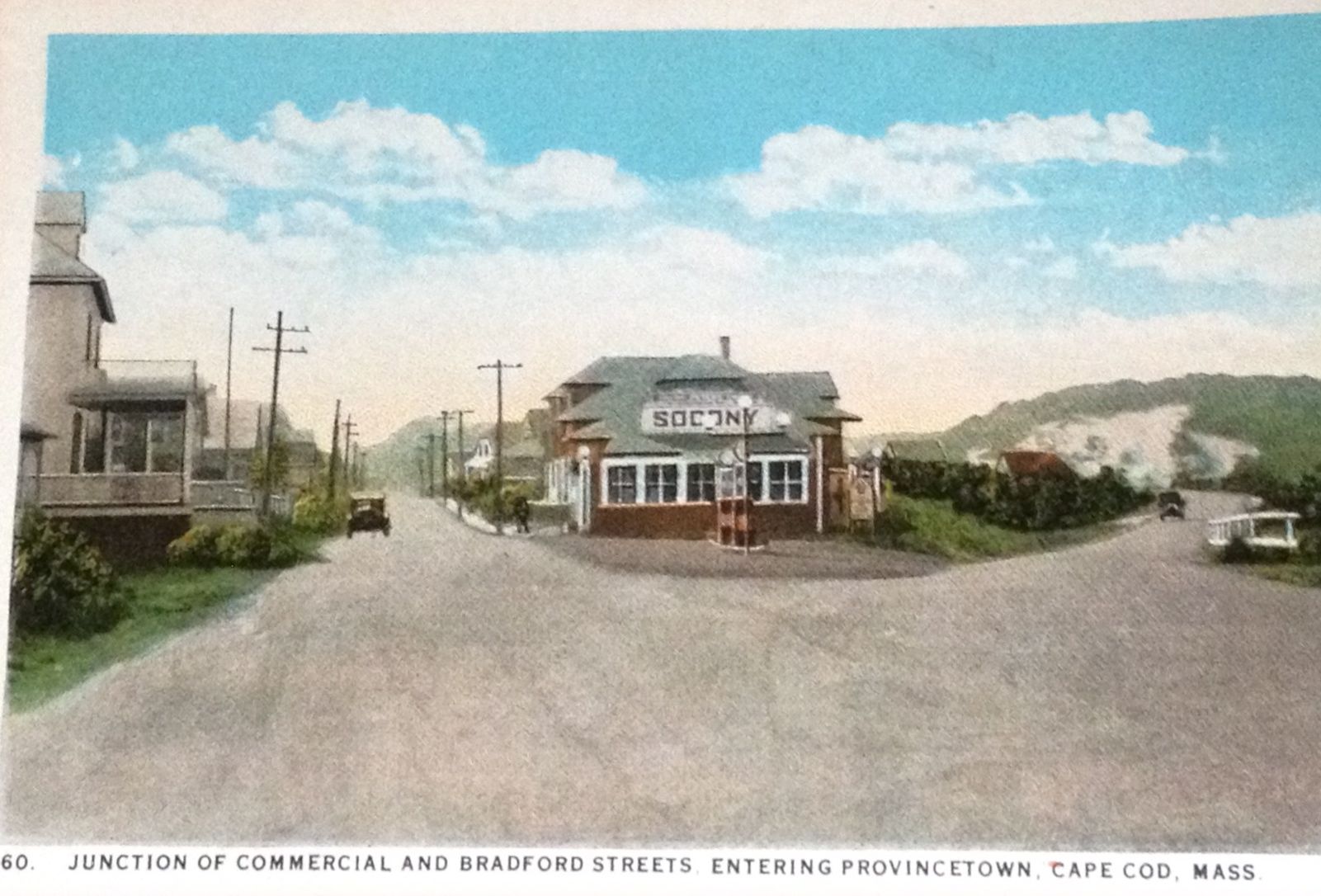
Sand dunes greet you as you enter the east end of Provincetown in this antique postcard. The houses on Commercial Street don’t look much different than they did 100 years ago in this unique town on the tip of Cape Cod. On Bradford Street, the town’s major two-way thoroughfare, however, it looks quite different. With just two main streets and only a one route out of town, by car, how do you commit a murder and make a clean getaway? In 1990, the approximate year the new novel Remaining in Provincetown takes place, much of the sand dunes and woods had already made way for apartments, condominium complexes, and businesses.
Provincetown walk across the water
The breakwater that spans across from the end of Cape Cod’s hook across the Bay to the little spit of land known as Long Point has been in place as long as anyone can remember. But there was a time when it was referred to as “The New Government Breakwater” as it is on this postcard. Walk across the breakwater and you’ll arrive at Long Point and the Long Point Lighthouse. Built by the Arm Corp of Engineers and completed in 1911, the intent of the breakwater was to secure the safety of the harbor and prevent the erosion of sand. Take a walk on the breakwater and arrive at the Long Point Lighthouse or practice your skills climbing the rocks. It used to be a great place to gather mussels to steam for dinner, along with hermit crabs and starfish. Still the sand around the breakwater moves and splits as the decades pass. Life changes . People die. Others leave and new residents arrive and decide to remain in Provincetown. Thus the name of the novel Remaining in Provincetown, a mystery not only about a murder but about the town itself.
Is it New Beach or Nude Beach in Provincetown on Cape Cod?
Written on the back of this antique postcard it says Hell Town, New Beach. Yes, long ago there was a fishing settlement between Woods End and Race Point called “Hell Town”. It’s a pretty ironic name considering that Provincetown, located at the very end of Cape Cod, through the years became known as a wild party town where just about anything goes. As for the term New Beach, it has not been used for decades to my knowledge. When I google the term “New Beach” what I get is “Nude Beach”. Well yes, there has always been an unofficial and then official Nude Beach over at Herring Cove Beach. If there is a secluded place, naturists will remove their clothes, it’s just natural. Just like it’s natural for folks who live in a beautiful place like Provincetown will want to enjoy spending as much time on the beach, listening to the sounds of the waves crashing on the shore and the sounds of the seagulls calling to one another flying above and looking for some tasty dinner. Partaking in tasty food is something many of the characters in Remaining in Provincetown like to do, particularly Bruno the owner of a popular Bed and Breakfast. Want to learn more? Keep posted to learn more about the soon-to-be released novel everyone’s talking about.
Provincetown Sand Dunes for love and recreation
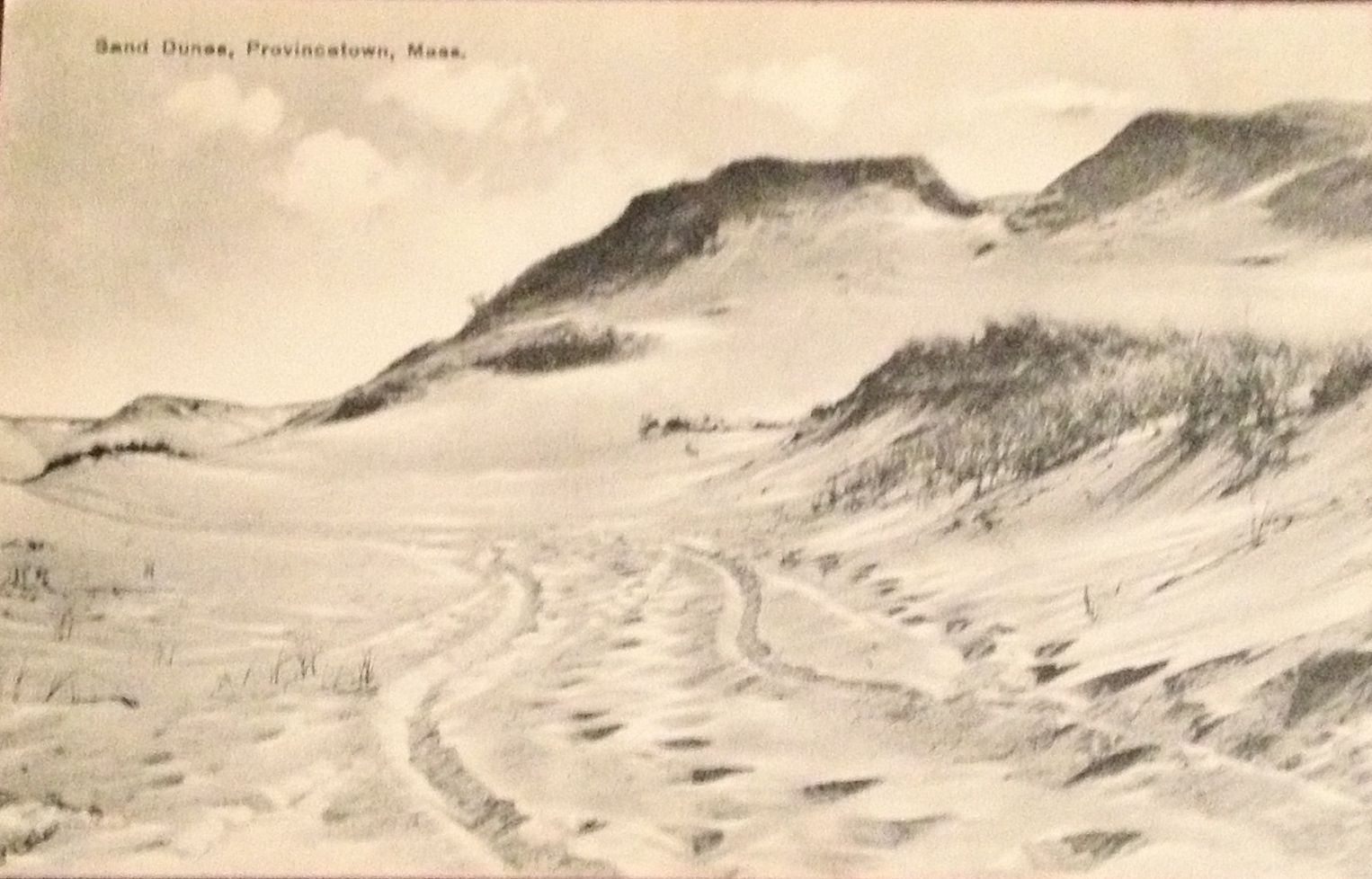
The sand dunes at the tip of Cape Cod, between Bay and Ocean have shifted with the wind, but the dunes have always been a secret place for hikes and love trysts. You can get across the sand on foot, horseback, or four wheel drive vehicle (with a special license) . Their beauty has inspired scores of artists and photographers. Are the Provincetown sand dunes a special meeting place for lovers? Where are the secret places two star crossed lovers might rendez-vous? It’s stories you’ll read about in the soon-to-be-released novel Remaining in Provincetown.