Gay Provincetown friendly to pets

An antique postcard with an interesting statement

An antique postcard with an interesting statement

Is this young lady saying she has no chance in Provincetown because none of the men in town are interested in her or because she is walking with a dog? When did Provincetown first get its reputation as a gay town? Lest you think this postcard is of recent manufacture, here is the back of the card.Ptownlady2

Provincetown has long had a reputation for not following society’s conventions. The fishing village at the very tip of the Cape was known as “Hell Town” back in the 19th century.  Whatever your sexual orientation, religious beliefs, or philosophical perspective, the small town on the tip of Cape Cod has long been the place you get away to not be deterred or influenced by what everyone else thinks. And as for that very cute dog, being walked on a leash, well Provincetown is also quite dog friendly and a great place to visit if you have a pet. There are many dog friendly inns and hotels in the area and placse to eat outside looking towards the bay you can sit with your favorite four legged honey.  And of course everyone with dogs know they love to run across the sand bars when the tide is low. The characters in the new novel Remaining in Provincetown, due to be released April 15th, like to walk along the beach with or without a dog. It’s a great place to think and reflect on just who the murderer in town might be. Want to find out more about the book? Visit our new facebook page, just launched, to see the cover. (click on it to see the entire image).  Like the page. We’ll be giving away some FREE copies to our facebook fans. So keep following.

Like our facebook fan page and you may be selected to receive a FREE advance cppy!
Like our facebook fan page and you may be selected to receive a FREE advance cppy!

Atlantic House or A-House, a historically gay place

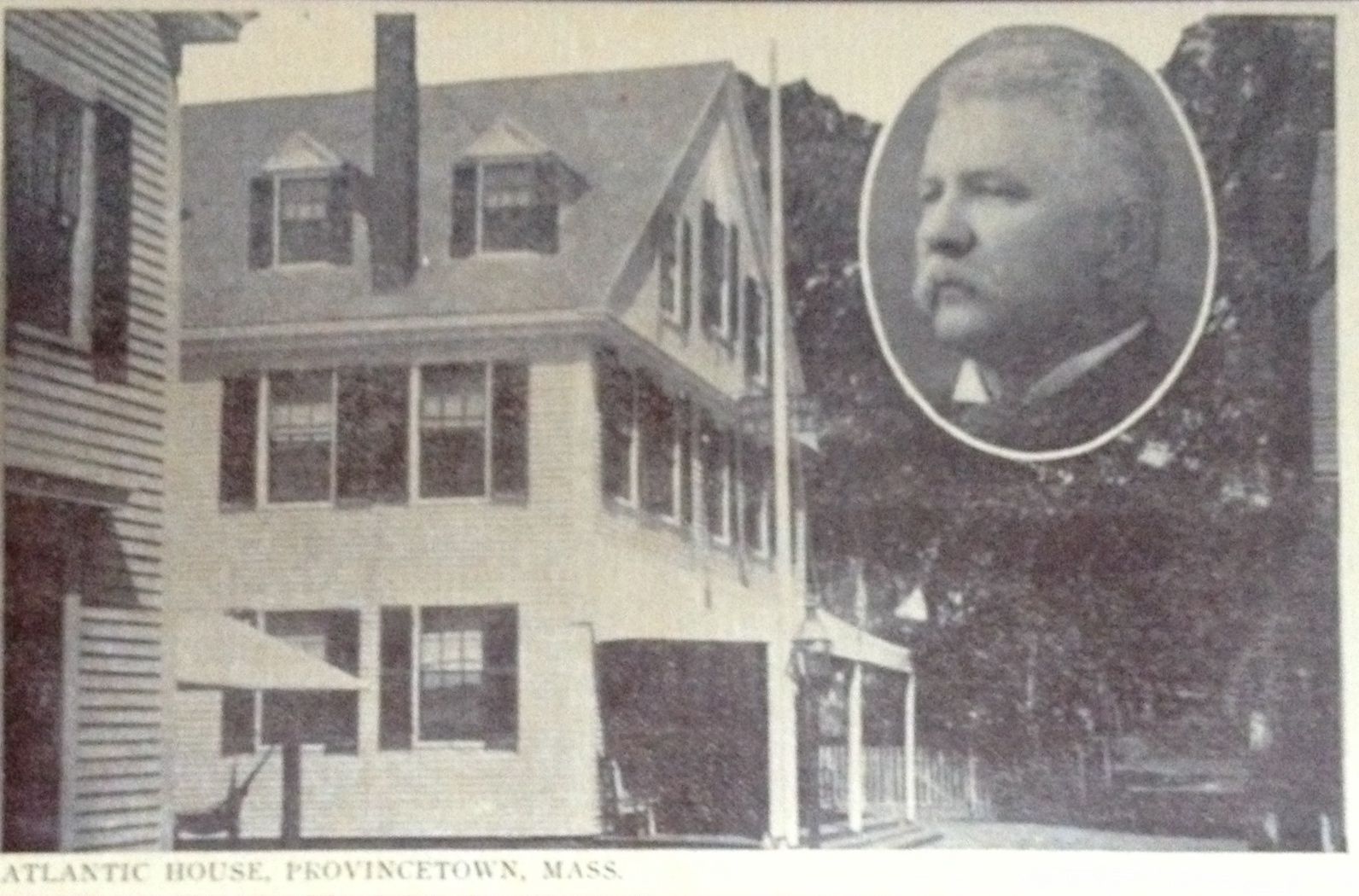
Atlantic House, Provincetown, Massachusetts and owner Frank Potter Smith

Atlantic House, Provincetown, Massachusetts and owner Frank Potter Smith

The Atlantic House, now affectionately known as the A-House, was given its current name by Portuguese sailor Frank Potter Smith, pictured in this antique postcard printed in the late 19th century. Smith (probably not his original family name) purchased the tavern in the early 1870s. Provincetown’s first Postmaster Daniel Pease built the historic building at 5 Masonic Place in 1798.

Before trains ran out to Provincetown you could reach the small town on the tip of Cape Cod by stagecoach. You could get on the stagecoach in Orleans and arrive in the center of Provincetown to be let off at what was then called the Alllstrum House (now the A-House).  You had literally reached “the end of the line.”

Considered by many social historians to be the oldest Gay Bar in the United States, among the memorabilia and art that grace the walls is a nude photograph of Tennessee Williams strolling on the beach.  Williams was one of many famous patrons in the 1940s.

Under the management of Reggie Cabral, who purchased the building with his sister and brother-in –law Mr. And Mrs. Frank Hurst in 1950 and subsequently took over full ownership, the business continued to become a favorite gathering place for locals and visitors, with its several intimate bars and happening dance floor.  Having a good time is definitely on the mind of several of the characters in Remaining in Provincetown. Will it cloud their judgment? When you live in a small town its hard to remain anonymous.

The originial Provincetown Inn on the tipe of Cape Cod

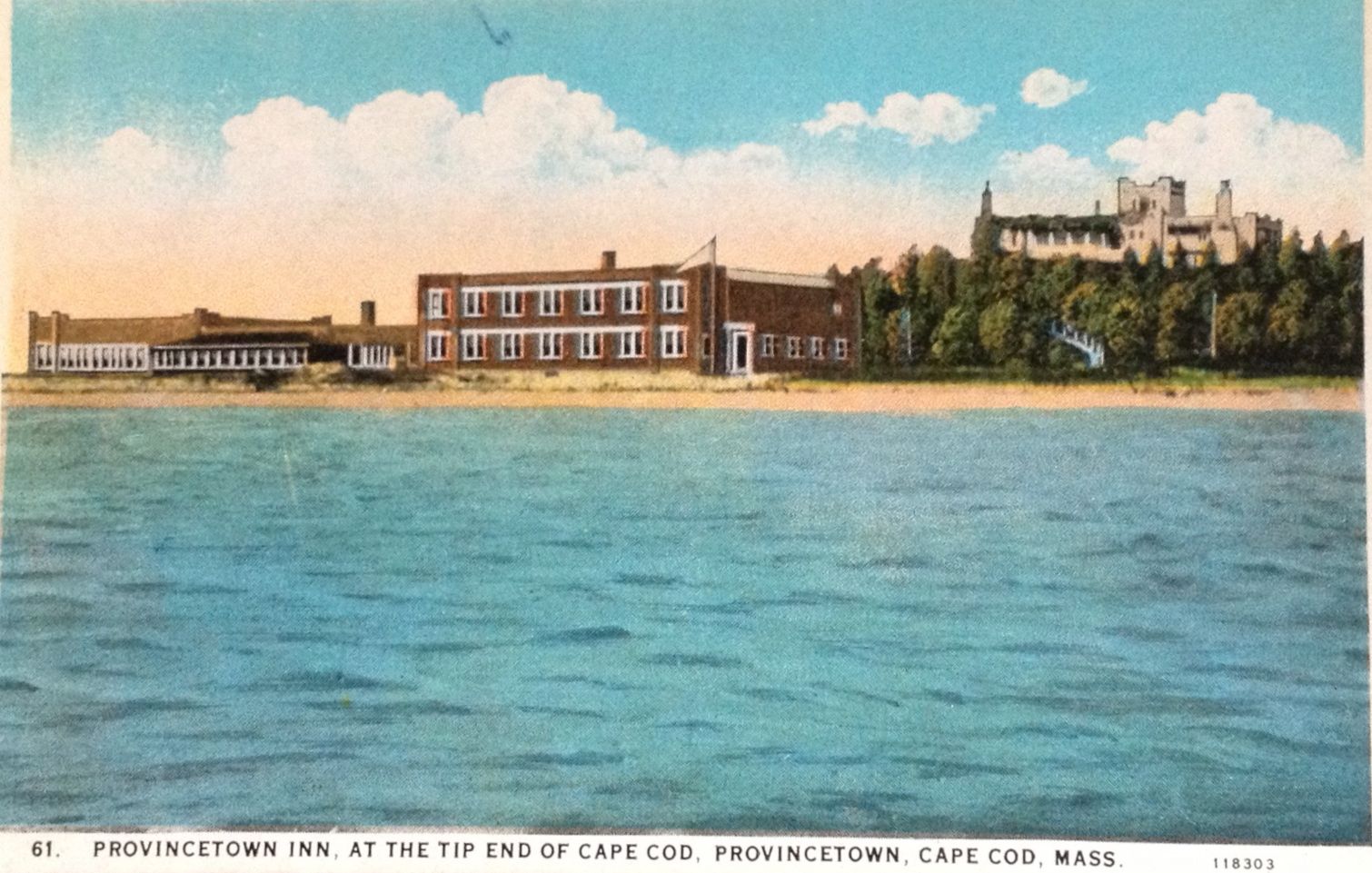
Provincetown Inn on Cape Cod

Provincetown Inn on Cape Cod

Looking out across Cape Cod Bay, the Provincetown Inn was built back in 1925 and initially had 28 guest rooms. Shown in this vintage postcard, it is located at the very end of town near the Breakwater and today looks quite different than it did  at the start of the 20th century. Purchased by Chester Peck in 1935, in the 1950s a beach was “created” using sand from the nearby dune and four additional acres (according to the Inn’s website) were created. Hmm that is not something that would be allowed today, with concerns about retaining existing coastline and drainage, but the result was a spacious resort with night club, three dining rooms, gift shop, barber and beauty shops and more. Thirty-two more rooms were also added. In 1972 the inn was sold to investors and in 1977 was sold to the Evans family.  During the mid 1970s  Marvin Hagler started coming to Provinetown to  train at the Provincetown Inn and jogged across the sand dunes to get into shape.  He set up his very own ring by the indoor swimming pool. Hagler was world middleweight boxing champion from 1980-1987.

While the indoor swimming pool is no more as the Inn has continued to be refurbished through the years one thing that does remain are the hand-painted murals that were painted by Don Aikens that were inspired by old photographs, postcards, and paintings showing how the town looked in the late 19th century.  It’s a favorite spot for the Carreiro family children to visit (the Carreiro’s being a fictitious family in the novel Remaining in Provincetown).  They’ve got a lot on their minds with their father being murdered. Will they catch who did it? Stay tuned for more information and more vintage pictures.

Town Crier once a Provincetown tradition

Town Crier in Provincetown late 19th century

Town Crier in Provincetown late 19th century

Town Criers were once a New England tradition. Walking the streets they verbally spread the news and in tourist communities such as Provincetown on Cape Cod, they were often employed by the Chamber of Commerce to promote commerce.
Usually the image of a New England Town Crier is a plump man dressed in Pilgrim style garb. The Town Crier in the black and white postcard printed in Germany, shown above, carried the bell and the broadside, but is certainly not dressed like a pilgrim.  Through Provincetown’s history there  have been many different Town Criers, and they are documented in antique post cards.  The last Town Crier for Provincetown, Gene Poyant, walked the streets in the early 1980’s and died in 1998.  A Town Crier figures into the plot of the novel Remaining in Provincetown in more than one way, just as there are a variety of Town Criers. We’ll be sharing some more pictures of Town Criers from the past in the weeks to come.

Sand dunes entering Provincetown Cape Cod a memory

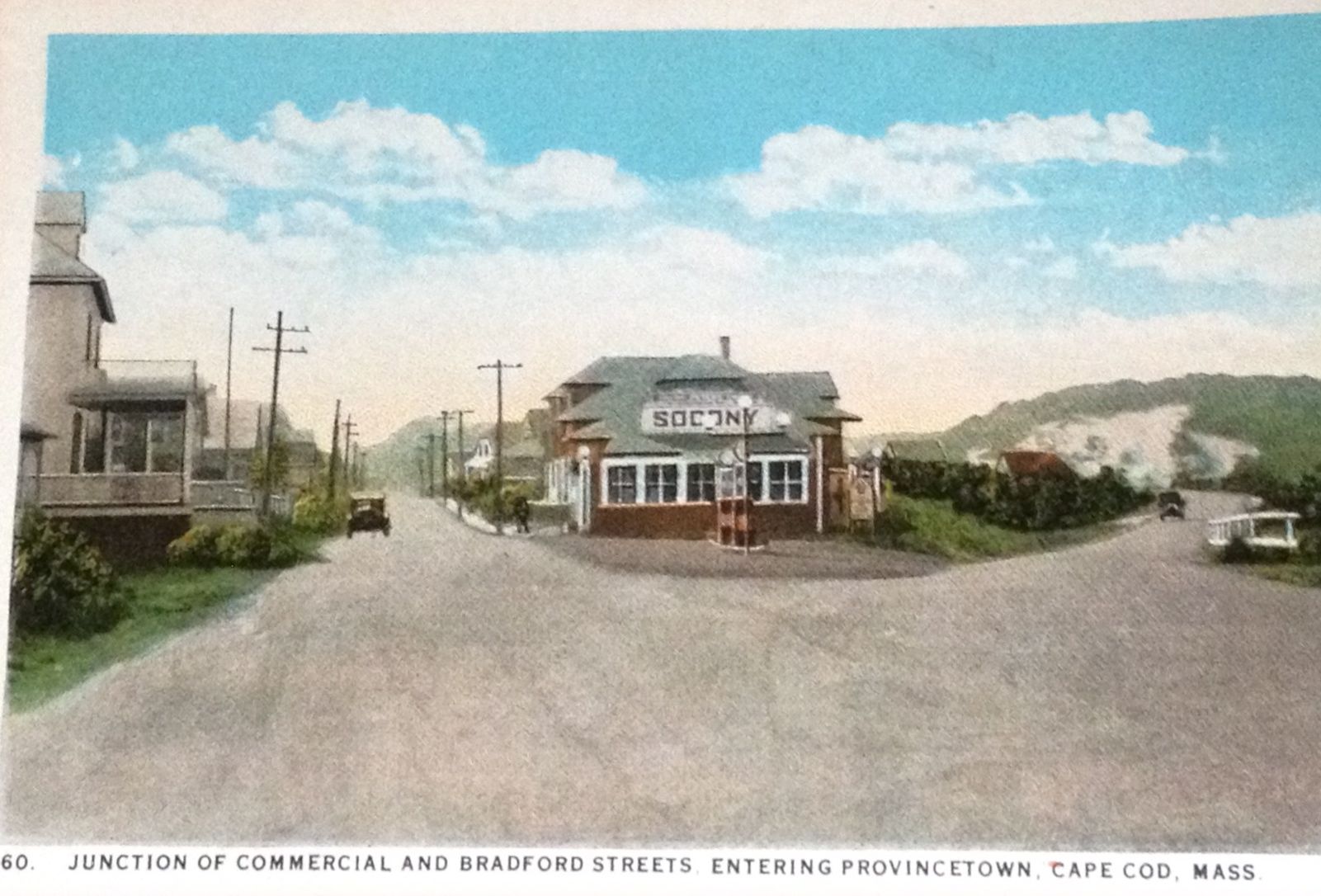
Junction of Commercial and Bradford Streets entering Provincetown, Cape Cod, Massachusetts

Junction of Commercial and Bradford Streets entering Provincetown, Cape Cod, Massachusetts

Sand dunes greet you as you enter the east end of Provincetown in this antique postcard.  The houses on Commercial Street don’t look much different than they did 100 years ago in this unique town on the tip of Cape Cod. On Bradford Street, the town’s major two-way thoroughfare, however, it looks quite different. With just two main streets and only a one route out of town, by car, how do you commit a murder and make a clean getaway? In 1990, the approximate year  the new novel Remaining in Provincetown takes place, much of the sand dunes and woods had already made way for apartments, condominium complexes, and businesses.

Is it New Beach or Nude Beach in Provincetown on Cape Cod?

Loading Fish at the tip of Cape Cod in Provincetown

Loading Fish at the tip of Cape Cod in Provincetown

Written on the back of this antique postcard it says Hell Town, New Beach.  Yes, long ago there was a  fishing settlement between Woods End and Race Point called “Hell Town”. It’s a pretty ironic name considering that Provincetown, located at the very end of Cape Cod, through the years became known as a wild party town where just about anything goes.  As for the term New Beach, it has not been used for decades to my knowledge. When I google the term “New Beach” what I get is “Nude Beach”.  Well yes, there has always been an unofficial and then official Nude Beach over at Herring Cove Beach.  If there is a secluded place, naturists will remove their clothes, it’s just natural. Just like it’s natural for folks who live in a beautiful place like Provincetown will want to enjoy spending as much time on the beach, listening to the sounds of the waves crashing on the shore and the sounds of the seagulls calling to one another flying  above and looking for some tasty dinner. Partaking in tasty food is something many of the characters in Remaining in Provincetown like to do, particularly Bruno the owner of a popular Bed and Breakfast. Want to learn more? Keep posted to learn more about the soon-to-be released novel everyone’s talking about.

Provincetown souvenirs are collectibles and memories

Commercial Street near Town Hall, Provincetown, Massachusetts

Commercial Street near Town Hall, Provincetown, Massachusetts

Provincetown in summer is a bustling place. The narrow streets are crowded with tourists. Even 100 years ago when the fishing industry provided year-round income for families, the  tourist trade was important. Souvenir shops that sold postcards, like this one shown above, as well as collectible souvenir spoons, plates, paper weights, and glasses provided seasonal income for local residents. Servicemen in the Coast Guard and Navy would come into town to see the sights that included fine restaurants, bars, and entertainment. The T-shirt shops came later! Town Hall in this antique postcard is partially obscured by the thick foliage of the trees, but it looks very much the same today as it did back then. In 1990 when the novel Remaining in Provincetown takes place, Town Hall was painted white and one of the characters has their office inside. Which one? You’ll have to read the book to find out.