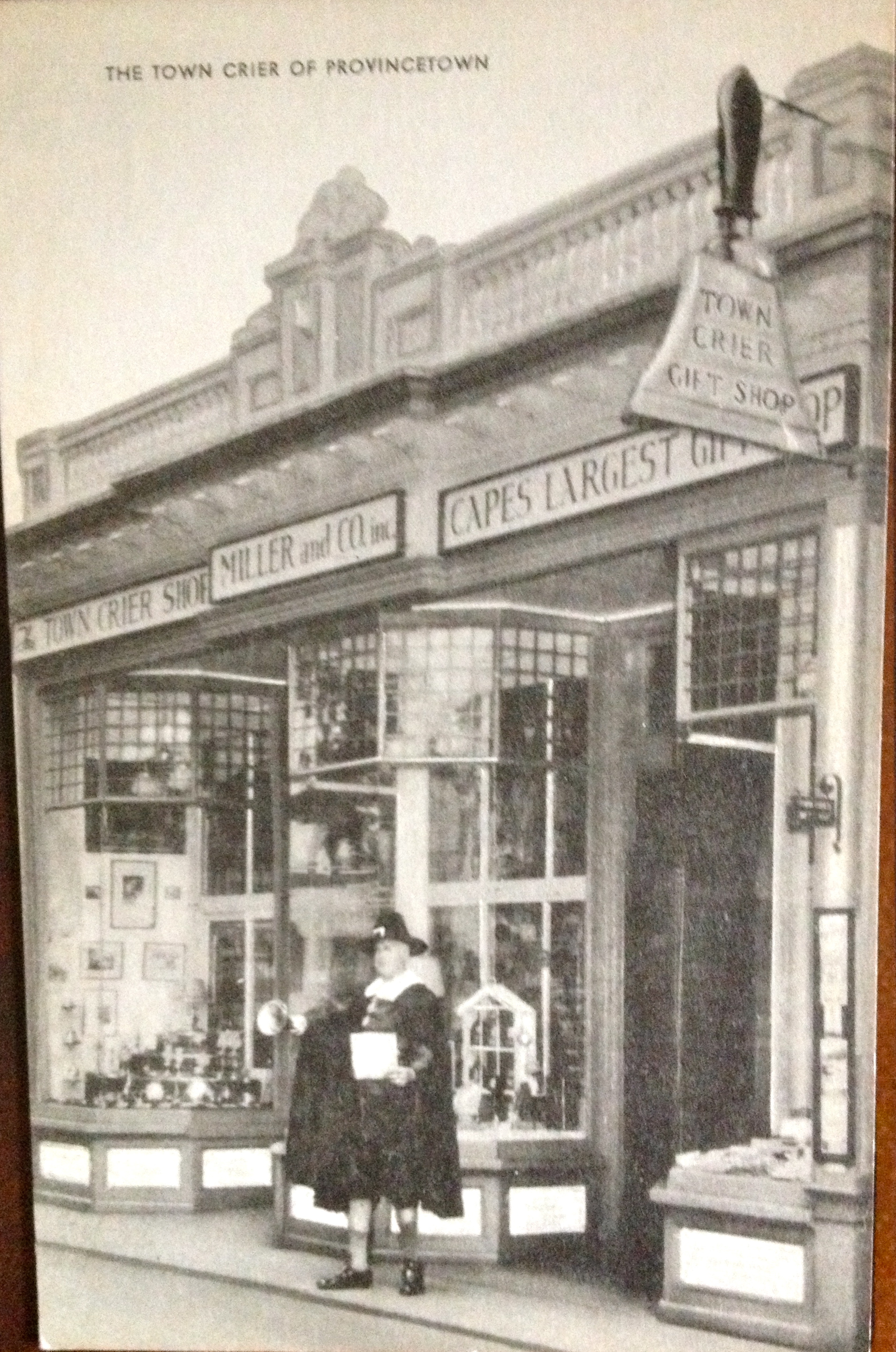
Provincetown, Massachusetts has always been a mecca for shopping. It’s one of the busiest towns on the Outer Cape. This postcard shows 265 Commercial Street, when it was the Town Crier Gift Shop. Prior to that time, this location was the home of the Advocate Gift and Souvenir Shop according to John Wright Hardy the author of Provincetown Vol. I. The gentleman in the pilgrim outfit standing outside the shop, which boasts itself as being the largest gift shop on Cape Cod, was not the official Town Crier for the town of Provincetown but was hired by the store to attract business. His name was Charles Walton. To learn more about Town Criers in Provincetown read some of our previous postings. To be entertained by a Provincetown mystery story read Remaining in Provincetown , available at bookstores and online in trade paperback and as an ebook. Like us on Facebook and keep the conversation going.
Tag Archives: Commercial street
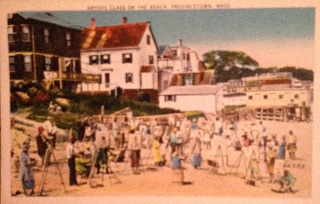
Provincetown artists and vacation time
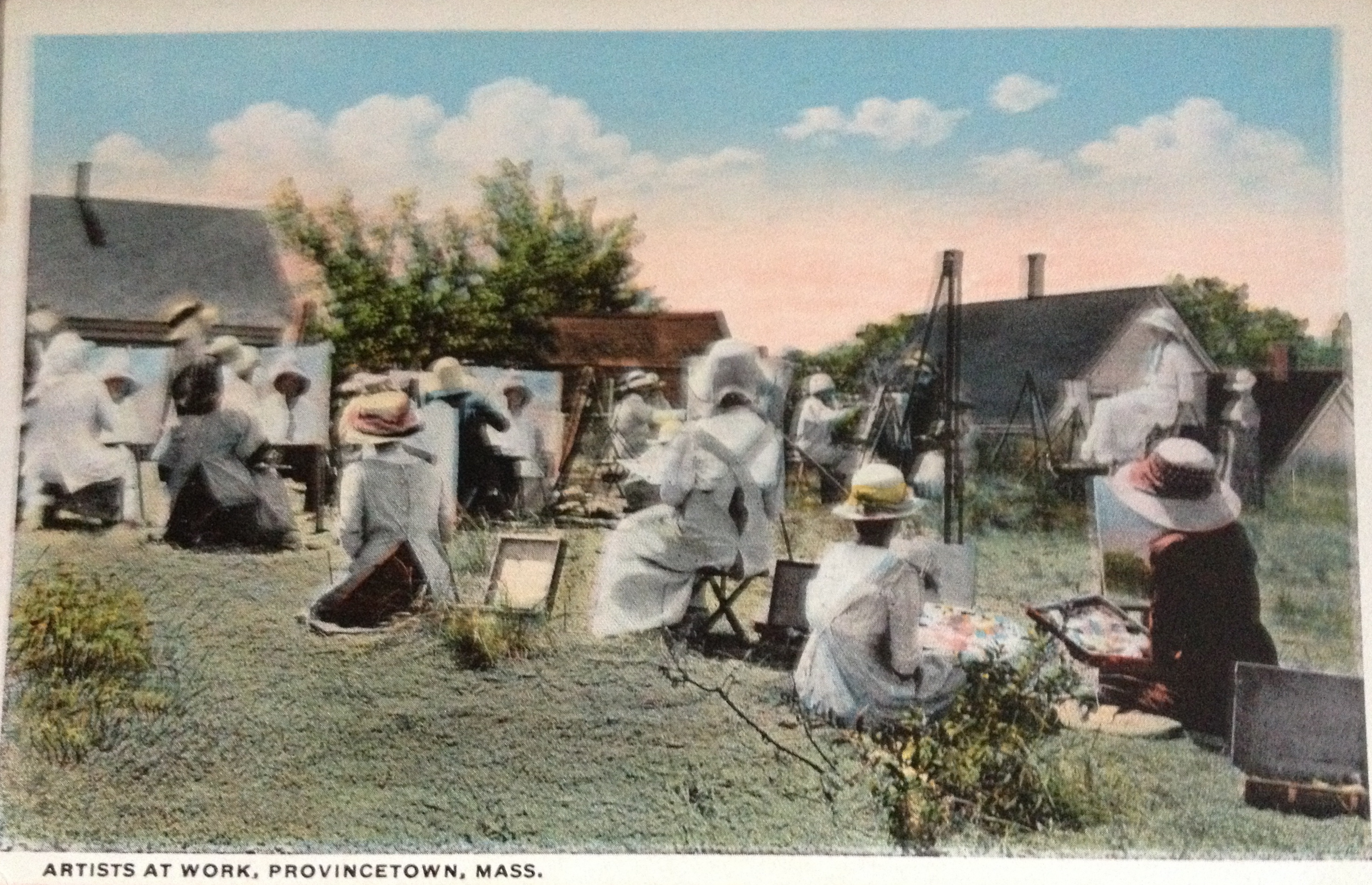
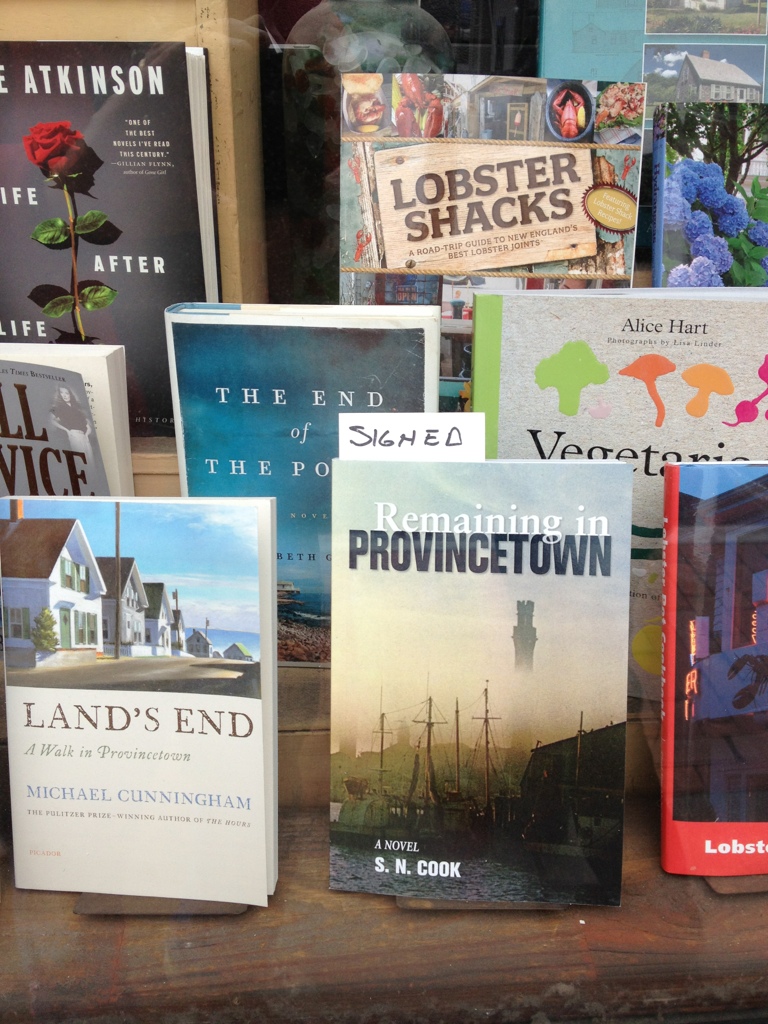
While many folks spend their vacations on Cape Cod, sunbathing on the beach, hiking across the sand dunes, surfing the ocean’s waves, and enjoying the fine restaurants,shops, and inns that are so abundant in Provincetown; aspiring artists come to take classes. This early 20th century postcard shows a large class of artists painting from life on a Provincetown beach at low tide, when there was enough sand to accommodate all those students! Artists and art galleries are a big part of Provincetown on a year-round basis. Collecting art was one of Sonny Carreiro’s many pleasures, as a successful entrepreneur o the Lower Cape. Maybe it was a weakness. Could something related to a particular Provincetown artist help solve the mystery in the new novel Remaining in Provincetown by S.N. Cook? Copies of this popular new mystery are now available in bookstores and online. Visiting Provincetown this summer? A limited number of signed copies are at the Provincetown Bookshop on Commercial Street. Also available at Amazon in trade paperback and kindle. Like us on Facebook. Keep the conversation going.
HIghland Light Cape Cod’s famous Lighthouse
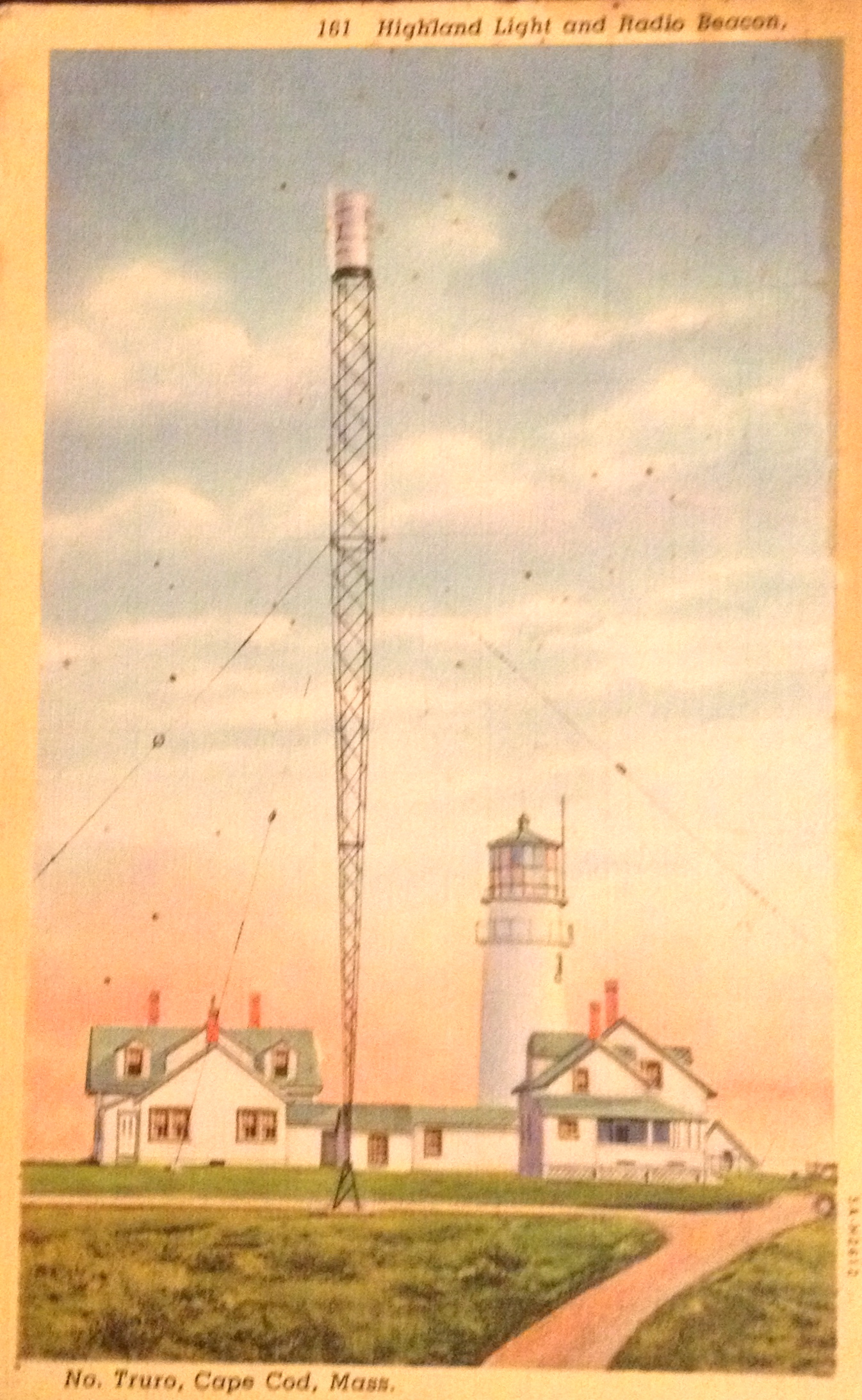
Standing on the unusual formation called Clay Pounds, one of the largest on the East Coast, the Highland Lighthouse in Truro, Cape Cod was built in 1797 and was the 7th lighthouse to be constructed in the United States.
Built on the highest cliff on Cape Cod, its location has been subject to severe erosion, as much as three feet per year! In 1996 to save the historic lighthouse, it was moved back 450 feet. When you visit, there is a museum on the property, the Highland House Museum with rotating exhibits and local history displays, maintained by the Truro Historical Society.
The radio tower referred to as Radio Beacon in the postcard description was erected by the Navy as a communication station in World War II. The postcard was printed by E D. West and Company. More postcards of this beautiful lighthouse will be seen in subsequent postings on this Remaining in Provincetown website. Haven’t read the book yet? If you love the Outer Cape, Provincetown, or mysteries that involve old postcards and quirky people , this mystery novel is for you. Check us out on Facebook and Amazon. Join the conversation. Signed copies are currently available at the Provincetown Bookshop on Commercial Street in Provincetown as well as a variety of bookstores and online sites. Happy Summer and enjoy the fireworks.
Provincetown’s Town Hall vintage postcard pre Meat Rack
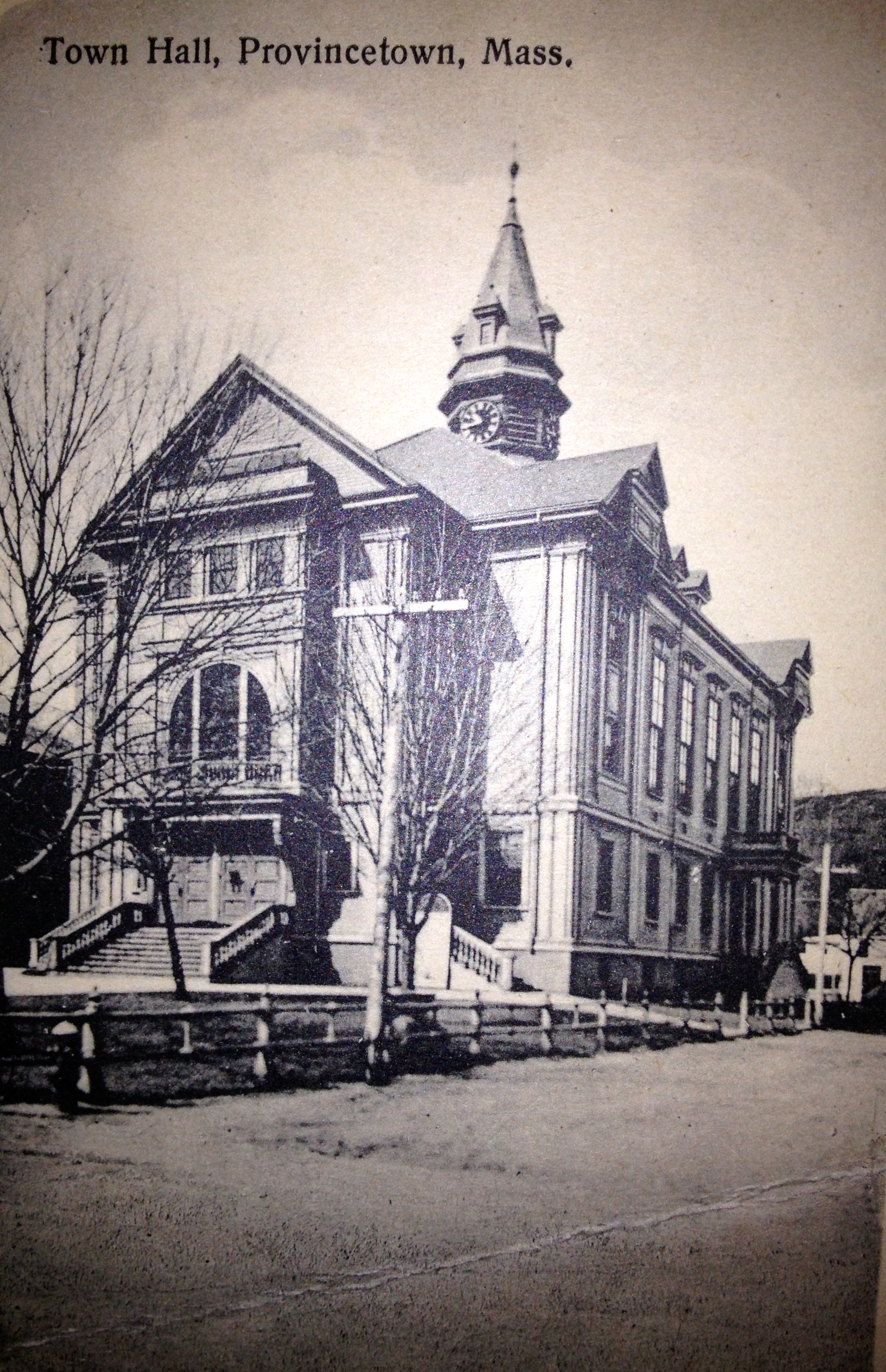
The scene in the above antique postcard shows the center of Provincetown, Cape Cod, and its Town Hall. Notice there are no benches in front of Town Hall. They were added mid 20th century. Those benches have become known as the “Meat Rack” for two reasons. During the daytime it’s a place to watch everyone walking by and check out who is in town. At night, particularly after the bars close, it’ a meet-up spot for singles, particularly gay men looking to run into an old friend or meet someone new. In the recently released mystery novel Remaining in Provincetown, with all -the clandestine meetings between the Publisher/Editor of the weekly newspaper and the Town Manager–there’s a fair amount of action that takes place near and around Town Hall.
Also notable in this photograph is the view of the Congregational Church, as it originally appeared before it became a movie theater (the old Art Cinema) and then shops, a sidewalk cafe, bakery, and restaurant — during the 20th century. Want to read a book that “captures the town to a T” ? Pick up a copy of Remaining in Provincetown by S.N. Cook available at bookstores including The Provincetown Bookshop and online in trade paperback and on kindle. Like us on Facebook and keep the conversation going.
Provincetown art students painting en plein air
Painting in the open air, (en plein air in French), has been a favorite practice of artists in Provincetown, Massachusetts since Charles Hawthorne (1872- 1930) founded the Cape Cod School of Art in 1899. Given Provincetown’s waterfront setting, one might assume that Hawthorne’s students always set up their box easels on the beach. The sun’s reflection on the water, and the light and shadows on the sand, were perfect starting points to practice the concepts of Impressionism, which put an important emphasis on capturing on canvas, the artist’s impression of how light changes throughout the day. . Not true, as shown in this antique postcard published by H.A. Dickerman & Son, Taunton, Massachusetts in approximately 1900. The students, primarily female, are painting a portrait of the model positioned in the right, dressed in a while summer frock and hat with a long braid. Student artists often used local citizens as their models.
The availability of paints in tubes made painting en plein air, so much easier when compared to the practice of grinding and mixing pigment powders with linseed oil. Notice in the photograph that the boxes to hold paints and contain a palette, also made transporting equipment for painting outside so much easier. Artists came from all over the world. and still do, to live and work in what was originally a fishing village.
Creating art is important to Annie Tinker, a sculptor who first came to Provincetown as a student at the Fine Arts Work Center. One of the characters in the recently released novel, Remaining in Provincetown by S. N. Cook. She’s married to Beau Costa, the former business partner of Sonny Carreiro who has been murdered. Could Beau be a suspect? Haven’t read the book yet? Signed copies are available at the Provincetown Bookshop downtown on Commercial Street or you can buy a trade paperback or ebook online at a variety of sites including Amazon. Visit our Facebook page , like us and join the conversation.
Provincetown Bookshop has autographed copies of new book
Visiting Cape Cod this weekend? The weather may be a bit overcast but that makes it a great day for shopping and curling up with a good book. Just arrived are author signed copies of the new novel, a mystery, Remaining in Provincetown by S.N. Cook. Buy them while they last at the Provincetown Bookshop on Commercial Street across from the Crown and Anchor where all the music is playing!
Provincetown Cape Cod view from the beach
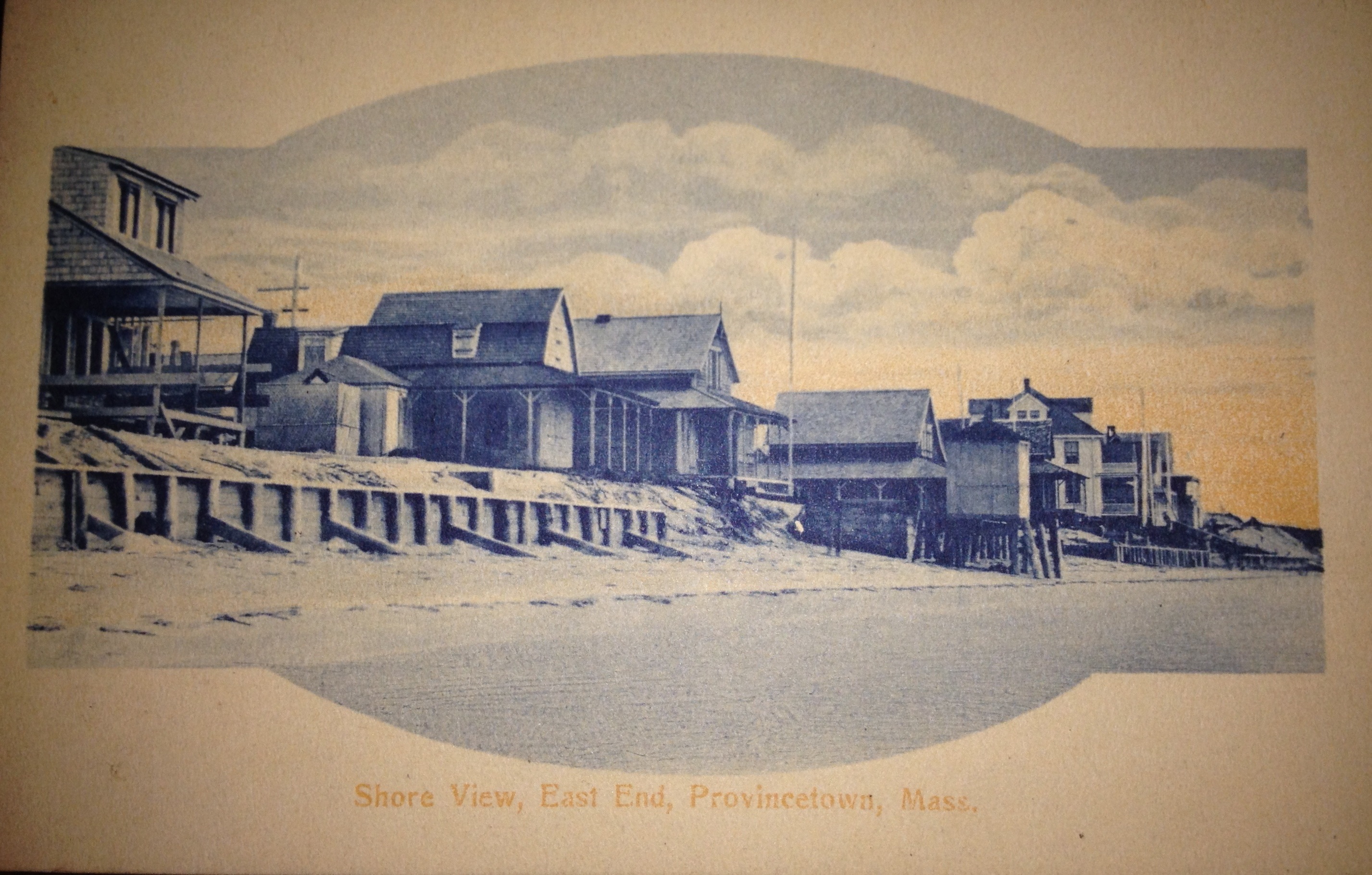
As shown in this antique postcard of Provincetown, Cape Cod, the waterfront houses were boarded up in the off-season. Primarily owned by summer residents, they offer a beautiful view of Cape Cod Bay looking out towards the Long Point Lighthouse. Many of the buildings have retained their charm, and look similar to the way they appeared in the late 19th century when this postcard was printed in Germany. While many visitors like to walk along Commercial Street so they can poke their heads into art galleries and shops, a wonderful way to soak up the beauty of the town is to walk along the beach at low tide. (When the tide is high you may not have a place to walk.) Plus you never know what might wash ashore.
Roz SIlva, the female protagonist in the new murder mystery Remaining in Provincetown, frequently walks along the beach to clear her head and think. As publisher and editor of the town’s weekly newspaper she has a lot on her plate, particularly because she is trying to figure out who killed real estate entrepreneur Sonny Carreiro, just as spring is beginning to arrive and the town is getting ready for the summer season. Want to find out more, check out the new novel by S.N. Cook, now available at local bookstores and online at Amazon.com in trade paperback and as an ebook. Like us on Facebook. Keep the conversation going.
Art and gossip at Provincetown Town Hall
Located on Commercial Street, in the center of Provincetown, the recently renovated Town Hall, was not the very first Town Hall built in the town located on the tip of Cape Cod. The first Town Hall was located on HIgh Pole Hill and was built in 1853, but burned down in 1877. The 22,000 square foot Victorian era
building, completed in 1886, was constructed to serve as a community gathering place. Commonly in New England, town’s held their town meetings in churches until Town Halls were constructed to insure the separation of church and state. At one time or another the Provincetown Hall served many functions that included, dance hall, basketball court, and even rolller skating rink.
The Provincetown Art Association and Museum held their early art exhibitions at the Provincetown Town Hall until they were able to acquire and renovate a building of their own. Along the way, the town amassed a significant art collection that includes two paintings by Charles Hawthorne, “The Crew of the Philomena Manta ” and “Fish Cleaners.” Hawthorne founded the Cape Cod School of Art in 1899. Ross Moffet completed two murals in 1934 , “Gathering Beach Plums” and “Spreading Nets” funded by the Public Works of Art Project that helped many struggling artists during the Great Depression.
Visit the Provincetown Town Hall when you visit the town and see many fine paintings hanging on the walls and in meeting rooms. And yes, the Town Hall does figure into the storyline of the new mystery novel Remaining in Provincetown. There is something going on between the newly hired Town Manager and the publisher and editor of the weekly newspaper. What could it be? Get your copy of the book just released last month and now available at local bookstores and online at Amazon.com in trade paperback and as an ebook. Like us on Facebook. Keep the conversation going.
Provincetown artists instrumental in starting Cape Cod museum
The above vintage postcard shows what the Provincetown Art Association and Museum (PAAM) looked like before the addition of the Charles Hawthorne Gallery and the subsequent addition of the Contemporary glass wing visitors see today. The veteran institution, located at 460 Commercial Street in the town’s East End, was founded in 1914 by artists who were seeking both exhibition space and an institution that would be supportive of the artists who had made the small town on the tip of Cape Cod their home. Oscar Gierberich, Gerrit Beneker, E. Ambrose Webster, Charles Hawthorne, and William Halsail are credited in the history books as being the founding artists who were supported in their efforts by a number of local businesspeople at the time.The building was initially purchased and renovated in 1919.
PAAM has had a long tradition of organizing a number of exhibitions, some open to members and others juried, during the year. With the addition of more space, a larger permanent collection has been established and a variety of programs and classes for all ages are offered trhroughout the year, with more going on during the summer season when there is a larger audience. 1914 is almost 100 years ago, and PAAM will thus be celebrating their 100th anniversary next year. Check the PAAM website to find out what is scheduled for this summer and read the new mystery novel Remaining in Provincetown by S.N. Cook to fully appreciate that importance of how artists have contributed to the community. (Writers are artists too!) The book, just released in April is available at local bookstores, and online at Amazon.com in trade paperback or ebook. Like us on Facebook. Keep the conversation going.
Provincetown Cape Cod Commercial Street
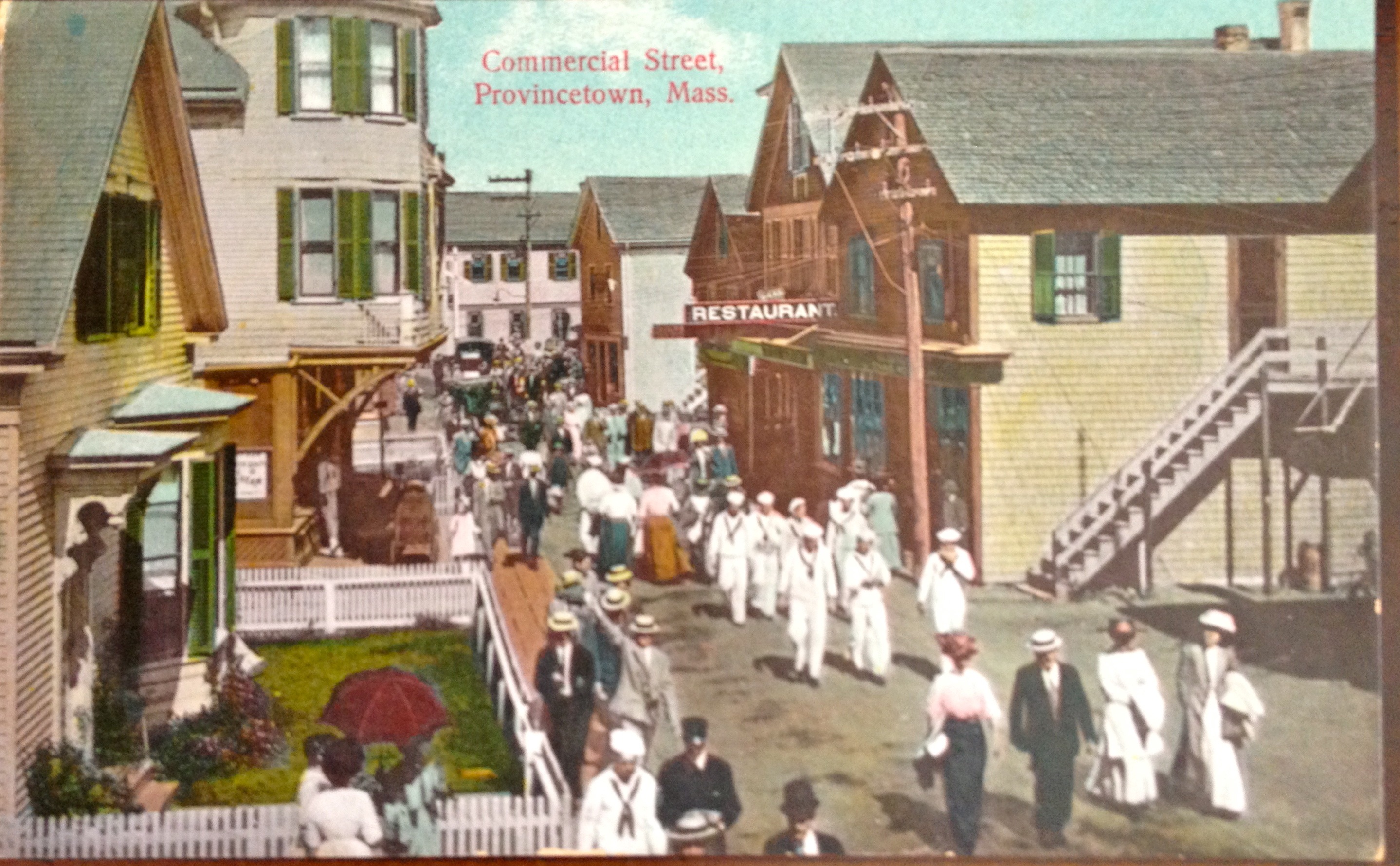
The title of this vintage postcard from approximately 1910 says Commercial Street. Do you recognize those buildings? What are they like today? Not so totally different, than today and just as crowded, just with different people. They are all on there way somewhere. Perhaps to the theater, a bar, a restaurant? There were always plenty of businesses to choose from, even 100 years ago. What’s the town like when it’s not so busy? Take a look at Remaining in Provincetown. Now available at bookstores, online, and at Amazon.com. Like us on Facebook.