Provincetown artists instrumental in starting Cape Cod museum

Provincetown Art Association and Museum  original building

Provincetown Art Association and Museum original building purchased in 1919

The above vintage postcard shows what the Provincetown Art Association and Museum (PAAM) looked like before the addition of the Charles Hawthorne Gallery and the subsequent addition of the Contemporary glass wing visitors see today. The veteran institution, located at 460 Commercial Street in the town’s East End,  was founded in 1914 by artists who were seeking both exhibition space and an institution that would be supportive  of the artists who had made the small town on the tip of Cape Cod their home. Oscar Gierberich, Gerrit Beneker, E. Ambrose Webster, Charles Hawthorne, and William Halsail are credited in the history books as being  the founding artists who were supported in their efforts by a number of local businesspeople at the time.The building was initially purchased and renovated in 1919.

PAAM has had a long tradition of organizing a number of exhibitions, some open to members and others juried, during the year. With the addition of more space, a larger permanent collection has been established and a variety of  programs and classes for all ages are offered trhroughout the year, with more going on during the summer season when there is a larger audience. 1914 is almost 100 years ago, and PAAM will thus be celebrating their 100th anniversary next year. Check the PAAM website to find out what is scheduled for this summer and read the new mystery novel Remaining in Provincetown by S.N. Cook  to fully appreciate that importance of how artists have contributed to the community. (Writers are artists too!) The book, just released in April is available at local bookstores, and online at Amazon.com in trade paperback or ebook. Like us on Facebook. Keep the conversation going.

Provincetown Cape Cod Gardens to Admire

Provincetown Cape Cod lovely flower garden

Provincetown Cape Cod lovely flower garden

Provincetown, Cape Cod evokes thoughts of narrow winding streets and views of the water peeking out from between busy gift shops and art galleries, but there is another part of the town, not everyone discovers–the lovely gardens. Some are hidden behind tall thick hedges, but other gardens are readily visible for all to enjoy. Spring has arrived on Cape Cod and enthusiastic gardeners are planting their dahlias, petunias, and zinnias in the upcoming weeks while perennials that include Salvia, daisies, and roses seem to thrive in the sunny sea salt environment. And let us not forgot the Hollyhocks standing strong and tall in so many soft colors. Some of the best gardens in town are one the back side streets, off the beaten track. Sometimes you have to look a little harder beneath the surface to find what you’re really looking for, like unraveling a mystery in a book, and if you are looking for a book set in Provincetown  you’ll want to read the new mystery novel Remaining in Provincetown, just released last month. Now available at local bookstores, online, and at Amazon in trade paperback and ebook. Like us on Facebook. Keep the conversation going. We love hearing from you.

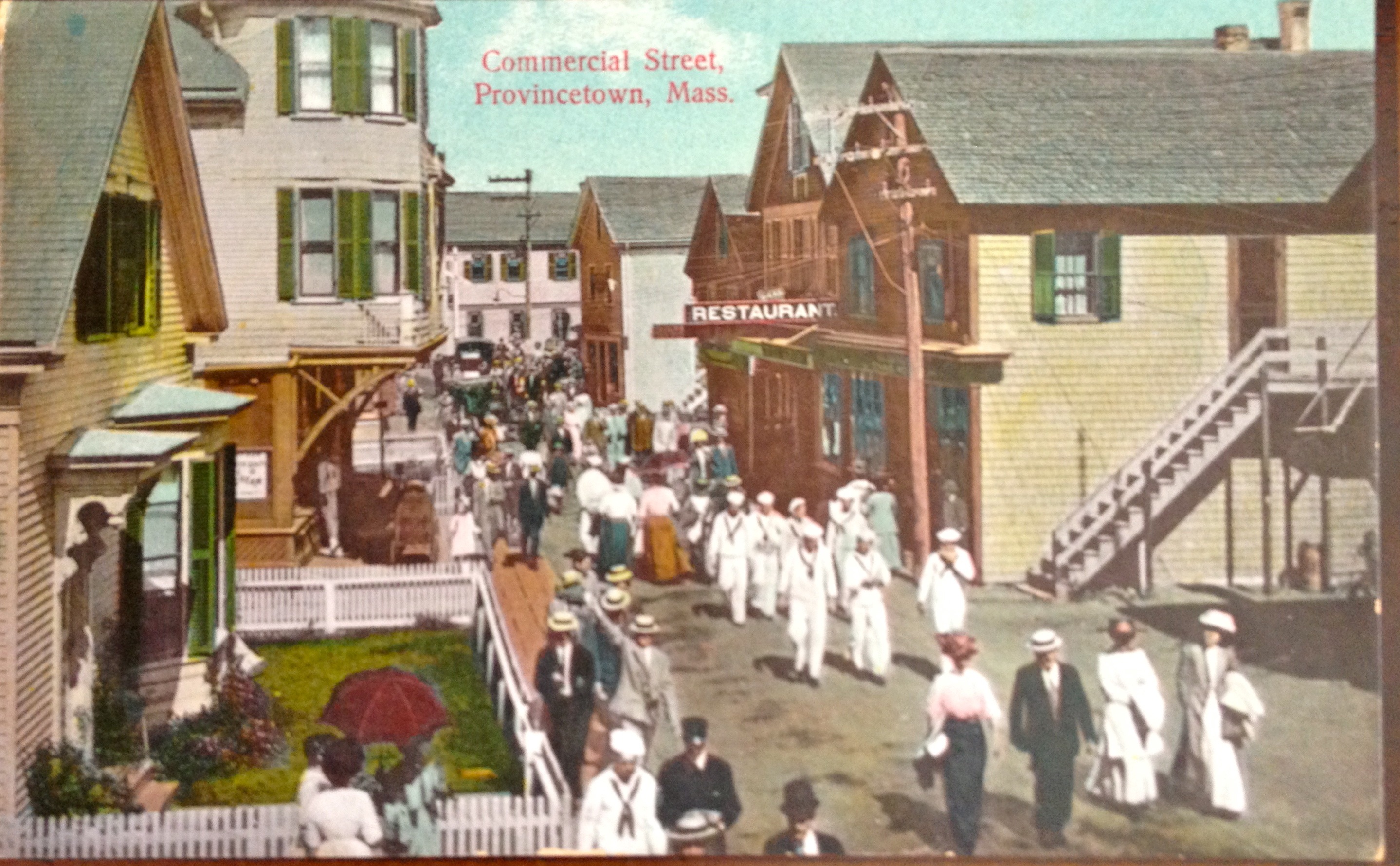
Provincetown Cape Cod Commercial Street

downtownThe title of this vintage postcard from approximately 1910 says Commercial Street. Do you recognize those buildings? What are they like today? Not so totally different, than today and just as crowded, just with different people. They are all on there way somewhere. Perhaps to the theater, a bar, a restaurant? There were always plenty of businesses to choose from, even 100 years ago. What’s the town like  when it’s not so busy? Take a look at Remaining in Provincetown. Now available at bookstores, online, and at Amazon.com. Like us on Facebook.

Boston to Provincetown a popular destination!

Arrival of Boston Boat to Provincetown's Railroad Wharf

Arrival of Boston Boat to Provincetown’s Railroad Wharf

Look at all those people who just arrived from Boston, getting off at Provincetown’s Railroad Wharf. They took the ferry to arrive in Provincetown, Cape Cod for their summer holiday. The harbor is filled with beautiful sailboats and the tourists are well dressed in bowlers, summer hats and frocks. They’re excited to be in Provincetown. And we’re excited to tell you about the new murder mystery Remaining in Provincetown. Now available online, at bookstores, and at Amazon.com Like us on facebook.

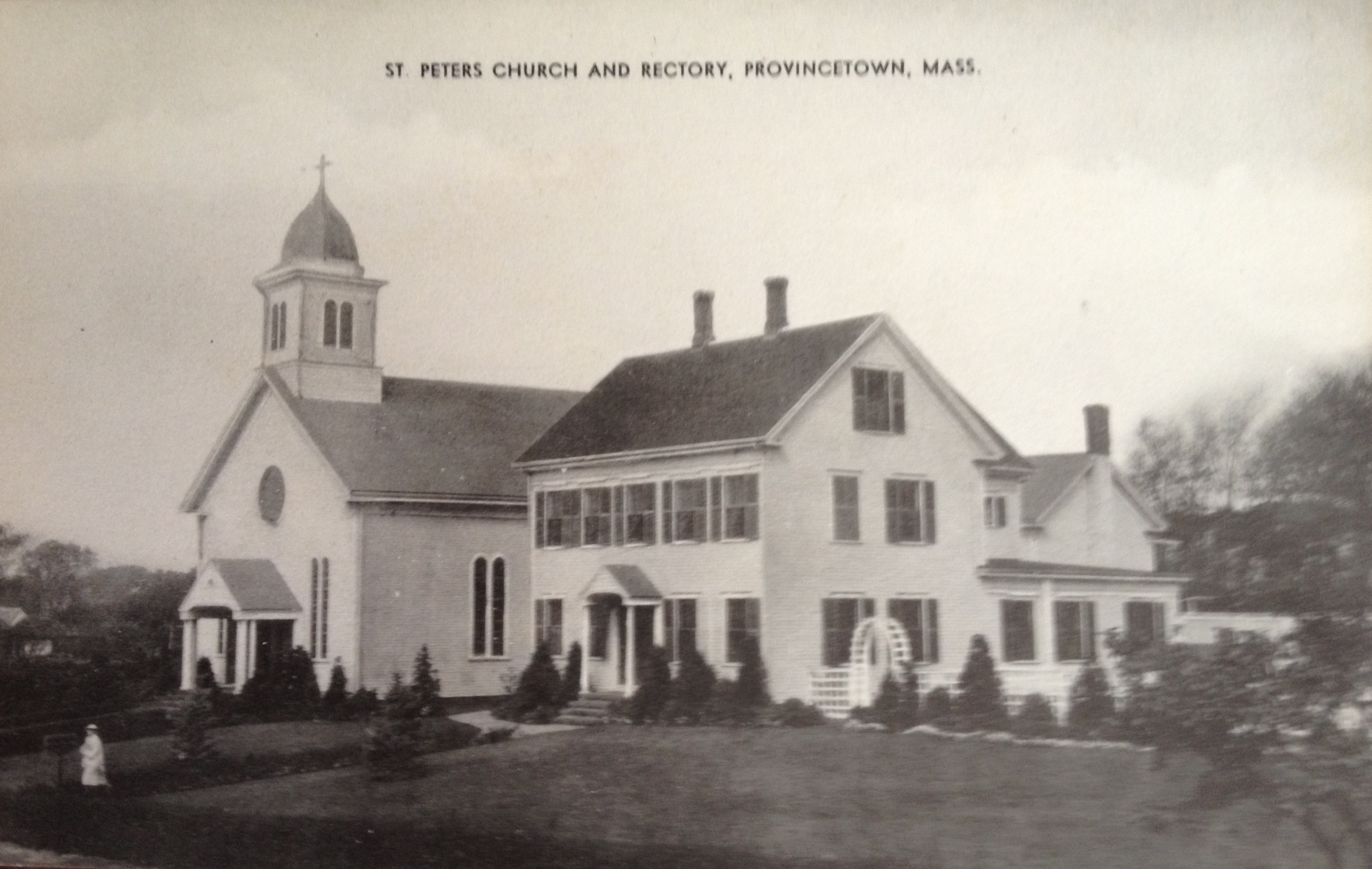
St. Peters Church in Provincetown

St Peter's Church in Provincetown

Visit St. Peter’s Church today, and you’ll be visiting the new church dedicated in July 2008. The original church was destroyed by fire in January 2005 and only one stained glass window was saved. But the church, dedicated in October 1874 is very much integral to the Provincetown community. Initially when the church was opened,  the majority of the parishioners were Portuguese fishermen and their families, according to the church’s website, they comprised well over 50 percent of the town’s population. The church figures into the storyline of the new murder mystery released in April, Remaining in Provincetown. Many of the characters are parishioners. Want to read more? Now on sale online and at bookstores as well as at Amazon.com. Like us on Facebook.

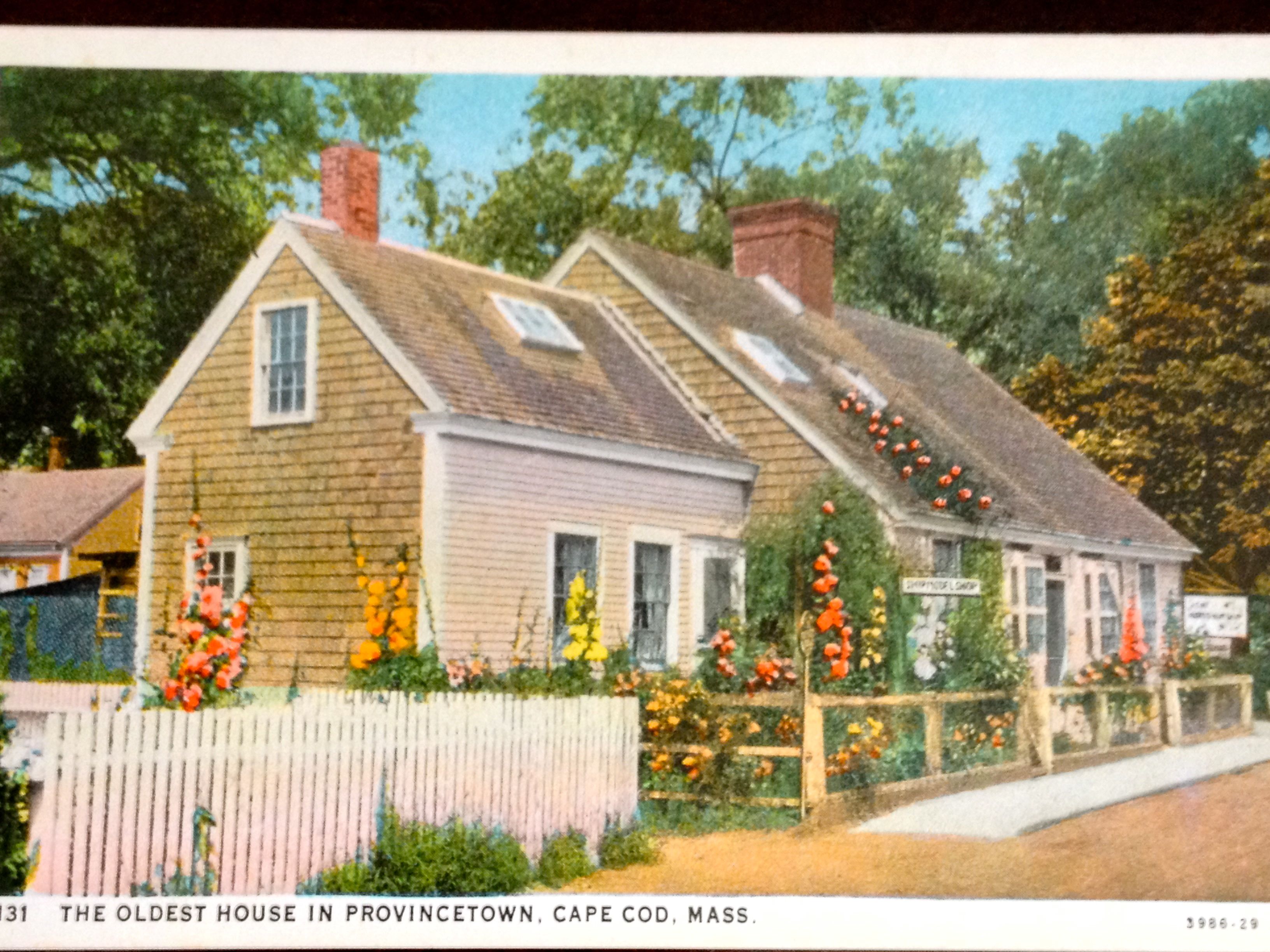
Provincetown’s Oldest House, a full cape

Built in approximately 1746 Provincetown's Oldest House

Built in approximately 1746 Provincetown’s Oldest House

Located on Commercial Street on the West End of Provincetown, the house purported to be the oldest house was once open to tourists but now is privately owned. As you can see in this antique postcard, the house was once a shop.  Artists Elizabeth and Coulton Waugh ran the Ship Model Shop and Hooked Rug Shop in the Cape Cod cottage built in approximately 1746.  In the front of the house was an arch made of a whale’s jawbone.

Architecturally a full Cape, said to have been built by Seth Nickerson, a ship’s carpenter. Two front windows flank a central doorway and  the windows abut the eaves.  Inside are wide-board floors. It is said that Nickerson built the house from wood salvage from shipwrecks.

Painter and photographer John Gregory, and Adelaide Gregory, a concert pianist, bought the house in 1944. They opened the house to the public, on occasion, but today you’ll just have to imagine its interior as you walk past. Just as you’ll have to imagine just what happens behind closed doors, unless you read Remaining in Provincetown, the new murder mystery released this month, available at stores, online and at Amazon.com. Like us on Facebook.

Like our facebook fan page and you may be selected to receive a FREE advance cppy!

Like our facebook fan page and you may be selected to receive a FREE advance cppy!


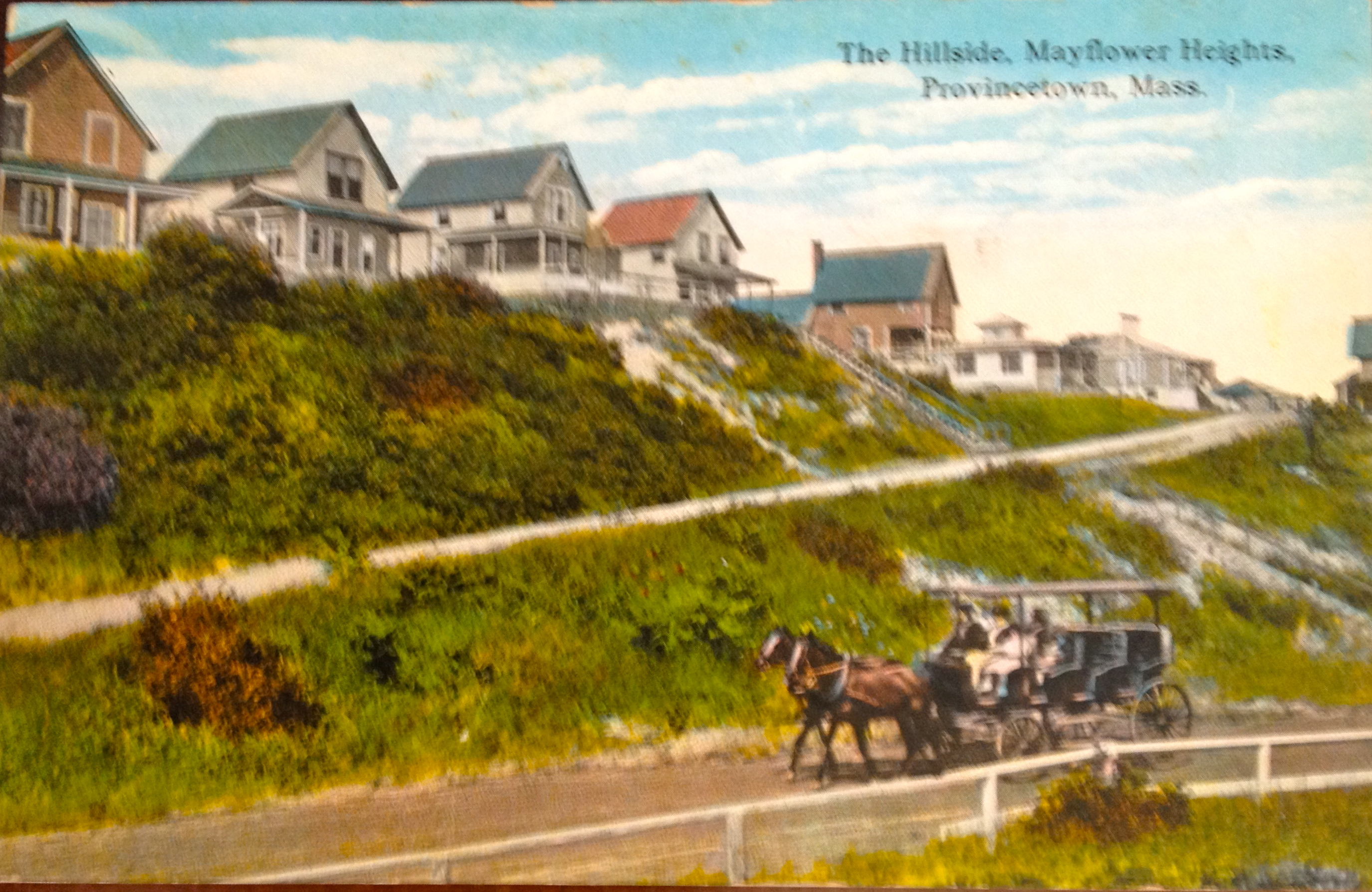
Mayflower Heights and Horses in Provincetown

Mayflower heightsThe geography of Mayflower Heights in Provincetown certainly looks different in this antique postcard when you are approaching by horse and carriage!  Not that many people living in Provincetown, on the tip of Cape Cod actually owned horses. A boat was a more practical means of transportation, for this small town overlooking the Cape Cod Bay. As written  in The Log of Provincetown and Truro on Cape Cod Massachusetts by M.C.M. Hatch, published in 1939:

“In 1829, a Provincetown minister could write to a friend: –“would you believe that there is a town in the United States with eighteen hundred inhabitants and only one horse with one eye? Well that town is Provincetown and I am the only man in it that owns a horse, and he is an old white one with only one eye.”

There’s all different sorts of interesting things you can read about Provincetown written in the past. Or you can read a brand new murder mystery, Remaining in Provincetown by S.N. Cook now available in bookstores, online, and at Amazon.com. Like us on Facebook. Thank you!


Provincetown Cape Cod, where did the name come from?

West

How did Provincetown, Massacusetts get its name?
According to Agnes Edwards book, “Cape Cod New and Old”  published in 1918, after the union of the Plymouth and Massachusetts Bay colonies in 1692 Provincetown, then a part of Truro. became a fishing hamlet.  In 1741 it was set off as a precinct of the Province of the Massachusetts Bay Colony  Initially the lands retained, were owned by the colony.  Province of the Massachusetts Colony became Provincetown. Sounds logical to me. What may not be logical to someone who doesn’t live in Provincetown, why sewage and water usage are such hot button issues. When it comes to real estate use and development, these things are very much on the minds of the characters in the new murder mystery novel, Remaining in Provincetown by S.N.Cook. Now available online and in bookstores, including Amazon.com. Like us on Facebook.


Provincetown’s first Italian restaurant a gay love story

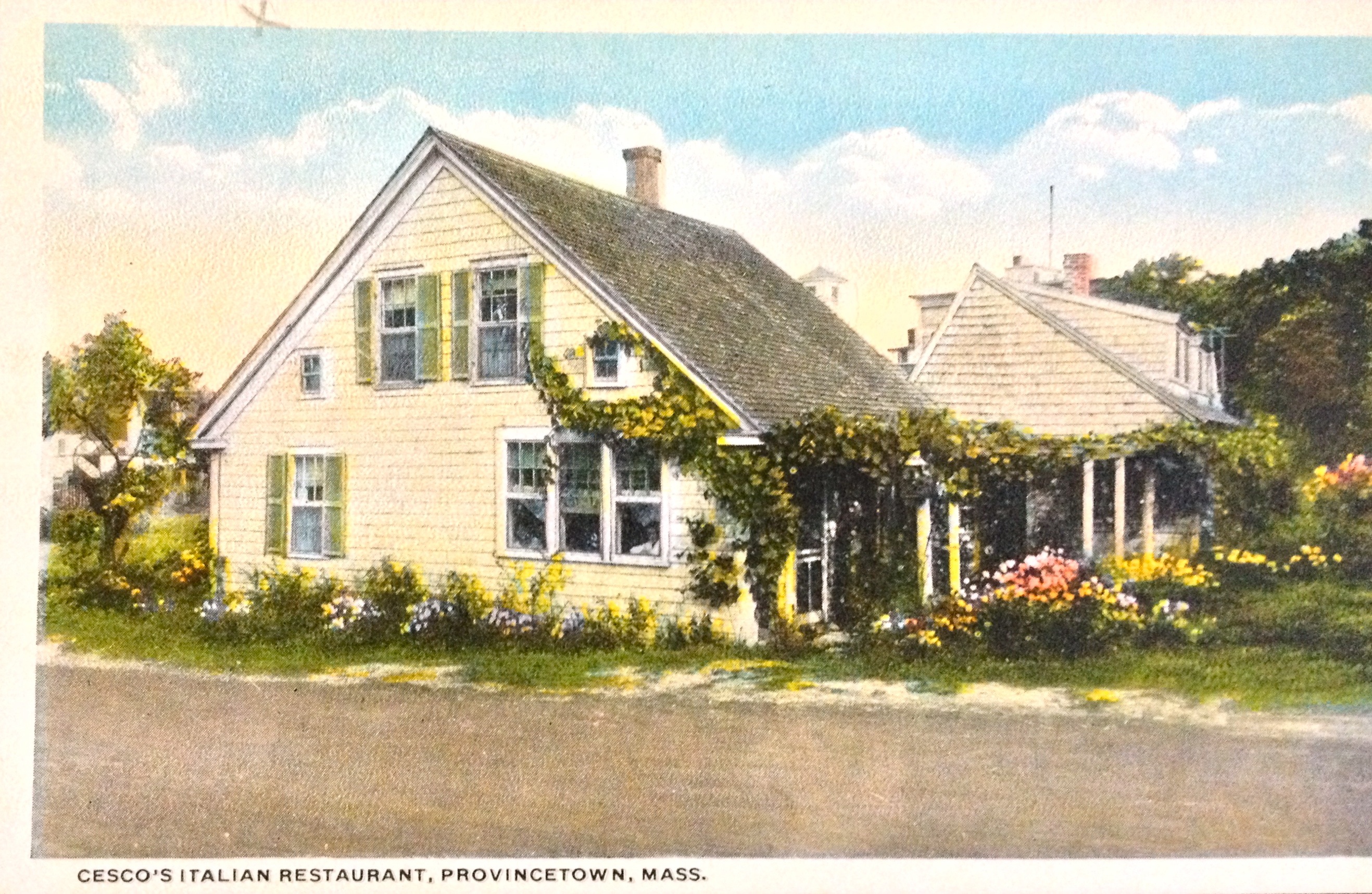
Cesco's Italian Restaurant  opened in 1916

Cesco’s Italian Restaurant
opened in 1916

Going up Bradford Street in Provincetown, just beyond the Milldred Greenfelter East End Playground on the corner of Howland Street, there used to be a very popular Italian Restaurant. Called Cesco’s, as you can see above, it had its own postcard printed, the name comes from an abbreviated version of its chef and owner Francesco “Cesco” Ronga,  known fondly as the “Spaghetti King of Cape Cod.” Francesco met and fell in love with artist Fred Marvin, the half brother of Mary Heaton Vorse,  in Naples and followed Fred to Provincetown. The two men were devoted to one another for 50 years. Located in an extension of their home, the restaurant drew clientele from all over New England and was in operation from approximately 1916 to 1934. One of the characters, Frank Chambers, in the new murder mystery novel Remaining in Provincetown, has his own restaurant, “The Indigo Inn. ” Creating new recipes for Frank is a passion, almost an obsession. Want to read more about Frank and the other characters in the new novel everyone’s talking about. Pick up a copy, now available online and a bookstores including Amazon.com. Like us on Facebook.

Hollyhocks a Provincetown Cape Cod favorite flower

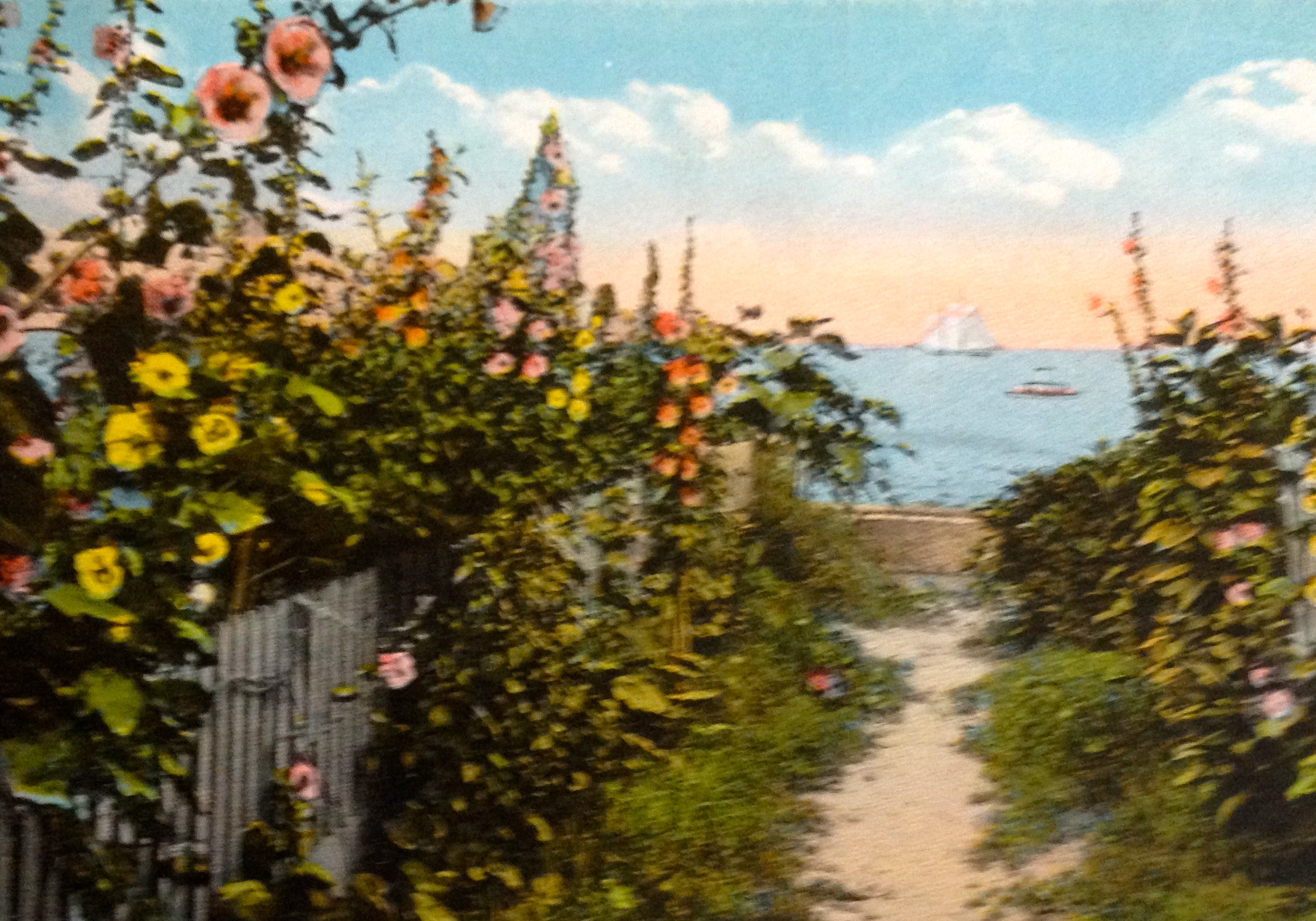
Hollyhock Lane glimpse of the harbor

Hollyhock Lane glimpse of the Provincetown harbor

Admiring the gardens as you walk downtown  is part of the summer experience when you visit Provincetown and hollyhocks are a favorite flower. Their height and various colors makes a nice contrast to other blossoms. According to English botantist Wedgewood, The name holly came from  “holy” because the first of the plants brought to southern Europe came from the Holy Land, having been transplanted there from the orient.  It does well in  all climates and soils. During  the Middle Ages, and it is mentioned as “holy-hoke”, an adaptation of the Welsh name, in a British horticultural treatise of 1548. Here is another lovely antique postcard.

Holly Hock Lane with the Provincetown monument in the background.

Holly Hock Lane with the Provincetown monument in the background.

If you enjoy reading about Provincetown, you should enjoy the murder mystery just published this month, Remaining in Provincetown by S.N. Cook, available online, at bookstores and at Amazon.Com. Like us on facebook.

Like our facebook fan page and you may be selected to receive a FREE advance cppy!

Like our facebook fan page and you may be selected to receive a FREE advance cppy!