Provincetown Poet of the Dunes, early Cape Cod publisher

Cape Cod  Sand Dunes

Cape Cod Sand Dunes

Provincetown’s sand dunes, now part of the Cape Cod National Seashore, have inspired many artists. One writer, closely associated with the dunes was Harry Kemp,(1883-1960) who was fondly referred to by the summer and year-round residents as “The Poet of the Dunes”. It is likely Kemp helped promote that name for himself, as one of his poetry collections he self-published in 1952 was entitled Poet of the Dunes.  Here is one of his short poems.

My Books

My books are ragged veterans

    Much leaked on in my shack;

But each of them’s bound with a rainbow

     And wears glory on its back.

Born in Youngstown, Ohio, Kemp first arrived in Provincetown in 1916.  His memoir, Tramping on LIfe: an Autobiographical Narrative (1922) was a bestseller during the 1920a and 30s. He was part of the elite circle of bohemian writers  of his era  that  included Upton SInclalir, Max Eastman, Eugene O’Neill, Edmund WIlson, John Dos Passos and many others. Setting down roots for a time in Greenwich Village, In the late 1920’s he started spending his summers in a Provincetown dune shack.  A heavy drinker and a womanizer, he was a master of self-promotion, performing stunts for the press in order to garner publicity and attention. Eventually his literary popularity waned, and when he could no longer find a publisher for his poetry, he founded the Provincetown Publishers and had his books printed by the Advocate Press which he sold for two dollars and autographed with a seagull feather along with an envelope of sand “gathered from the first landing place of The Pilgrims”.  Now that is marketing for you!

While the purchase of the new mystery novel Remaining in Provincetown does not include sand gathered from the dunes, it is the hope of the writer that when you read the book you will feel as if you’ve been walking on the streets of Provincetown, which usually results in a little sand in your shoes. Now available in trade paperback or on kindle at Amazon.com , Like us on Facebook and keep the conversation going.
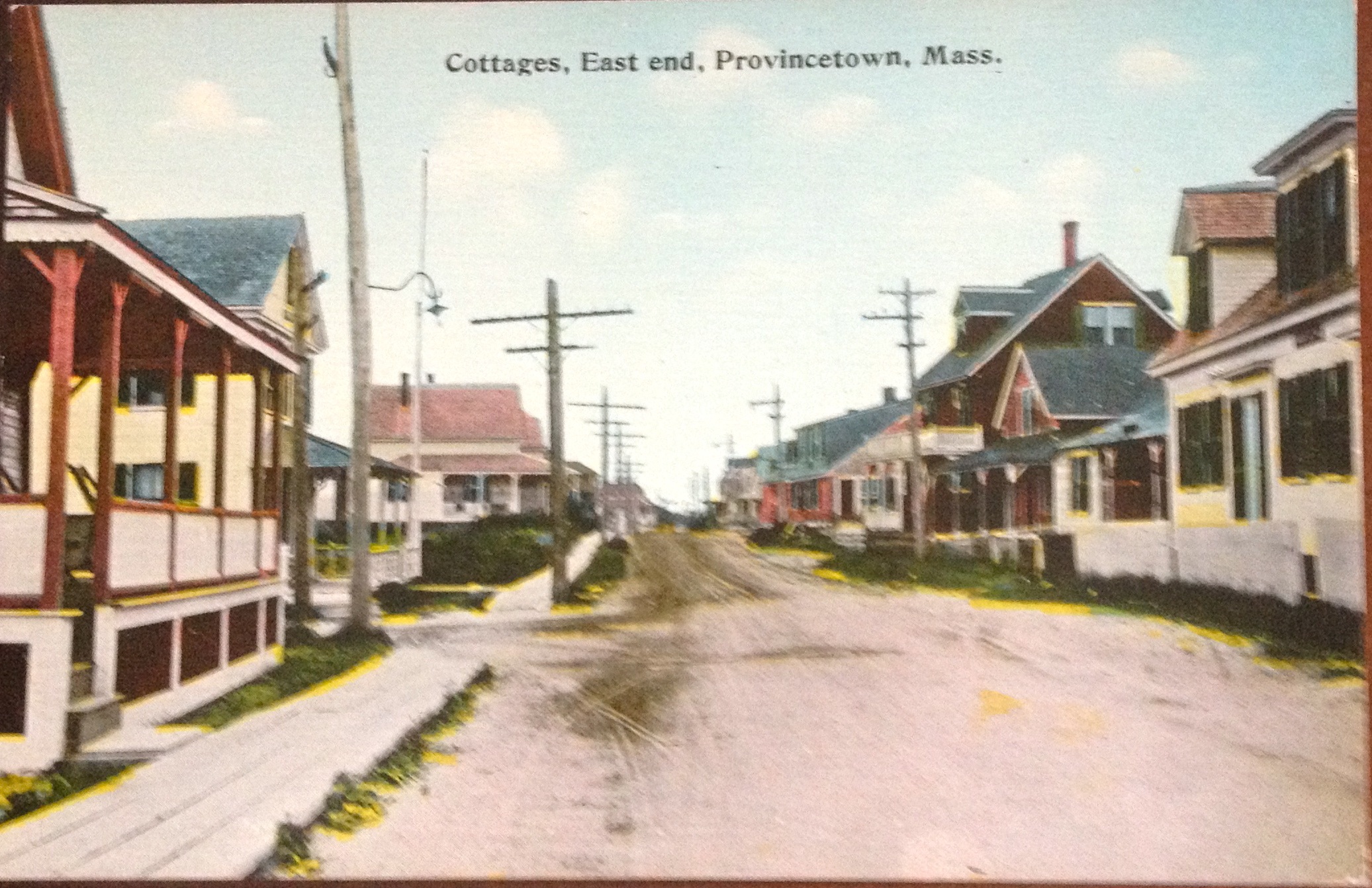
Provincetown Cape Cod East End Vintage Postcard

East End Cottages on Commercial Street in Provincetown, Massachusetts

East End Cottages on Commercial Street in Provincetown, Massachusetts

Provincetown’s Commercial Street is unpaved and the sidewalks are made of wood, but the houses look very much the same as they do today. in this antique postcard printed 100 years ago.

Every town has its East End and West End and Provincetown, with its  long and narrow in configuration, is no different. The East End on the waterside has traditionally been populated with seasonal summer residents.  Famous artists like Robert Motherwell and  Helen Frankenthaler constructed a grand residence on the  East End waterfront, but others of more modest means stayed in historic Cape Cod cottages.  Empty lots are few and far between, when waterfront land is so valuable, but take a walk at the start of town, at the point where Commercial Street and Bradford Street divide, and see many beautiful old homes, primarily built in the beginning of the 20th century. What kinds of houses do the characters in Remaining in Provincetown live in? Real estate speculation has played a major role in Cape Cod’s economic development and where there is money to be made there is often graft and corruption. Could that kind of corruption lead to murder? You’ll have to read the  book to find out. Now available at Amazon in trade paperback or on kindle as an ebook. Like us on Facebook and be entered to win a FREE book and thank you for all the positive feedback

Like our facebook fan page and you may be selected to receive a FREE advance cppy!

Like our facebook fan page and you may be selected to receive a FREE advance cppy!

Provincetown Gay Party Central, Crown & Anchor history

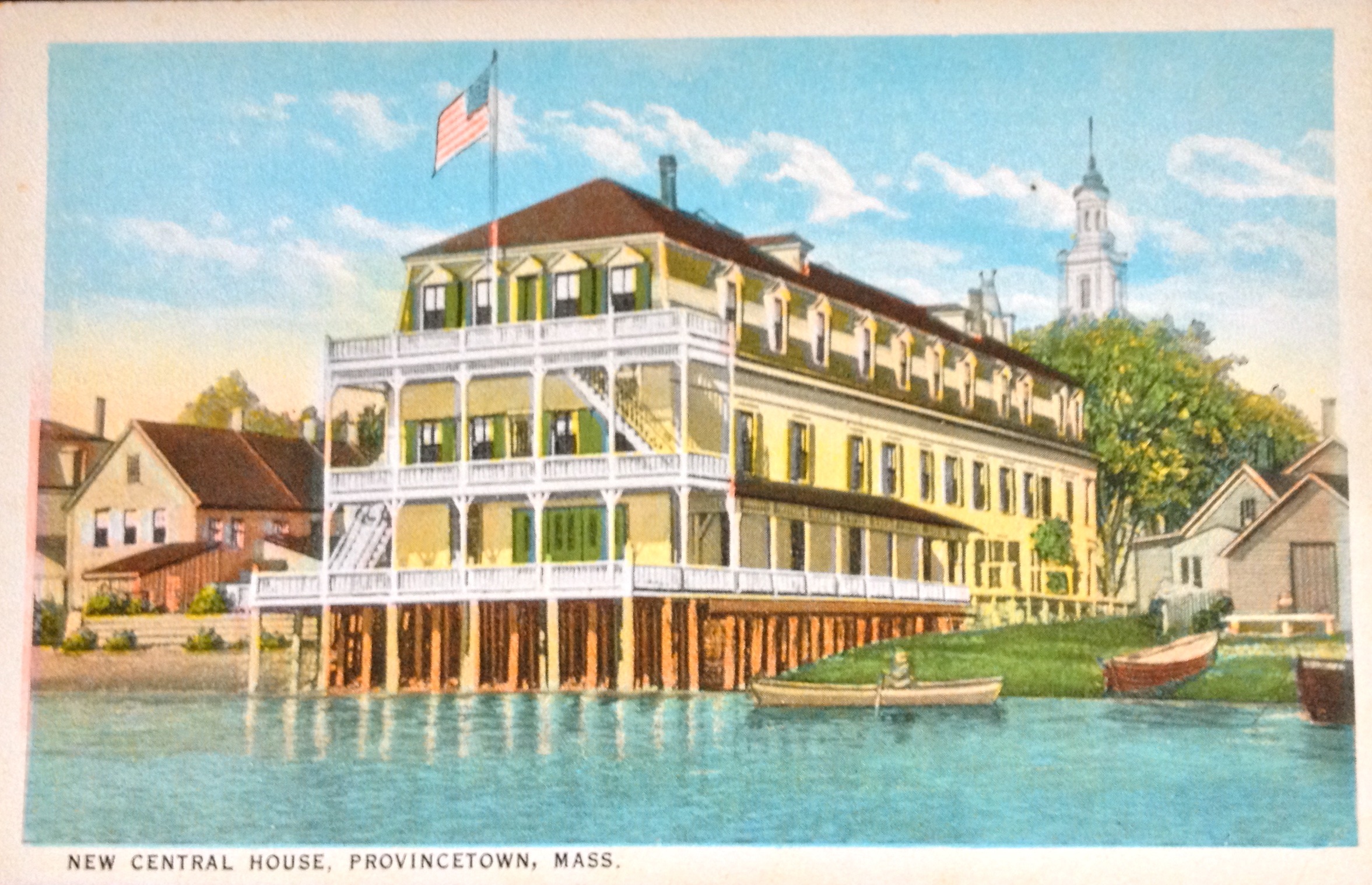
Now called The Crown & Anchor, the New Central Hotel was a popular Provincetown Inn in the 19th century

Now called The Crown & Anchor, the New Central House was a popular Provincetown Inn in the 19th century and  today is a  “happening place”.

The handsome waterfront Provincetown Inn located in the center of Provincetown on Commercial Street has gone by many names. In the antique postcard shown above it is called “New Central House”. Said to have been built in 1836 as the Central Hotel by 1868 it was considered the largest hotel at the tip of Cape Cod, with 75 guest rooms.  A private beach with cabanas and long porches with rocking chairs for guests to sit out and look at the water, made this Inn a successful business that kept expanding through its many incarnations. Its been called: Ocean House, Central House, New Central House, Towne House, the Sea Horse Inn. and the Crown & Anchor as it is known today.  At the end of the 19th century it catered to prosperous guests by providing a  billiard hall, smoking rooms, gentleman’s parlor, and ladies’ reading room for a mixed clientele of families and primarily straight travelers. But as the town evolved into a mecca for gay travelers, it gradually evolved into a thriving complex of bars and restaurants that cater to gay and lesbian patrons of varying tastes.   Although the Crown & Anchor was burned to the ground in 1998 when adjacent Whaler’s Wharf burned as well, it was faithfully rebuilt in its previous architectural style. The leather bar is known as The Vault and the restaurant Central House at the Crown pays tribute to its earlier years by using the earlier name of the hotel. while  the Paramount Nightclub, Piano Bar, Wave Video Bar and more make certain there is always a party going on somewhere.   Places to have a good time are an important aspect of life in Provincetown, whether you are a tourist or a resident, and in the new mystery novel Remaining in Provincetown a popular hang-out is the fictitious “Cowboy Club”. Want to learn more about what goes on there? You’ll have to read the book now available at Amazon.com and as an ebook on Kindle. Like our Facebook page and you may win a FREE copy.

Provincetown Inn mystery of the house on the hill

West End, Provincetown Cape Cod Massachussets first Murchison house

West End, Provincetown Cape Cod Massachusetts first Murchison house

Today a contemporary mansion, once the residence of  the famous psychologist Carl Murchison, sits high up looking out across Land’s End, hidden by an overgrown thicket of shrubs and trees across the street from the Provincetown Inn. But 100 years ago, as shown in the above picture postcard, a white Victorian style house sat on an open bluff and the Provincetown Inn was yet to be constructed. (They opened their doors in 1925).

Cranberry bogs and wetlands once were more apparent in this scenic spot on the very tip of Cape Cod and an open white fence created a boundary for the flower bed and green fields beyond. Sidewalks were made of wood.

So who was Carl Murchison and his wife Dorotea who built the current glass walled house that sits on the hill today?… The Murchisons moved to Provincetown in the mid 1930s from Worcester, Massachusetts where Carl was previously editor and publisher of the Clark University Press.  Chair of the psychology department at Clark University he edited over a dozen books which brought international recognition to the University but also created some controversy within some scientific circles as to his research practices and management of the psychology department.  In 1935 he founded the Journal of Psychology, which he published out of his own home. This newest enterprise created the ultimate clash leading to his exit from the University.  He did, however retain possession of all the Clark University Press journals he edited and he continued to publish his journals out of Provincetown.  A tragic fire in the spring of 1956 destroyed the original house, including many of his private papers. A new modern house designed by Walter Gropius’s firm, costing $300,000 (a princely sum at the time) replaced the earlier home but unfortunately Carl did not live very much longer to enjoy its beauty. ( It was named on of the best-designed homes at 1959 by Architectural Record magazine. )He died in 1961, after an 18 month illness, (For more details about Murchison’s life consult Portraits of Pioneers in Psychology, vol 2, edited by Kimble, Boneau & Wertheimer, and published by the American Psychological Association, 1996.) His wife lived in the house for another 20 years. If you like mysteries and you like Provincetown, you’ll want to read  the new novel Remaining in Provincetown, just released this month and available for sale at Amazon in trade paperback or kindle. Like our Facebook page and you may be selected to receive a FREE book.

Provincetown Harbor Prettiest on Cape Cod

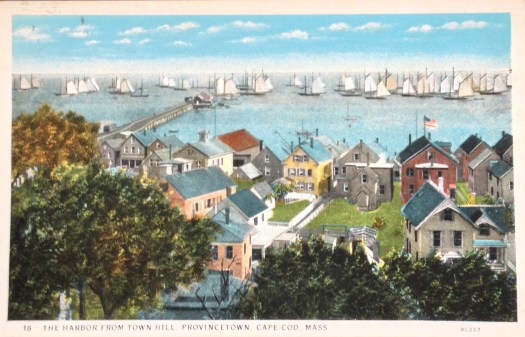
A view of Provincetown, Massachusetts harbor from Town Hill.

A view of Provincetown, Massachusetts harbor from Town Hill.

An antique postcard from the time when it only cost one penny to mail, this color lithographic print captures the beauty of Provincetown on the tip of Cape Cod when the harbor was filled with sailing ships. The description on the back says it all: PROVINCETOWN is one of the quaintest places, not only on the Cape, but in the entire country with its old streets, very narrow at that, and fairly teems with “local color” which attracts scores of artists every year eager to transfer the odd scenes to canvas. It is entirely unlike any other town in the country and must be seen to be fully appreciated. Writers are also artists, and the town is certainly the inspiration for the just released murder mystery Remaining in Provincetown now available at Amazon.com  and on Kindle. Like the RemaininginProvincetown Facebook page and you may be selected to win a FREE book.

Like our facebook fan page and you may be selected to receive a FREE advance cppy!

Like our facebook fan page and you may be selected to receive a FREE advance cppy!

Finback Whale watching in Provincetown Cape Cod

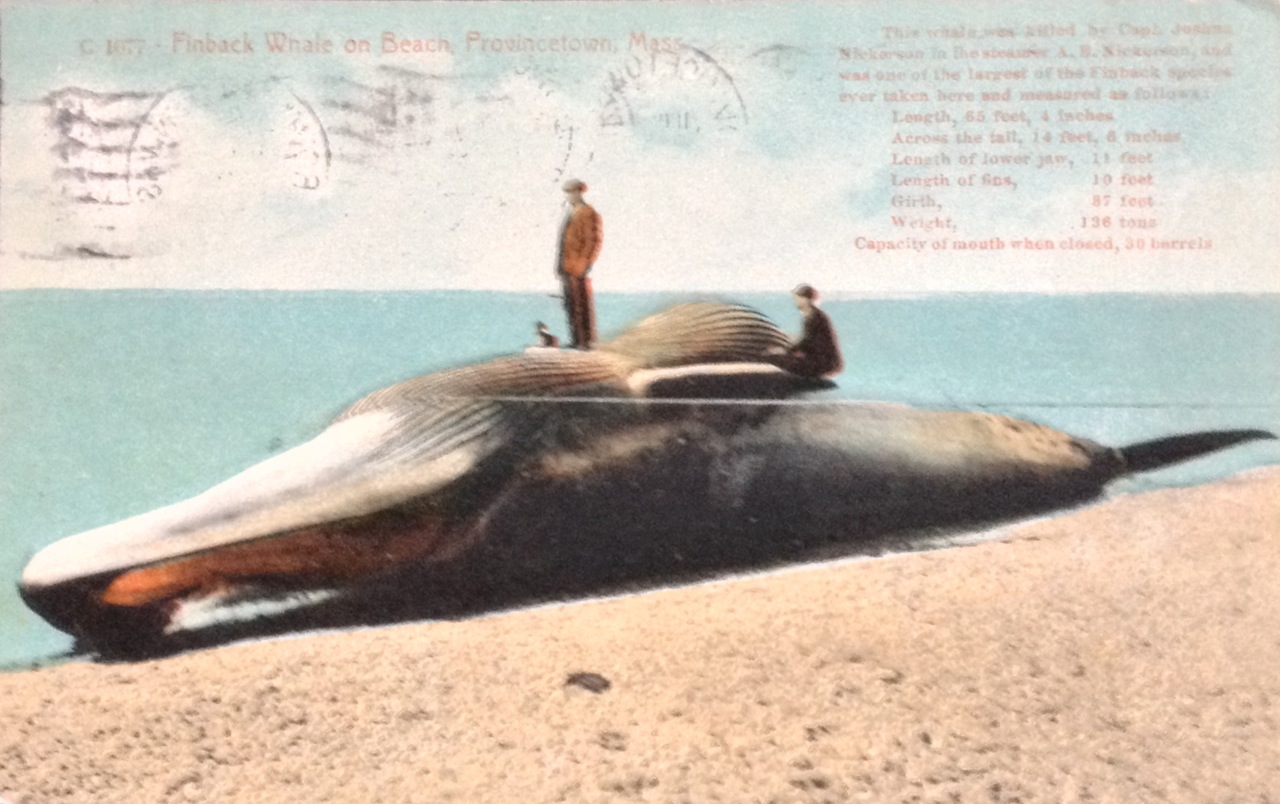
Finback Whale on Provincetown beach one of the largest ever taken.

Finback Whale on Provincetown beach one of the largest ever taken.

The Finback whale shown in this antique postcard which was mailed in 1918, at first glance looks as if it beached on the Provincetown shore. But on closer examination, and from reading the caption on the photograph, the sad truth is this whale was hunted and killed for its blubber oil.   Currently an endangered species, the Finback is the second largest animal in the world. (The Blue Whale is the largest) It has been described by naturalist Roy Chapman Andrews as “the greyhound of the sea”. Since the mid 1980’s whale watching has become a way for visitors to Cape Cod to observe these handsome mammals. Often sighted in the waters on the tip of Cape Cod are primarily Humpback Whales as well as a few Finback Whales.

This particular whale in the vintage postcard above was killed by Captain Joshua Nickerson while at the command of the steamer the A.B. Nickerson. It was one of the largest of the Finback species ever taken in Provincetown and measured 65 feet and 4 inches in length and weighed 136 tons.  According to the book Provincetown written by Herman Atwell Jennings, “in 1886 the steamer and a facility for processing whales was built at Herring Cove near the Race Point Lighthouse and in 1889 a wharf was extended from shore four hundred feet to enable the factory steamer to bring the whales and other fish alongside to be handled.” A number of the streets in Provincetown have the names of the early families that include Nickerson, Snow, and Dyer. Small towns have their secrets. Want to gain a more intimate sense of the town and its inhabitants?  You’ll want to read the new novel Remaining in Provincetown, now available at Amazon.com. Like us on Facebook and you may win a FREE copy.

Like our facebook fan page and you may be selected to receive a FREE advance cppy!

Like our facebook fan page and you may be selected to receive a FREE advance cppy!

Provincetown ferry to Boston living history

The Steamer Dorothy Bradford arriving in Provincetown in 1911

The Steamer Dorothy Bradford arriving in Provincetown in 1911

The “Boston Boat” has been a fixture in Provincetown culture since the first ferry boat connected the city of Boston to the furthermost tip of Cape Cod in 1883. The first boat was named The Longfellow and it was replaced in 1911 by the Dorothy Bradford shown above docking at Railroad Pier, now known as MacMillan Pier (named for the famous arctic explorer). Operated by the Cape Cod Steamship Company, the Dorothy Bradford was in service until 1937.  Today seasonal ferry service between Boston and Provincetown is provided by the Bay State Cruise Company. The Provincetown III makes it possible to get from Boston to Provincetown in just 90 minutes. The  2013 season begins on May 17th and will operate until mid October. For a lower price on Saturdays, visitors can take the Provincetown II for a lower price and a slower three hour journey. Either way, approaching Cape Cod by water provides beautiful scenery on a clear day.  And it’s the beautiful scenery and the proximity to water that has the characters in Remaining in Provincetown so committed to the town, despite its seasonal economic challenges. What is it like to live in the town when the “Boston Boat” is not running and tourists are few? You’ll have to read the book , now available at Amazon.com, to find out.

Provincetown Pilgrim Monument inspires new novel

President Theodore Roosevelt Laying the cornerstone for the Pilgrim Monument in Provincetown in 1907

President Theodore Roosevelt Laying the cornerstone for the Pilgrim Monument in Provincetown in 1907

President Theodore “Teddy” Roosevelt came to Provincetown, Massachusetts on August 20th, 1907 to lay the cornerstone for the Pilgrim Monument as shown in the above antique postcard.  It was a joyous occasion for the Cape Cod town and the Cape Cod Pilgrim Memorial Association founded in 1892 to honor Provincetown as the Mayflower Pilgrims’ first landing place in 1620.  Crowds gathered and the bands played to mark the start of construction that was completed three years later in 1910.

While Plymouth often gets much of the glory for being the first settlement of the pilgrims, it was  in Provincetown and Truro that the Pilgrims, sailing to the New World on The Mayflower, spent five weeks before they sailed to the base of the Cape. It was in Provincetown Harbor that they drew up the Mayflower Compact, which established the basic rules of governance for their new home.

The novel everyone is talking about is about to be released.

The novel everyone is talking about has been released.

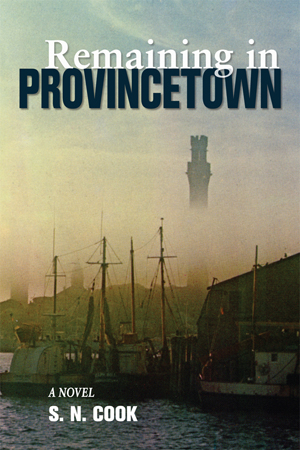
The Pilgrim Monument situated up on a hill looking out over the town, stands 252 feet in height.  The design of the all granite monument that sits 350 feet above sea level, was modeled after a classic stone monument in Italy, Torre Del Mangia in Siena. Whether you approach Provincetown by boat, car, or airplane, the Pilgrim Monument immediately grabs your attention as an important landmark.  Which is why the Pilgrim Monument is a focal point on the cover of the just released novel Remaining in Provincetown now available at Amazon.com.  If you’ve been enjoying this blog,  you’ll want to read the book.

Like our facebook fan page and you may be selected to receive a FREE advance cppy!

Like our facebook fan page and you may be selected to receive a FREE advance cppy!

Old Cape Cod and Provincetown in stories and song

Vintage Cape Cod postcard circa 1930

Vintage Cape Cod postcard circa 1930

“If you’re fond of sand dunes and salty air,” goes the 1957 song written by Alan Jeffrey, Claire Rothrock and Milton Yakus, “Quaint little villages here and there, you’re sure to fall in love with  Old Cape Cod.” The hit tune sung by Patti Page captures the spirit of the above antique postcard published 20 some years earlier.  “If you like the taste of a lobster stew served by a window with an ocean view, you’re sure to fall in love with Old Cape Cod,” the song goes on to say although they don’t mention Provincetown’s Pilgrim Monument, fishing excursions, swimming, and little neck clams as illustrated in the postcard, the reference to “Old Cape Cod” alludes to the preponderance of historic buildings and antique shops even in the 1950s.  There are still plenty of antique shops, flea markets, and yard sales on Cape Cod today. And there were plenty of antiques bought and sold during the 1990s, when  the soon-to-be released mystery novel Remaining in Provincetown takes place. One of the book’s characters  Bruno, has furnished his entire Bed and Breakfast with antiques and another character, Sonny Carreiro, collects antique postcards. Visit our facebook page to see the novel’s front cover . Click the “like” button and you’ll automatically be entered to possibly win a FREE copy. Now available at Amazon.com.

Like our facebook fan page and you may be selected to receive a FREE advance cppy!

Like our facebook fan page and you may be selected to receive a FREE advance cppy!

Digging for clams in Provincetown, Cape Cod

Ptown clammers

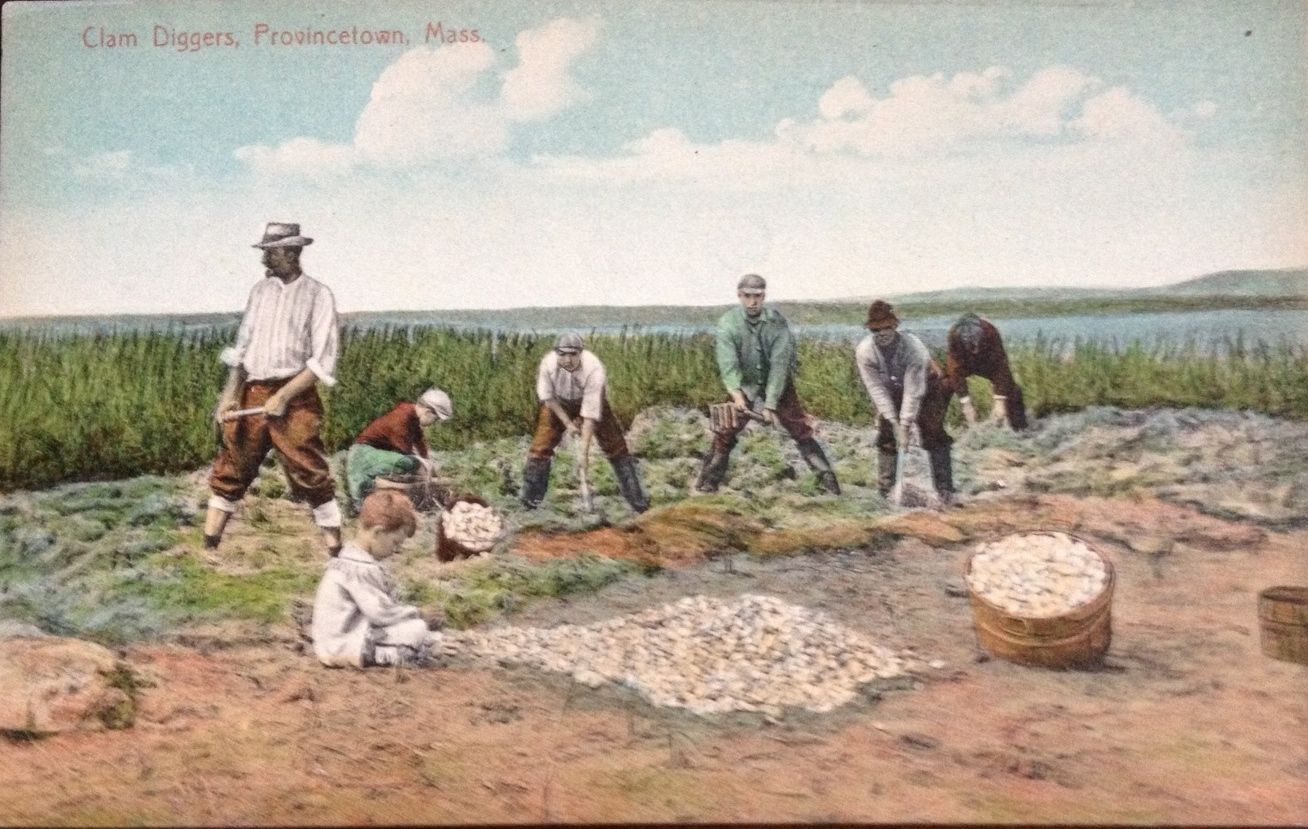
This rare antique postcard shows clam diggers using rakes to gather bushels of clams in Provincetown, Massachusetts on the tip of Cape Cod.  Clam chowder, stuffed quahogs, and fried clams are some of the favorites visitors enjoy when they dine, as do the characters in the novel Remaining in Provincetown by S.N. Cook, at Sally’s Chowder Bowl (a fictitious place that may bring back memories).  Quahogs, also known as cherry stones and little necks, along with steamers (soft-shell clams), sea clams, and razor clams were once exceedingly plentiful in Provincetown Harbor.  They were an important source of food for the Indians and the purple portion of the quahog shells were used as a trading exchange referred to as wampum.  The early American colonists took advantage of this easy to access food source and developed a taste for shellfish stews and chowders. During the Great Depression in the 1930s, shellfish provided sustenance when jobs were few and families were struggling to put food on the table. The result was a depleted shellfish population, overfished almost to extinction. The one exception is mussels, which live on rocks and benefitted from the construction of breakwaters. Today efforts are being made, with some success, to restore the shellfish population because their presence helps to filter the Bay’s water and maintain an ecological balance.  Take note that the gathering of clams and oysters requires a license and is under strict regulation.  There are, however, plenty of opportunities to go fishing.  There are a number of boats that take off from Provincetown harbor. To see another vintage postcard, just posted, visit our new face book page and like it to be entered in the drawing to win a FREE copy of the new mystery coming out later this month. Thank you.

Like our facebook fan page and you may be selected to receive a FREE advance cppy!

Like our facebook fan page and you may be selected to receive a FREE advance cppy!