Art and gossip at Provincetown Town Hall

Located on Commercial Street, in the center of Provincetown, the recently renovated Town Hall, was not the very first Town Hall built in the town located on the tip of Cape Cod. The first Town Hall was located on HIgh Pole Hill and was built in 1853, but burned down in 1877.  The 22,000 square foot Victorian era
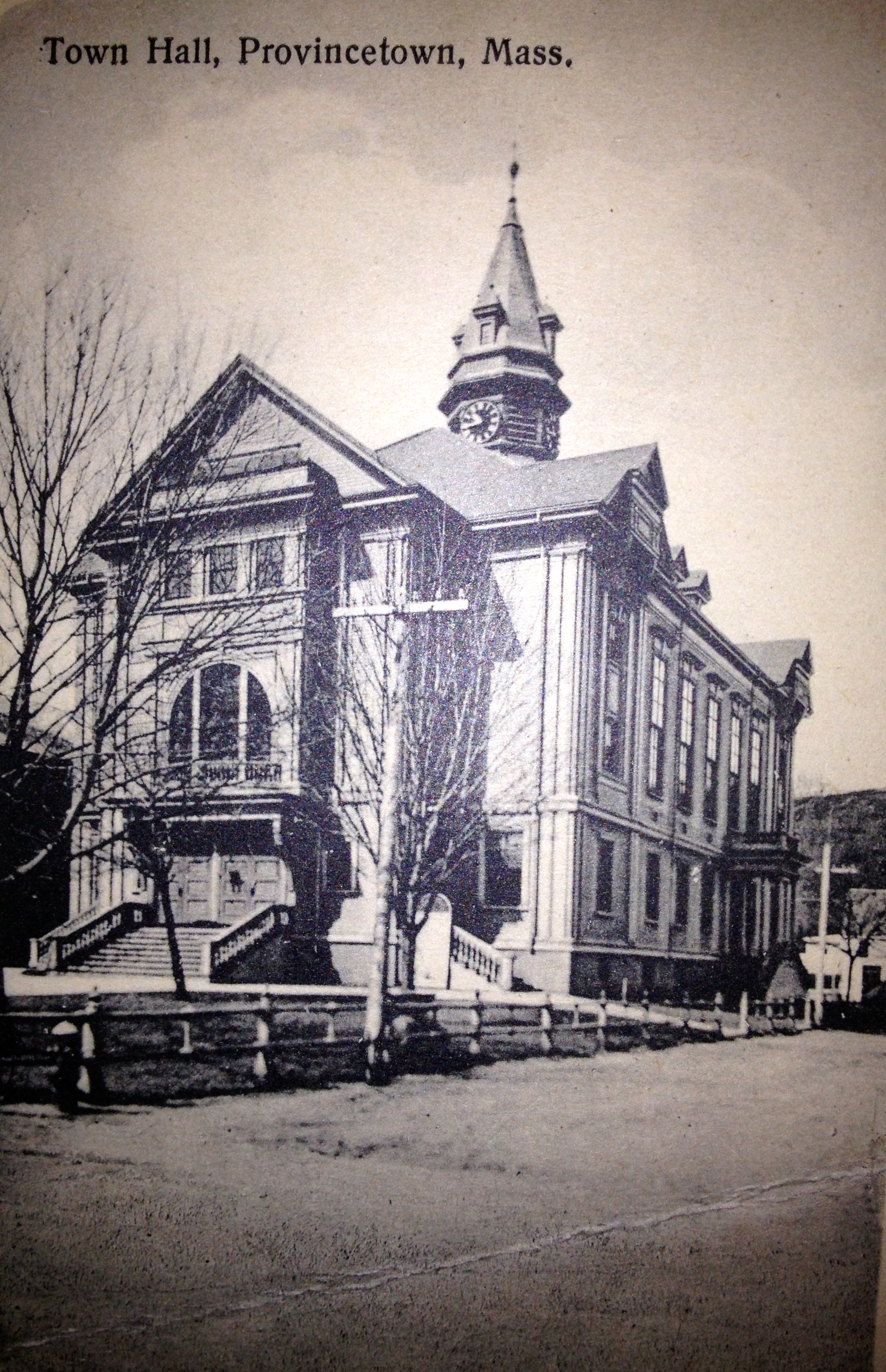
Provincetown Town Hall was completed 1886

Provincetown Town Hall was completed 1886

building, completed in 1886, was constructed to serve as a community gathering place.  Commonly in New England, town’s held their town meetings in churches until Town Halls were constructed to insure the separation of church and state. At one time or another the Provincetown Hall served many functions that included, dance hall, basketball court, and even rolller skating rink.
The Provincetown Art Association and Museum held their early art exhibitions at the Provincetown Town Hall until they were able to acquire and renovate a building of their own.  Along the way, the town amassed a significant art collection that includes two paintings by Charles Hawthorne, “The Crew of the Philomena Manta ” and “Fish Cleaners.” Hawthorne founded the Cape Cod School of Art in 1899.  Ross Moffet completed two murals in 1934 , “Gathering Beach Plums” and “Spreading Nets” funded by the Public Works of Art Project that helped many struggling artists during the Great Depression.

Visit the Provincetown Town  Hall when you visit the town and see many fine paintings hanging on the walls and in meeting rooms. And yes, the Town Hall does figure into the storyline of the new mystery novel Remaining in Provincetown. There is something going on between the newly hired Town Manager and the publisher and editor of the weekly newspaper. What could it be? Get your copy of the book just released last month and now available at local bookstores and online at Amazon.com in trade paperback and as an ebook. Like us on Facebook. Keep the conversation going.

Provincetown artists instrumental in starting Cape Cod museum

Provincetown Art Association and Museum  original building

Provincetown Art Association and Museum original building purchased in 1919

The above vintage postcard shows what the Provincetown Art Association and Museum (PAAM) looked like before the addition of the Charles Hawthorne Gallery and the subsequent addition of the Contemporary glass wing visitors see today. The veteran institution, located at 460 Commercial Street in the town’s East End,  was founded in 1914 by artists who were seeking both exhibition space and an institution that would be supportive  of the artists who had made the small town on the tip of Cape Cod their home. Oscar Gierberich, Gerrit Beneker, E. Ambrose Webster, Charles Hawthorne, and William Halsail are credited in the history books as being  the founding artists who were supported in their efforts by a number of local businesspeople at the time.The building was initially purchased and renovated in 1919.

PAAM has had a long tradition of organizing a number of exhibitions, some open to members and others juried, during the year. With the addition of more space, a larger permanent collection has been established and a variety of  programs and classes for all ages are offered trhroughout the year, with more going on during the summer season when there is a larger audience. 1914 is almost 100 years ago, and PAAM will thus be celebrating their 100th anniversary next year. Check the PAAM website to find out what is scheduled for this summer and read the new mystery novel Remaining in Provincetown by S.N. Cook  to fully appreciate that importance of how artists have contributed to the community. (Writers are artists too!) The book, just released in April is available at local bookstores, and online at Amazon.com in trade paperback or ebook. Like us on Facebook. Keep the conversation going.
Provincetown’s first Italian restaurant a gay love story

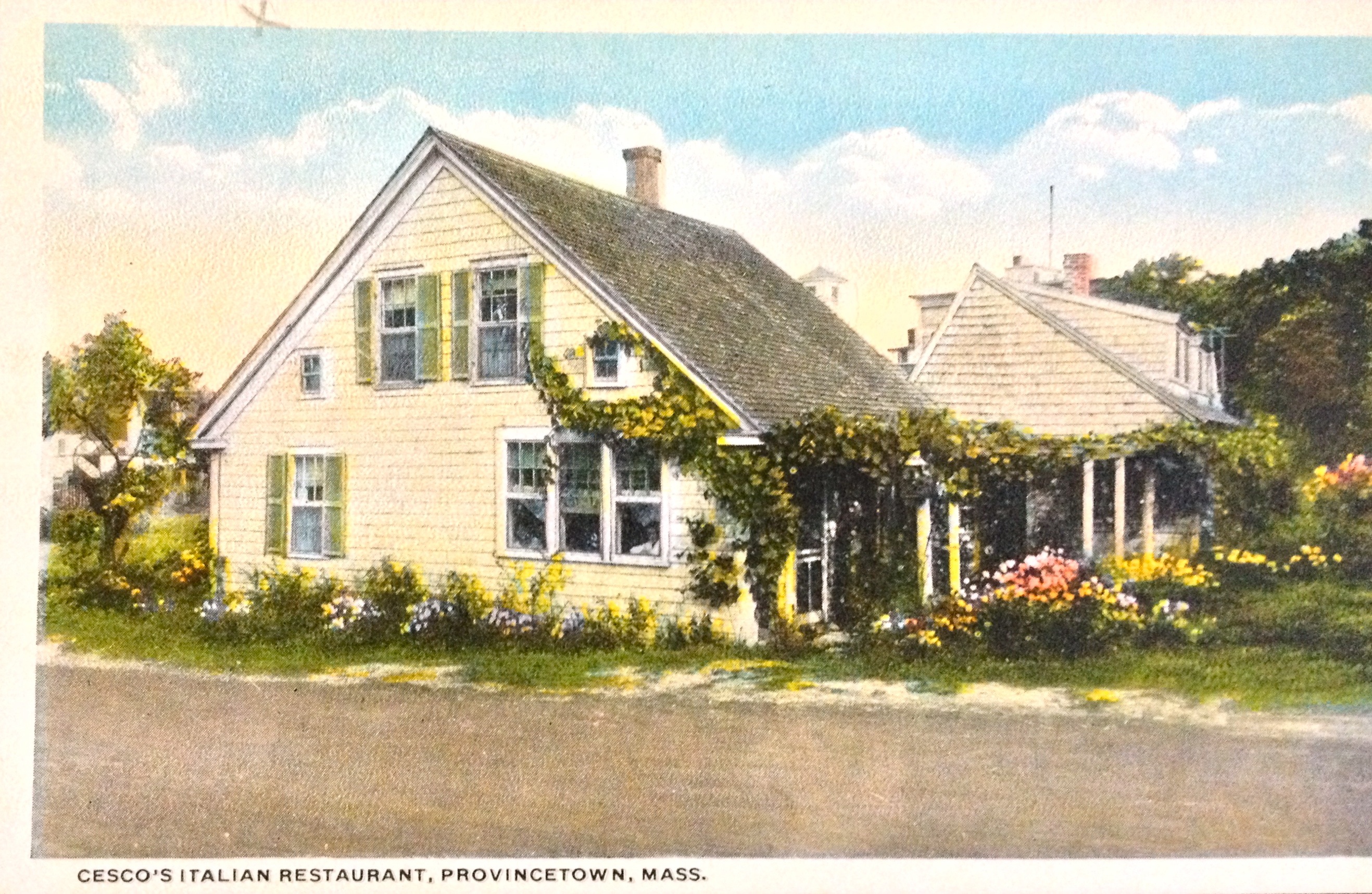
Cesco's Italian Restaurant  opened in 1916

Cesco’s Italian Restaurant
opened in 1916

Going up Bradford Street in Provincetown, just beyond the Milldred Greenfelter East End Playground on the corner of Howland Street, there used to be a very popular Italian Restaurant. Called Cesco’s, as you can see above, it had its own postcard printed, the name comes from an abbreviated version of its chef and owner Francesco “Cesco” Ronga,  known fondly as the “Spaghetti King of Cape Cod.” Francesco met and fell in love with artist Fred Marvin, the half brother of Mary Heaton Vorse,  in Naples and followed Fred to Provincetown. The two men were devoted to one another for 50 years. Located in an extension of their home, the restaurant drew clientele from all over New England and was in operation from approximately 1916 to 1934. One of the characters, Frank Chambers, in the new murder mystery novel Remaining in Provincetown, has his own restaurant, “The Indigo Inn. ” Creating new recipes for Frank is a passion, almost an obsession. Want to read more about Frank and the other characters in the new novel everyone’s talking about. Pick up a copy, now available online and a bookstores including Amazon.com. Like us on Facebook.

Provincetown takes center stage in new book

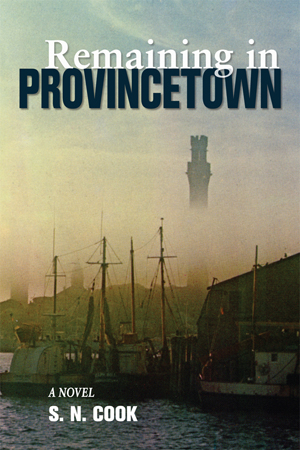
Remaining in Provincetown  By S.N.Cook.  Truro Works. 306 pages  $12.95 Trade Paperback

Remaining in Provincetown
By S.N.Cook.
Truro Works. 306 pages
$12.95 Trade Paperback

Provincetown, that enigmatic town on the tip of Cape Cod, is part of the title of the newly released murder mystery Remaining in Provincetown, and it is the core focus of a perfect mystery lite.  A story that delves into the thoughts, fears, and aspirations of a medley of characters as varied in their socio-economic and sexual orientations as the town in which they reside.

 Roz Silva, is the power hungry publisher/editor of the town’s (fictitious) weekly newspaper The Provincetown Observer. Widowed three years earlier, with two teenage daughters, she is attractive and lonely—so lonely she’s been carrying on what she thinks is a secret love affair with the new town manager, who just happens to be married. But in a small town, there are no secrets.  Certainly talented and sensitive Frank Chambers, a chef and owner of the highly regarded Indigo Inn, knows of Roz’s indiscretions and he’s not going to pass judgment on who she sleeps with when he is too busy worrying how to get his restaurant staffed for the upcoming season and whether the HIV virus he’s carrying will develop into a full blown case of AIDS.  But he and his good friend Bruno, an Innkeeper with a weakness for young boys, do know one thing, they don’t like Roz and they want to start an alternative publication—a magazine.

And then there is the murder. Sonny Carreiro, Portuguese American native son, insurance agent, and real estate developer is mysteriously shot in front of his home on a Sunday evening and there are no witnesses. But there are plenty of suspects. He’s been separated from his wife Sarah for several months. Why did she leave him? He’s not on speaking terms with his business partner Beau Costa. Where was Beau on Sunday night?  Who in Sonny’s past, may have a score to settle?

Set in the early 1990s in a version of Provincetown which contains many actual businesses and locations used in a fictional context along with newly created places and situations that may feel oddly familiar, the book brings to life a town known for its beauty and the unique diversity of its inhabitants.  Available online at Amazon.com and at local bookstores in trade paperback, 306 pages $12.95 retail or as a kindle ebook, it is destined to become a mystery classic.

Like our facebook fan page and you may be selected to receive a FREE advance cppy!

Like our facebook fan page and you may be selected to receive a FREE advance cppy!

Writing about the nature of Provincetown, Cape Cod

New state road

Once the dunes were covered with forests,” writes Mary Heaton Vorse (1874-1966) in her classic book about Provincetown entitled, Time and the Town, The early settlers cut them down and made their houses and vessels of them The old houses in Provincetown are made from timber cut here.”

Vorse first came to Provincetown in 1907 for a short vacation, ended up buying a house and staying on and off Cape Cod for the rest of her life.  She writes eloquently about many things including the sand dunes. “The dune walks. A great wind will lift them bodily.  A vast crater will appear where last year there was one. The wind piles up a mountain of sand and things may begin to grow upon its top. Then the mountain will be again leveled off. There is space here. There is an expanse that gives the illusion that the other side of the dunes is a great way off, as one feels in the West, looking over a great mesa.”  Time and the Town was published in 1942.

Provincetown has continued to attract and inspire writers.   What are the mysterious dynamics of the town? Intrigued to read more? Check out Remaining in Provincetown, the new mystery novel now available at Amazon.com in trade paperback or on kindle. Like the Remaining in Provincetown Facebook page and keep the conversation going.

Provincetown Poet of the Dunes, early Cape Cod publisher

Cape Cod  Sand Dunes

Cape Cod Sand Dunes

Provincetown’s sand dunes, now part of the Cape Cod National Seashore, have inspired many artists. One writer, closely associated with the dunes was Harry Kemp,(1883-1960) who was fondly referred to by the summer and year-round residents as “The Poet of the Dunes”. It is likely Kemp helped promote that name for himself, as one of his poetry collections he self-published in 1952 was entitled Poet of the Dunes.  Here is one of his short poems.

My Books

My books are ragged veterans

    Much leaked on in my shack;

But each of them’s bound with a rainbow

     And wears glory on its back.

Born in Youngstown, Ohio, Kemp first arrived in Provincetown in 1916.  His memoir, Tramping on LIfe: an Autobiographical Narrative (1922) was a bestseller during the 1920a and 30s. He was part of the elite circle of bohemian writers  of his era  that  included Upton SInclalir, Max Eastman, Eugene O’Neill, Edmund WIlson, John Dos Passos and many others. Setting down roots for a time in Greenwich Village, In the late 1920’s he started spending his summers in a Provincetown dune shack.  A heavy drinker and a womanizer, he was a master of self-promotion, performing stunts for the press in order to garner publicity and attention. Eventually his literary popularity waned, and when he could no longer find a publisher for his poetry, he founded the Provincetown Publishers and had his books printed by the Advocate Press which he sold for two dollars and autographed with a seagull feather along with an envelope of sand “gathered from the first landing place of The Pilgrims”.  Now that is marketing for you!

While the purchase of the new mystery novel Remaining in Provincetown does not include sand gathered from the dunes, it is the hope of the writer that when you read the book you will feel as if you’ve been walking on the streets of Provincetown, which usually results in a little sand in your shoes. Now available in trade paperback or on kindle at Amazon.com , Like us on Facebook and keep the conversation going.

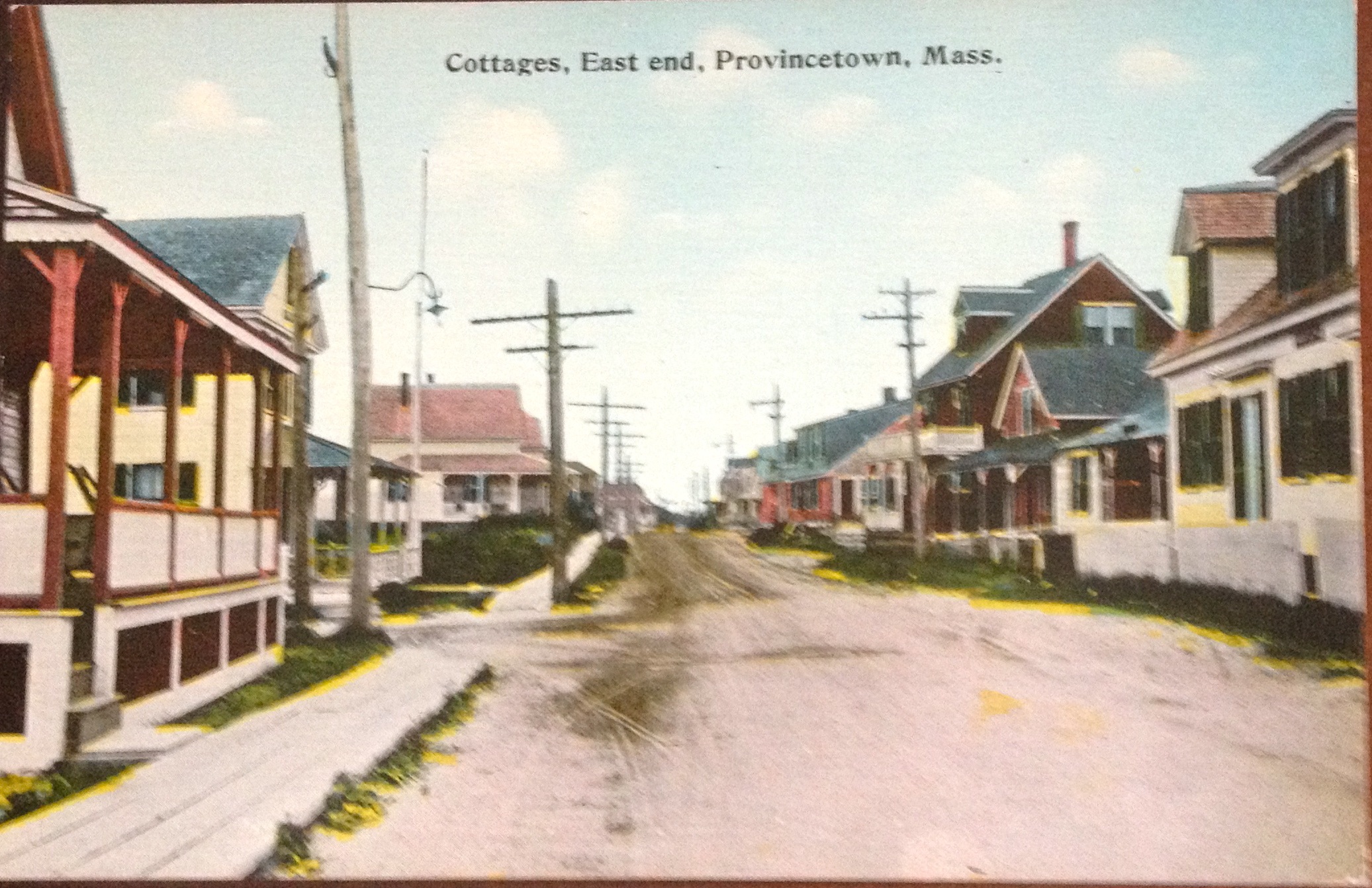
Provincetown Cape Cod East End Vintage Postcard

East End Cottages on Commercial Street in Provincetown, Massachusetts

East End Cottages on Commercial Street in Provincetown, Massachusetts

Provincetown’s Commercial Street is unpaved and the sidewalks are made of wood, but the houses look very much the same as they do today. in this antique postcard printed 100 years ago.

Every town has its East End and West End and Provincetown, with its  long and narrow in configuration, is no different. The East End on the waterside has traditionally been populated with seasonal summer residents.  Famous artists like Robert Motherwell and  Helen Frankenthaler constructed a grand residence on the  East End waterfront, but others of more modest means stayed in historic Cape Cod cottages.  Empty lots are few and far between, when waterfront land is so valuable, but take a walk at the start of town, at the point where Commercial Street and Bradford Street divide, and see many beautiful old homes, primarily built in the beginning of the 20th century. What kinds of houses do the characters in Remaining in Provincetown live in? Real estate speculation has played a major role in Cape Cod’s economic development and where there is money to be made there is often graft and corruption. Could that kind of corruption lead to murder? You’ll have to read the  book to find out. Now available at Amazon in trade paperback or on kindle as an ebook. Like us on Facebook and be entered to win a FREE book and thank you for all the positive feedback

Like our facebook fan page and you may be selected to receive a FREE advance cppy!

Like our facebook fan page and you may be selected to receive a FREE advance cppy!

Provincetown art schools and artists

An Art Class at Work

An Art Class at Work

Artists clustered together on a dock painting a scene of  a Provincetown Wharf in summer. How could they work, all crowded together? The clear north light on the tip of Cape Cod attracted artists from all over the world. Many of these artists were also  teachers. Thus more aspiring artists were drawn to Cape Cod to study drawing and painting and dozens stayed and made Cape Cod their permanent home. Thus Provincetown become known as an art colony. Today the town is home to the Fine Arts Work Center as well, where students of writing, sculpture, painting, and drawing work year-round.

One of the most popular art teachers was Charles Hawthorne (1872-1930) and many of his fine oil paintings are in the collection of the Provincetown Art Association and Museum.  Hawthorne founded the Cape Cod School of Art. Be sure to visit the Provincetown Art Association and Museum if you are a new visitor to the town to see his masterful portraits, still lifes, and landscapes.    Many artists had art schools including Hans Hoffman,  Seong Moy, who taught printmaking, and Henry Henche.  Hawthorne taught his students to focus on capturing the contrasts in colors and light and to work quickly with confidence.  These are still good life lessons that could be applied to everything including writing. Read any good books lately? The new novel, coming this summer Remaining in Provincetown, is almost on its way to the printer.