Provincetown Cape Cod, where did the name come from?

West

How did Provincetown, Massacusetts get its name?
According to Agnes Edwards book, “Cape Cod New and Old”  published in 1918, after the union of the Plymouth and Massachusetts Bay colonies in 1692 Provincetown, then a part of Truro. became a fishing hamlet.  In 1741 it was set off as a precinct of the Province of the Massachusetts Bay Colony  Initially the lands retained, were owned by the colony.  Province of the Massachusetts Colony became Provincetown. Sounds logical to me. What may not be logical to someone who doesn’t live in Provincetown, why sewage and water usage are such hot button issues. When it comes to real estate use and development, these things are very much on the minds of the characters in the new murder mystery novel, Remaining in Provincetown by S.N.Cook. Now available online and in bookstores, including Amazon.com. Like us on Facebook.


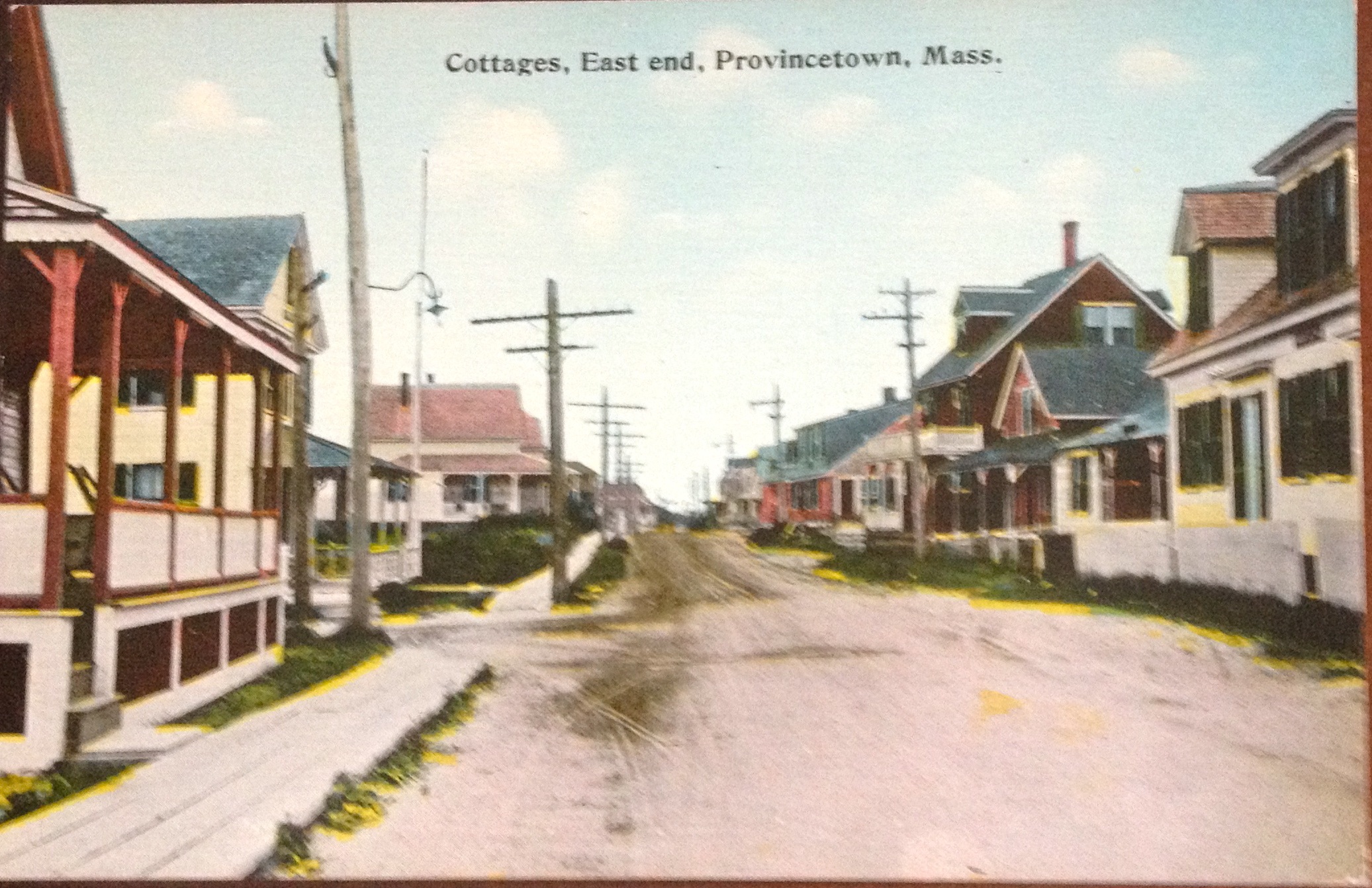
Provincetown Cape Cod East End Vintage Postcard

East End Cottages on Commercial Street in Provincetown, Massachusetts

East End Cottages on Commercial Street in Provincetown, Massachusetts

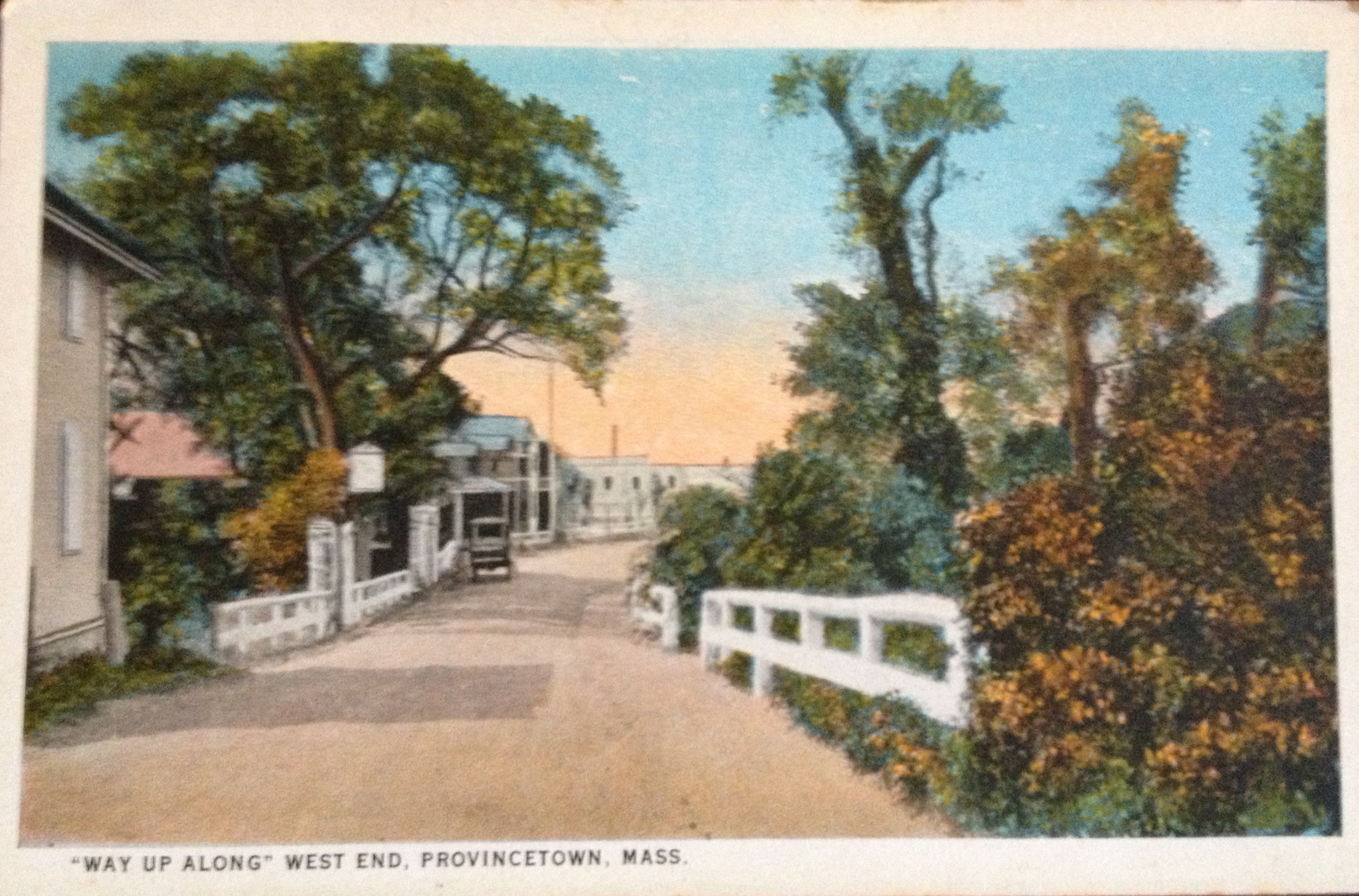
Provincetown’s Commercial Street is unpaved and the sidewalks are made of wood, but the houses look very much the same as they do today. in this antique postcard printed 100 years ago.

Every town has its East End and West End and Provincetown, with its  long and narrow in configuration, is no different. The East End on the waterside has traditionally been populated with seasonal summer residents.  Famous artists like Robert Motherwell and  Helen Frankenthaler constructed a grand residence on the  East End waterfront, but others of more modest means stayed in historic Cape Cod cottages.  Empty lots are few and far between, when waterfront land is so valuable, but take a walk at the start of town, at the point where Commercial Street and Bradford Street divide, and see many beautiful old homes, primarily built in the beginning of the 20th century. What kinds of houses do the characters in Remaining in Provincetown live in? Real estate speculation has played a major role in Cape Cod’s economic development and where there is money to be made there is often graft and corruption. Could that kind of corruption lead to murder? You’ll have to read the  book to find out. Now available at Amazon in trade paperback or on kindle as an ebook. Like us on Facebook and be entered to win a FREE book and thank you for all the positive feedback

Like our facebook fan page and you may be selected to receive a FREE advance cppy!

Like our facebook fan page and you may be selected to receive a FREE advance cppy!

Provincetown Gay Party Central, Crown & Anchor history

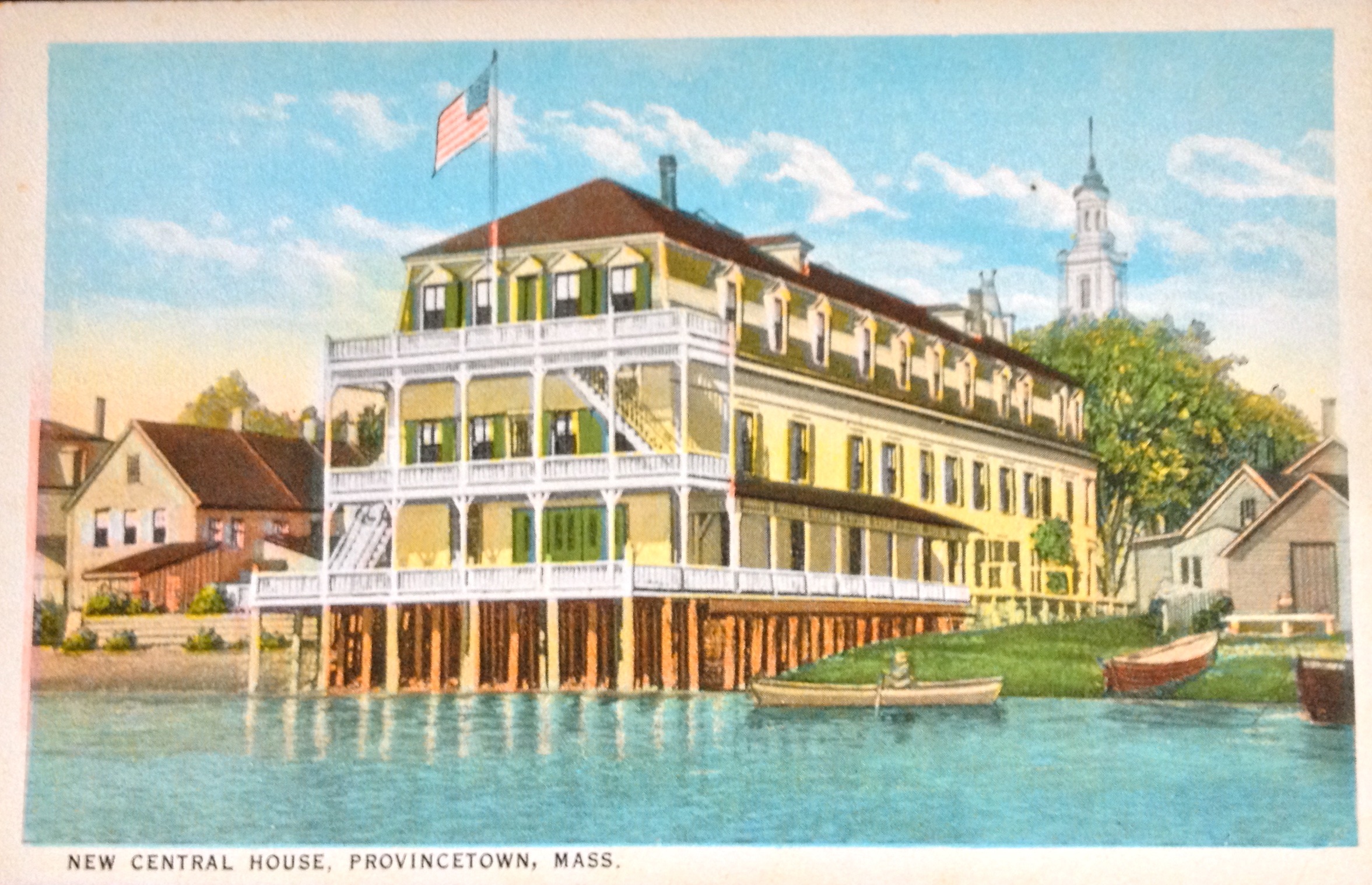
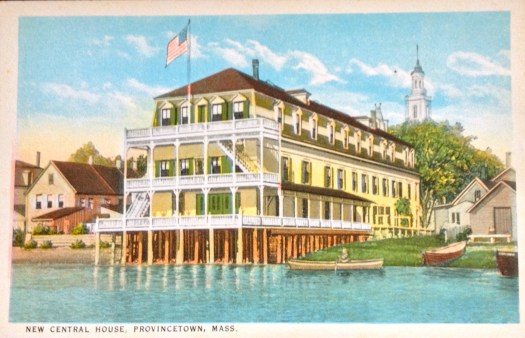
Now called The Crown & Anchor, the New Central Hotel was a popular Provincetown Inn in the 19th century

Now called The Crown & Anchor, the New Central House was a popular Provincetown Inn in the 19th century and  today is a  “happening place”.

The handsome waterfront Provincetown Inn located in the center of Provincetown on Commercial Street has gone by many names. In the antique postcard shown above it is called “New Central House”. Said to have been built in 1836 as the Central Hotel by 1868 it was considered the largest hotel at the tip of Cape Cod, with 75 guest rooms.  A private beach with cabanas and long porches with rocking chairs for guests to sit out and look at the water, made this Inn a successful business that kept expanding through its many incarnations. Its been called: Ocean House, Central House, New Central House, Towne House, the Sea Horse Inn. and the Crown & Anchor as it is known today.  At the end of the 19th century it catered to prosperous guests by providing a  billiard hall, smoking rooms, gentleman’s parlor, and ladies’ reading room for a mixed clientele of families and primarily straight travelers. But as the town evolved into a mecca for gay travelers, it gradually evolved into a thriving complex of bars and restaurants that cater to gay and lesbian patrons of varying tastes.   Although the Crown & Anchor was burned to the ground in 1998 when adjacent Whaler’s Wharf burned as well, it was faithfully rebuilt in its previous architectural style. The leather bar is known as The Vault and the restaurant Central House at the Crown pays tribute to its earlier years by using the earlier name of the hotel. while  the Paramount Nightclub, Piano Bar, Wave Video Bar and more make certain there is always a party going on somewhere.   Places to have a good time are an important aspect of life in Provincetown, whether you are a tourist or a resident, and in the new mystery novel Remaining in Provincetown a popular hang-out is the fictitious “Cowboy Club”. Want to learn more about what goes on there? You’ll have to read the book now available at Amazon.com and as an ebook on Kindle. Like our Facebook page and you may win a FREE copy.

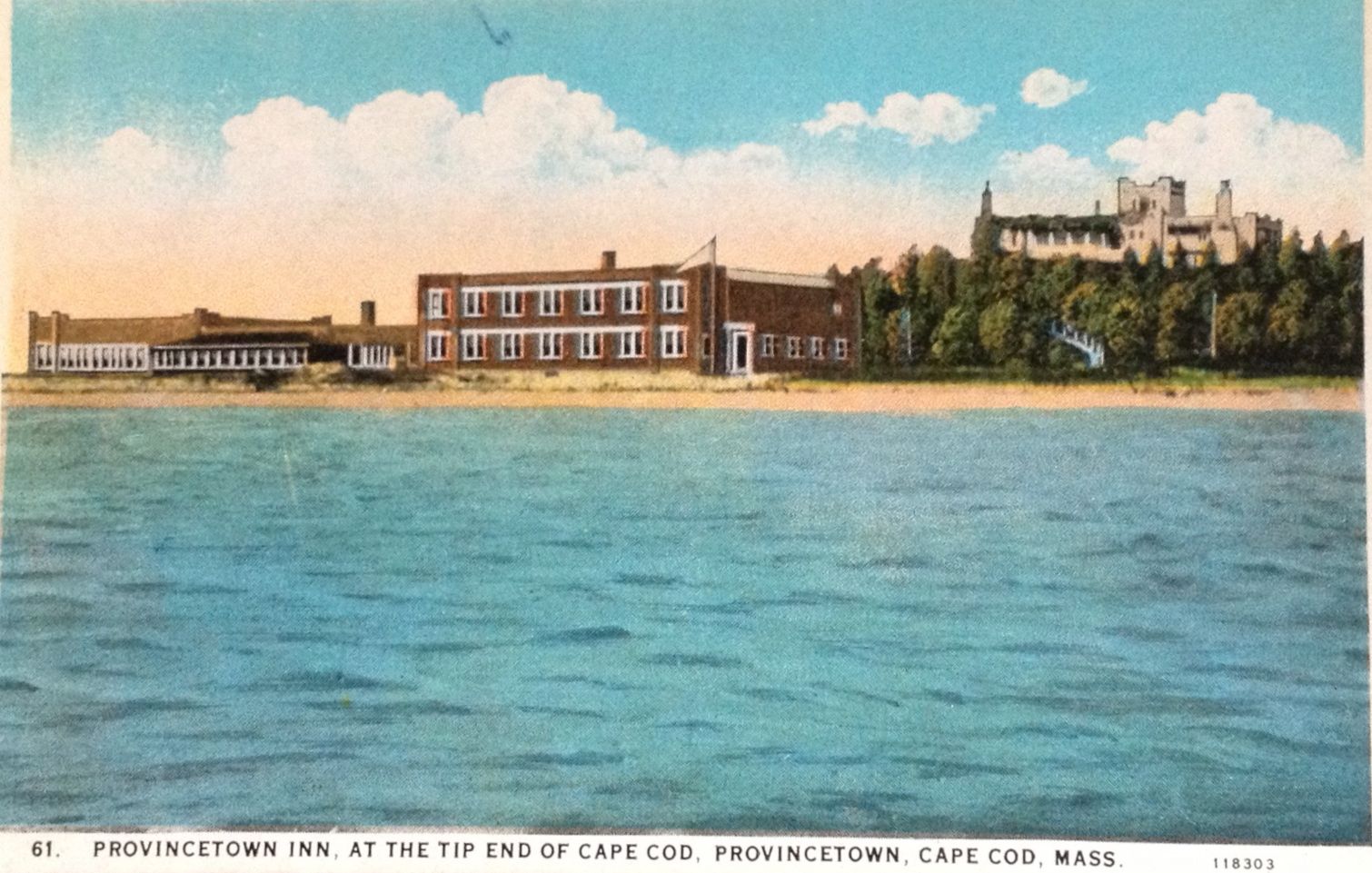
The originial Provincetown Inn on the tipe of Cape Cod

Provincetown Inn on Cape Cod

Provincetown Inn on Cape Cod

Looking out across Cape Cod Bay, the Provincetown Inn was built back in 1925 and initially had 28 guest rooms. Shown in this vintage postcard, it is located at the very end of town near the Breakwater and today looks quite different than it did  at the start of the 20th century. Purchased by Chester Peck in 1935, in the 1950s a beach was “created” using sand from the nearby dune and four additional acres (according to the Inn’s website) were created. Hmm that is not something that would be allowed today, with concerns about retaining existing coastline and drainage, but the result was a spacious resort with night club, three dining rooms, gift shop, barber and beauty shops and more. Thirty-two more rooms were also added. In 1972 the inn was sold to investors and in 1977 was sold to the Evans family.  During the mid 1970s  Marvin Hagler started coming to Provinetown to  train at the Provincetown Inn and jogged across the sand dunes to get into shape.  He set up his very own ring by the indoor swimming pool. Hagler was world middleweight boxing champion from 1980-1987.

While the indoor swimming pool is no more as the Inn has continued to be refurbished through the years one thing that does remain are the hand-painted murals that were painted by Don Aikens that were inspired by old photographs, postcards, and paintings showing how the town looked in the late 19th century.  It’s a favorite spot for the Carreiro family children to visit (the Carreiro’s being a fictitious family in the novel Remaining in Provincetown).  They’ve got a lot on their minds with their father being murdered. Will they catch who did it? Stay tuned for more information and more vintage pictures.

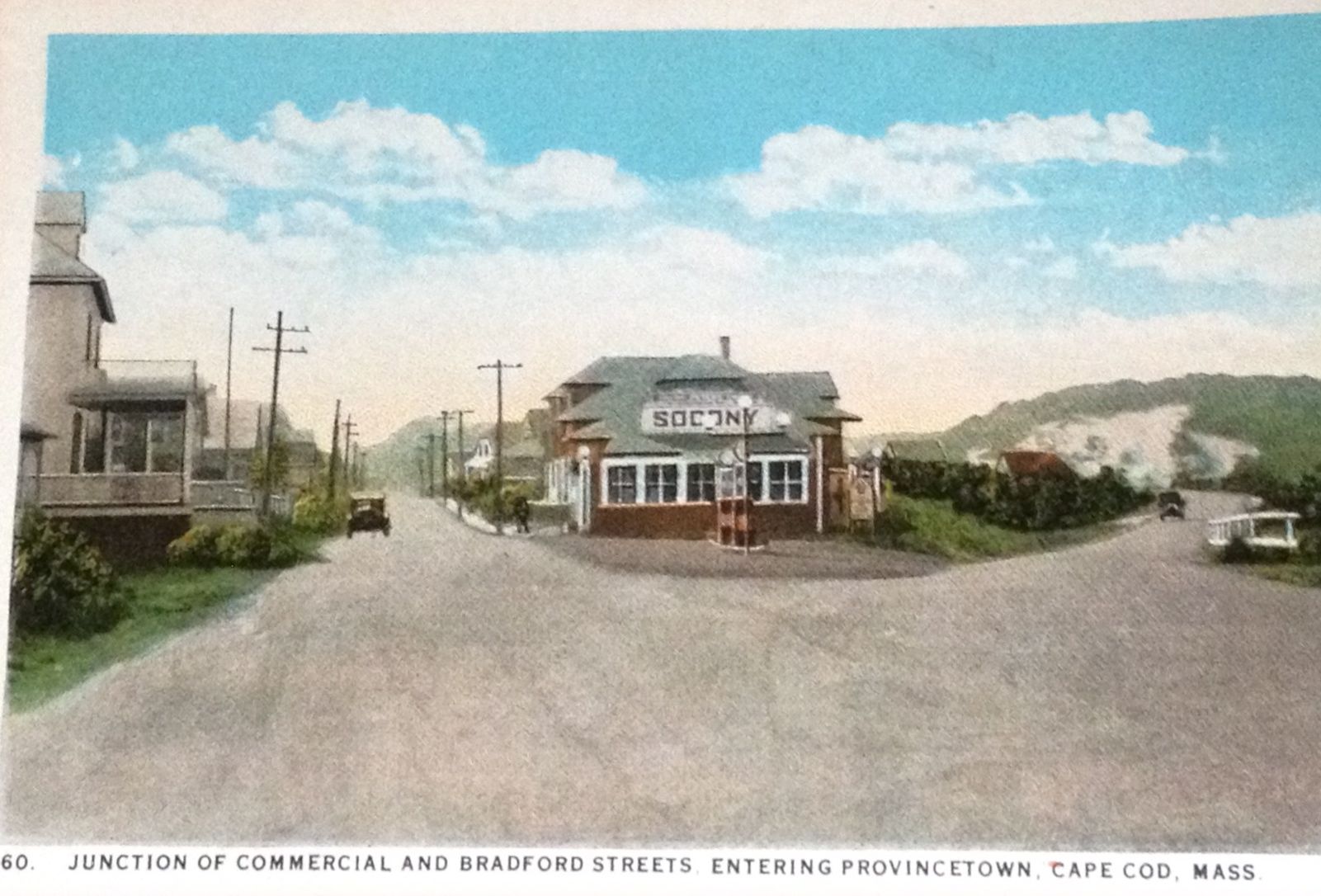
Sand dunes entering Provincetown Cape Cod a memory

Junction of Commercial and Bradford Streets entering Provincetown, Cape Cod, Massachusetts

Junction of Commercial and Bradford Streets entering Provincetown, Cape Cod, Massachusetts

Sand dunes greet you as you enter the east end of Provincetown in this antique postcard.  The houses on Commercial Street don’t look much different than they did 100 years ago in this unique town on the tip of Cape Cod. On Bradford Street, the town’s major two-way thoroughfare, however, it looks quite different. With just two main streets and only a one route out of town, by car, how do you commit a murder and make a clean getaway? In 1990, the approximate year  the new novel Remaining in Provincetown takes place, much of the sand dunes and woods had already made way for apartments, condominium complexes, and businesses.

Provincetown an idyllic setting for a murder

Provincetown Street Scenecirca 1880

Provincetown, Massachusetts  Street Scene
circa 1880

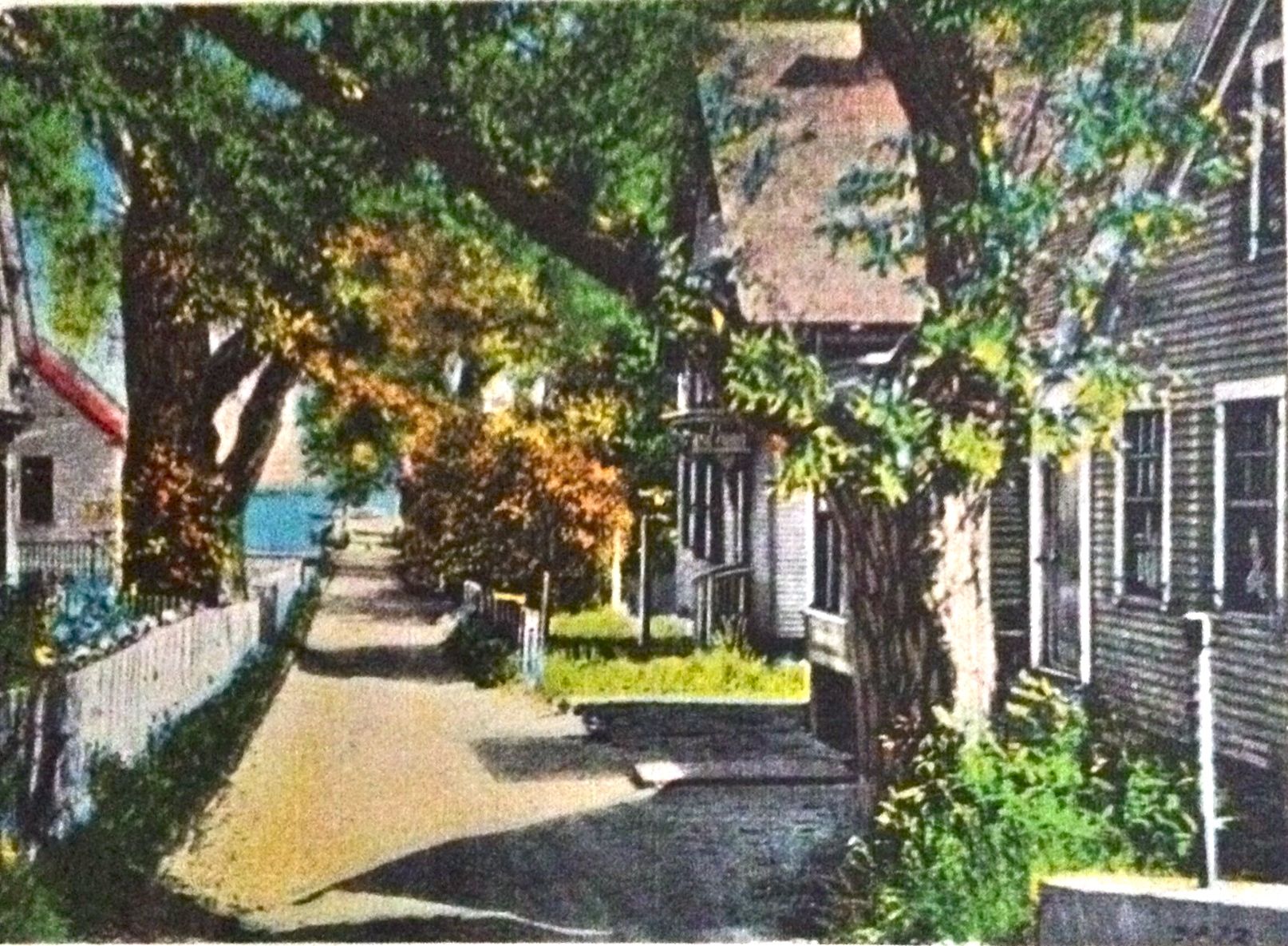
In the early days of Provincetown, the streets were narrow and unpaved because most people got around on foot or by boat.  Today walking and bicycling are still the most efficient ways of transportation, particularly during the summer season when everything is so crowded,
So where was this picture taken (a colored lithographic print)? It looks like the west end of town, near the very tip of Cape Cod, but the bay on the left hand corner is so close to the edge… One of the nice things about the town is seeing the sea as you walk down Commercial Street. It’s a small town, with only two main streets running parallel to one another, making it a challenge for someone to commit a crime and make an easy getaway. But someone does commit a murder and manages to initially escape detection. Want to know more? You’ll  just have to read: Remaining in Provincetown. Stay tuned to this blog for more information.