“If you’re fond of sand dunes and salty air,” goes the 1957 song written by Alan Jeffrey, Claire Rothrock and Milton Yakus, “Quaint little villages here and there, you’re sure to fall in love with Old Cape Cod.” The hit tune sung by Patti Page captures the spirit of the above antique postcard published 20 some years earlier. “If you like the taste of a lobster stew served by a window with an ocean view, you’re sure to fall in love with Old Cape Cod,” the song goes on to say although they don’t mention Provincetown’s Pilgrim Monument, fishing excursions, swimming, and little neck clams as illustrated in the postcard, the reference to “Old Cape Cod” alludes to the preponderance of historic buildings and antique shops even in the 1950s. There are still plenty of antique shops, flea markets, and yard sales on Cape Cod today. And there were plenty of antiques bought and sold during the 1990s, when the soon-to-be released mystery novel Remaining in Provincetown takes place. One of the book’s characters Bruno, has furnished his entire Bed and Breakfast with antiques and another character, Sonny Carreiro, collects antique postcards. Visit our facebook page to see the novel’s front cover . Click the “like” button and you’ll automatically be entered to possibly win a FREE copy. Now available at Amazon.com.
Tag Archives: Outer Cape
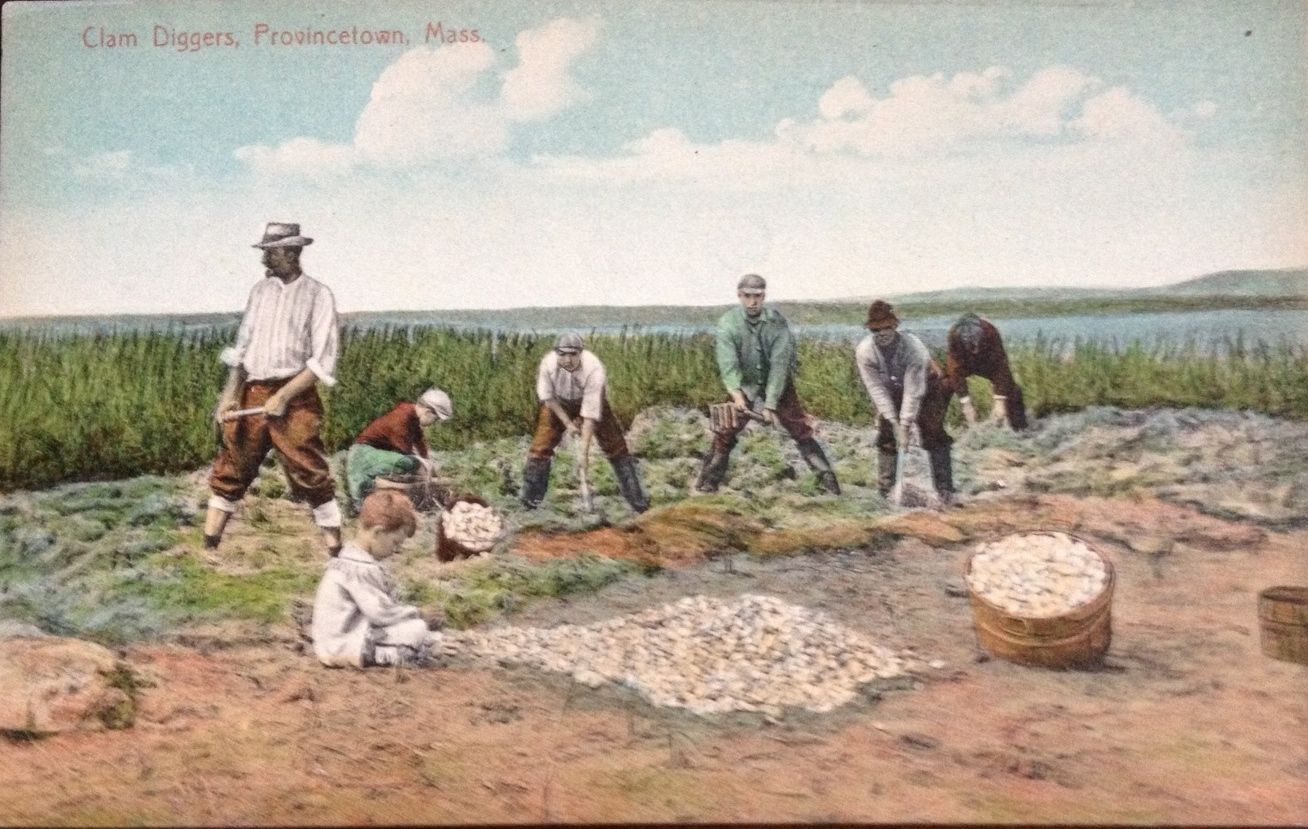
Digging for clams in Provincetown, Cape Cod
This rare antique postcard shows clam diggers using rakes to gather bushels of clams in Provincetown, Massachusetts on the tip of Cape Cod. Clam chowder, stuffed quahogs, and fried clams are some of the favorites visitors enjoy when they dine, as do the characters in the novel Remaining in Provincetown by S.N. Cook, at Sally’s Chowder Bowl (a fictitious place that may bring back memories). Quahogs, also known as cherry stones and little necks, along with steamers (soft-shell clams), sea clams, and razor clams were once exceedingly plentiful in Provincetown Harbor. They were an important source of food for the Indians and the purple portion of the quahog shells were used as a trading exchange referred to as wampum. The early American colonists took advantage of this easy to access food source and developed a taste for shellfish stews and chowders. During the Great Depression in the 1930s, shellfish provided sustenance when jobs were few and families were struggling to put food on the table. The result was a depleted shellfish population, overfished almost to extinction. The one exception is mussels, which live on rocks and benefitted from the construction of breakwaters. Today efforts are being made, with some success, to restore the shellfish population because their presence helps to filter the Bay’s water and maintain an ecological balance. Take note that the gathering of clams and oysters requires a license and is under strict regulation. There are, however, plenty of opportunities to go fishing. There are a number of boats that take off from Provincetown harbor. To see another vintage postcard, just posted, visit our new face book page and like it to be entered in the drawing to win a FREE copy of the new mystery coming out later this month. Thank you.
Provincetown Bathing Beach a Tourist Attraction
It was a time of discretion , when men and women covered themselves for the sake of modesty when bathing at a public beach. Brown’s Bathing Beach in Provincetown, was such a place where there were booths for changing into the appropriate bathing suits. Automobiles and trains enabled tourists to travel to scenic beach side resorts such as Provincetown, located on the tip of Cape Cod. It was a popular destination. With its narrow streets and houses built along the waterside, many guest houses and hotels established thriving businesses. Shops and restaurants geared to the tourist trade soon followed, creating a seasonal economy. Nowadays Provincetown is still a popular summer destination with a seasonal economy. It’s the winter economy that can be challenging for those who live on the Outer Cape year-round, Curious to know what it’s like in early spring before the tourist season? Read the soon-to-be-released novel Remaining in Provincetown.
Shipwrecks in Provincetown
Stormy seas like the seas we’ve been experiencing on the Outer Cape the past few days mean danger for ships. Particularly in the past before radar and satellite tracking technology many ships crashed on the sand bars and drifted to shore.
This old post card shows a “Rum Runner” stranded on Race Point Beach at the tip of Cape Cod, now part of the Provincetown National Seashore, near the Coast Guard Station. Stormy weather in the soon to be released novel, Remaining in Provincetown?
You’ll have to read it to find out.