Town Criers were once a New England tradition. Walking the streets they verbally spread the news and in tourist communities such as Provincetown on Cape Cod, they were often employed by the Chamber of Commerce to promote commerce.
Usually the image of a New England Town Crier is a plump man dressed in Pilgrim style garb. The Town Crier in the black and white postcard printed in Germany, shown above, carried the bell and the broadside, but is certainly not dressed like a pilgrim. Through Provincetown’s history there have been many different Town Criers, and they are documented in antique post cards. The last Town Crier for Provincetown, Gene Poyant, walked the streets in the early 1980’s and died in 1998. A Town Crier figures into the plot of the novel Remaining in Provincetown in more than one way, just as there are a variety of Town Criers. We’ll be sharing some more pictures of Town Criers from the past in the weeks to come.
Tag Archives: provincetown massachusetts
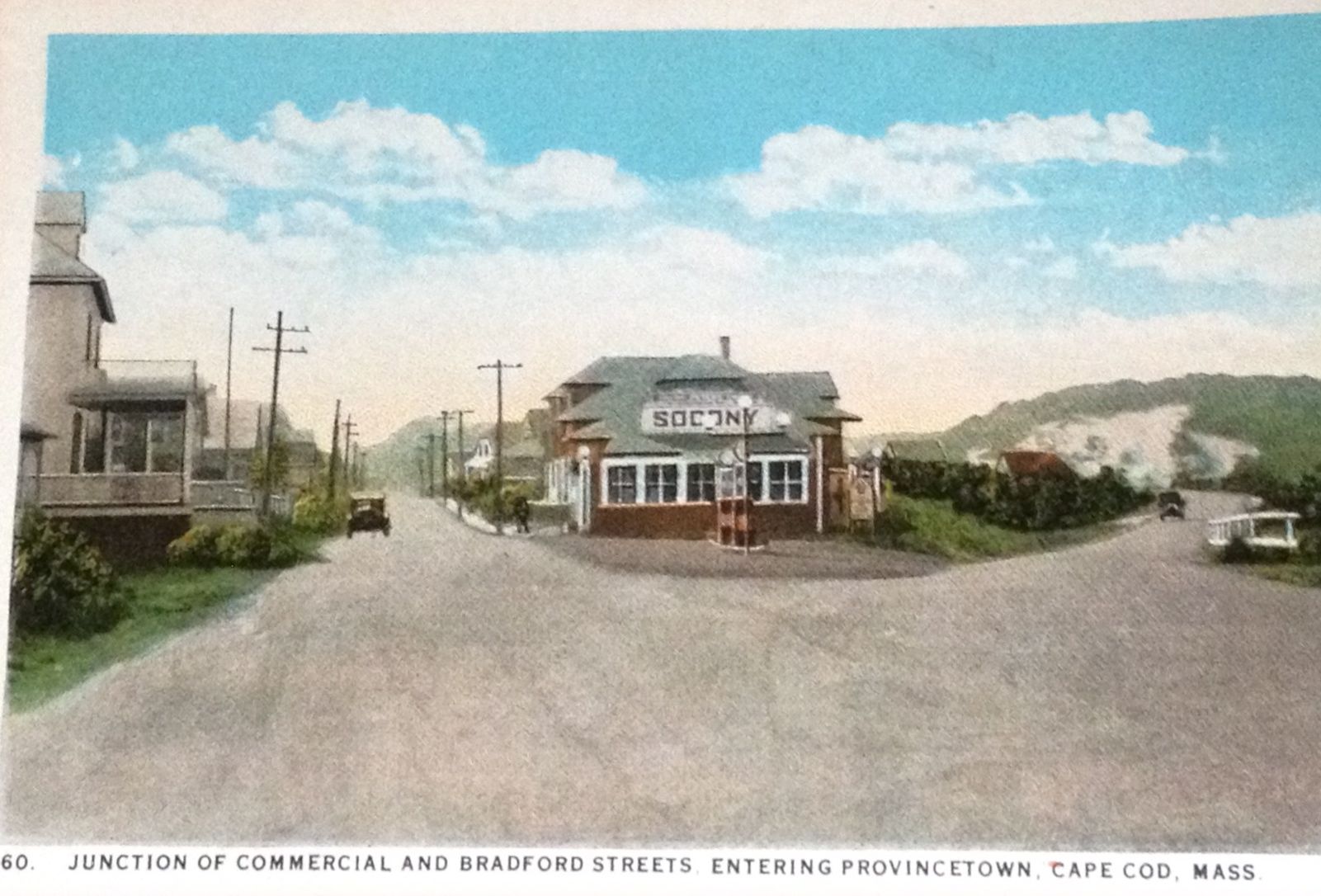
Sand dunes entering Provincetown Cape Cod a memory
Sand dunes greet you as you enter the east end of Provincetown in this antique postcard. The houses on Commercial Street don’t look much different than they did 100 years ago in this unique town on the tip of Cape Cod. On Bradford Street, the town’s major two-way thoroughfare, however, it looks quite different. With just two main streets and only a one route out of town, by car, how do you commit a murder and make a clean getaway? In 1990, the approximate year the new novel Remaining in Provincetown takes place, much of the sand dunes and woods had already made way for apartments, condominium complexes, and businesses.
Provincetown walk across the water
The breakwater that spans across from the end of Cape Cod’s hook across the Bay to the little spit of land known as Long Point has been in place as long as anyone can remember. But there was a time when it was referred to as “The New Government Breakwater” as it is on this postcard. Walk across the breakwater and you’ll arrive at Long Point and the Long Point Lighthouse. Built by the Arm Corp of Engineers and completed in 1911, the intent of the breakwater was to secure the safety of the harbor and prevent the erosion of sand. Take a walk on the breakwater and arrive at the Long Point Lighthouse or practice your skills climbing the rocks. It used to be a great place to gather mussels to steam for dinner, along with hermit crabs and starfish. Still the sand around the breakwater moves and splits as the decades pass. Life changes . People die. Others leave and new residents arrive and decide to remain in Provincetown. Thus the name of the novel Remaining in Provincetown, a mystery not only about a murder but about the town itself.
Is it New Beach or Nude Beach in Provincetown on Cape Cod?
Written on the back of this antique postcard it says Hell Town, New Beach. Yes, long ago there was a fishing settlement between Woods End and Race Point called “Hell Town”. It’s a pretty ironic name considering that Provincetown, located at the very end of Cape Cod, through the years became known as a wild party town where just about anything goes. As for the term New Beach, it has not been used for decades to my knowledge. When I google the term “New Beach” what I get is “Nude Beach”. Well yes, there has always been an unofficial and then official Nude Beach over at Herring Cove Beach. If there is a secluded place, naturists will remove their clothes, it’s just natural. Just like it’s natural for folks who live in a beautiful place like Provincetown will want to enjoy spending as much time on the beach, listening to the sounds of the waves crashing on the shore and the sounds of the seagulls calling to one another flying above and looking for some tasty dinner. Partaking in tasty food is something many of the characters in Remaining in Provincetown like to do, particularly Bruno the owner of a popular Bed and Breakfast. Want to learn more? Keep posted to learn more about the soon-to-be released novel everyone’s talking about.
Provincetown an idyllic setting for a murder
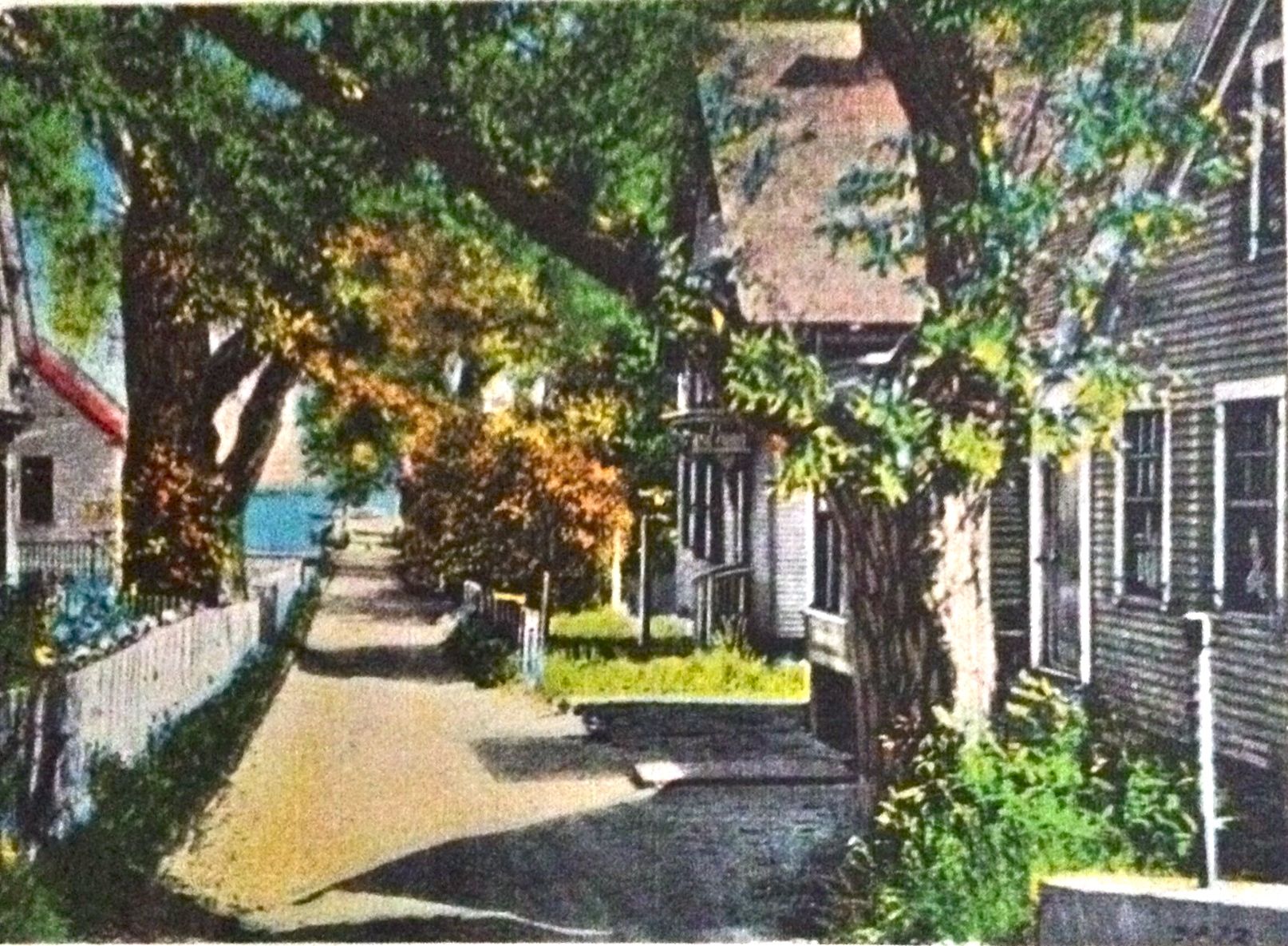
In the early days of Provincetown, the streets were narrow and unpaved because most people got around on foot or by boat. Today walking and bicycling are still the most efficient ways of transportation, particularly during the summer season when everything is so crowded,
So where was this picture taken (a colored lithographic print)? It looks like the west end of town, near the very tip of Cape Cod, but the bay on the left hand corner is so close to the edge… One of the nice things about the town is seeing the sea as you walk down Commercial Street. It’s a small town, with only two main streets running parallel to one another, making it a challenge for someone to commit a crime and make an easy getaway. But someone does commit a murder and manages to initially escape detection. Want to know more? You’ll just have to read: Remaining in Provincetown. Stay tuned to this blog for more information.
Provincetown souvenirs are collectibles and memories
Provincetown in summer is a bustling place. The narrow streets are crowded with tourists. Even 100 years ago when the fishing industry provided year-round income for families, the tourist trade was important. Souvenir shops that sold postcards, like this one shown above, as well as collectible souvenir spoons, plates, paper weights, and glasses provided seasonal income for local residents. Servicemen in the Coast Guard and Navy would come into town to see the sights that included fine restaurants, bars, and entertainment. The T-shirt shops came later! Town Hall in this antique postcard is partially obscured by the thick foliage of the trees, but it looks very much the same today as it did back then. In 1990 when the novel Remaining in Provincetown takes place, Town Hall was painted white and one of the characters has their office inside. Which one? You’ll have to read the book to find out.