Truro Cape Cod Pamet River

Early 20th century Truro Postcard showing Pamet River.

Early 20th century Truro Postcard showing Pamet River.

If you live in Provincetown, you spend time in Truro–the adjacent township which is more rural in its setting.  Or maybe you work  in Provincetown and live in Truro. One of the beautiful spots in the town is the Pamet River. Over four miles in length, the river is named for the Paomet Indian tribe who lived on Cape Cod. It is probably their corn the pilgrims stole from Corn Hill after  they initially landed in Provincetown Harbor and then went further down the Bay in pursuit of food.
WIth the changes that winter storms have wrought on the coastlines during the past few years, its interesting to see this old postcard that was mailed in 1927 from Truro to Carver Road.   The writer was evidently staying in Truro but talks about going into Provincetown to enjoy parades and celebrations.  So even back in the 1920s, Provincetown was the place for parties.  Want to learn more about Provincetown read Remaining in Provincetown by S.N. Cook, available online and in local bookstores. Like us on Facebook and keep the conversation going. Pick up a copy of this week’s Provincetown Magazine and read a brief excerpt from the book.

Champion Provincetown Clam Digger

"Carl" Champion Provincetown Clamdigger

“Carl” Champion Provincetown Clamdigger

Quahogs and steamers were once in plentiful supply in Provincetown harbor.  The above antique postcard is a  19th century color lithographic print published in Germany by F. H. Dearborn, Provincetown Massachussets. The card shows a champion clam digger, “Carl”, wheeling his haul down Commercial Street standing in front of what is now Marine Specialties.
Clams were often used for fish bait. Nowadays  Cape Cod clams are enjoyed fried, stuffed, steamed, and in chowders. Because the clam population has become depleted due to overfishing, clam digging is closely monitored and restricted according to season.  But during the Great Depression, shellfish was an important source of protein for Cape Codders.
Everyone loves a creamy hot bowl of Clam Chowder on a cold damp day. A number of Provincetown restaurants serve delicious homemade chowder and one restaurant “Sally’s Chowder Bowl,”–a fictional location,  is a favorite dining spot of several of the characters in Remaining in Provincetown, the mystery novel by S.N. Cook.  Who likes to eat there and why? Read the book everyone’s talking about available online and at local bookstores. Like us on Facebook and keep the conversation going.

Provincetown Cape Cod Seining Fish

Seining FIsh Provincetown Massachusetts

Seining FIsh Provincetown Massachusetts

This antique Provincetown postcard is entitled “Seining Fish” and was published by the Provincetown Advocate in the late 19th century. The American Indians used weirs, stationary nets to capture fish and fishing weirs were still a common sight in parts of Cape Cod  Bay in the 20th century. But another fishing technique, popular in the 19th century as depicted in this antique Provincetown postcard, was seine fishing. Seine fishing uses nets that are hung vertically in the water, set in place to catch a school of fish and then removed. The bottom edge of the net is held down by weights while the top of the net edge is held aloft by floats.  Purse seine fishing uses rings on the edges of the nets to gather the net together like a purse. That’s where it gets its name—purse seine.

Names can be very descriptive. What is the significance of the name of the novel, Remaining in Provincetown by S.N. Cook? Who is remaining? Is it the murder victim or is it the characters who have chosen the town as their home and have chosen to stay? Want to learn more? Read the murder mystery available at your local bookstore or online as a trade paperback or ebook. Like us on Facebook

At bookstores that include the Provincetown Bookshop.

At bookstores that include the Provincetown Bookshop.

Like our facebook fan page and you may be selected to receive a FREE advance cppy!

Like our facebook fan page and you may be selected to receive a FREE advance cppy!

and keep the conversation going.

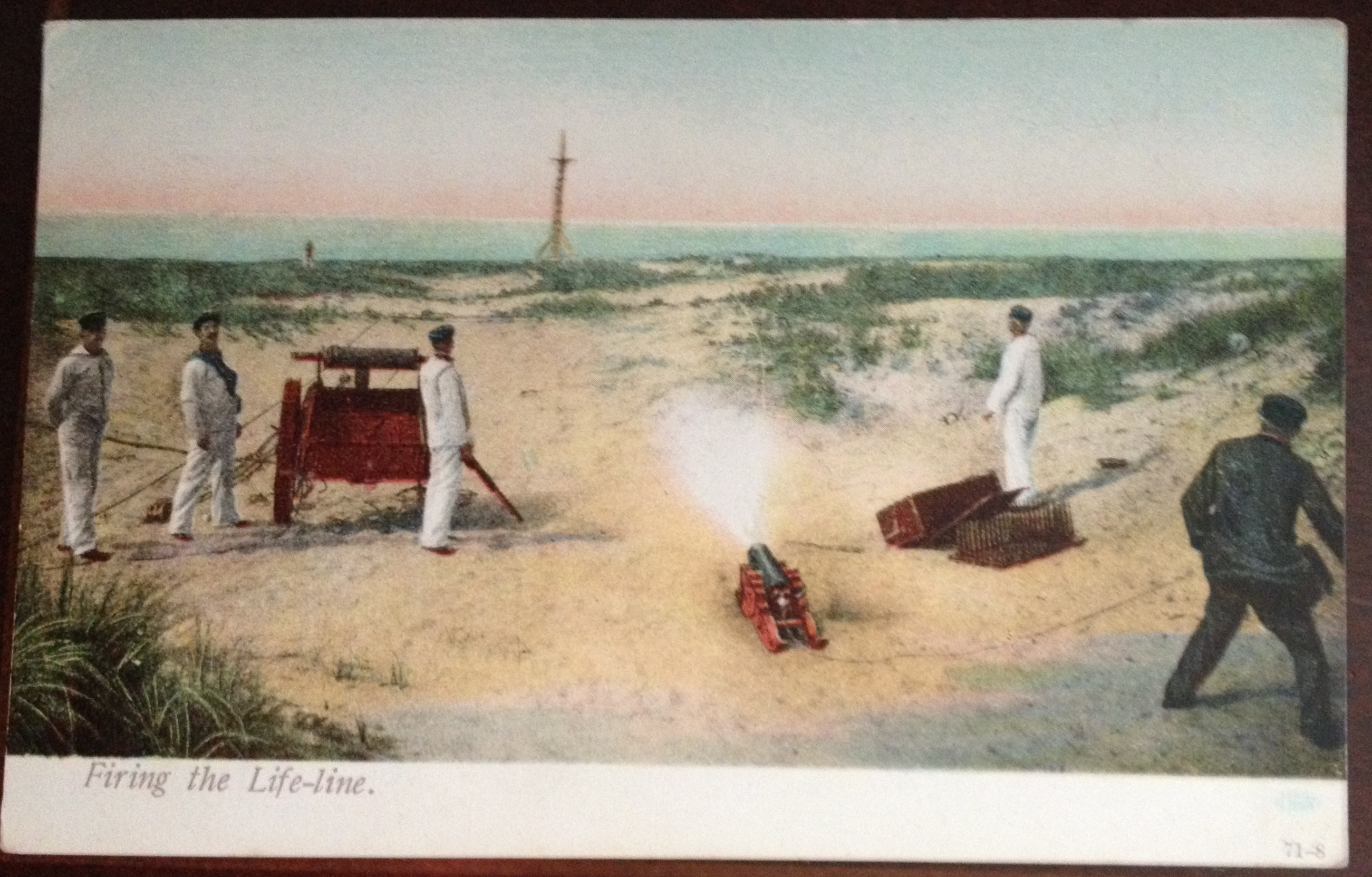
U.S. Lifesaving Service at Race Point, Provincetown

Firing the Lifeline

Firing the Life-line

The United States Lifesaving Service was founded in 1871 after an alarming number of fatalities occurred along the Atlantic coast during the winters of 1870 and 1871.

The stations were manned by expert surf men and boat handlers who patrolled the coast at night and during foggy and stormy days.  The buildings where equipment was stored were painted red so they could be seen from the sea and a sixty foot flagstaff signaled  passing ships by International code.

Nine lifesaving stations were built on Cape Cod in 1872. Captain Samuel O. Fisher was one of the Race Point station’s keepers and he had a horse that would help the crew by dragging the heavy boats and equipment across the sand.  Postcards that show the work of the early Cape Cod Lifesaving Service are highly desirable. It was a these types of antique postcards that Sonny Carreiro was looking at before he drives back to Provincetown and is inexplicably murdered. Want to know more about the mystery? Read the new novel, Remaining in Provincetown by S.N. Cook available at bookstores, including signed copies at the Provincetown Bookshop and online in trade paperback and as an ebook.Like us on Facebook and keep the conversation going.

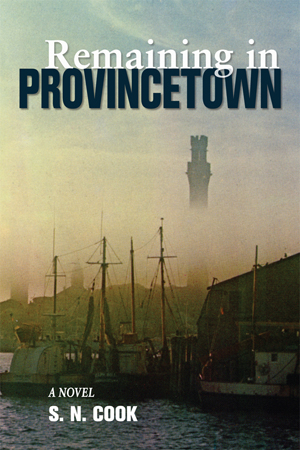
Remaining in Provincetown  By S.N.Cook.  Truro Works. 306 pages  $12.95 Trade Paperback

Remaining in Provincetown
By S.N.Cook.
Truro Works. 306 pages
$12.95 Trade Paperback

Like our facebook fan page and you may be selected to receive a FREE advance cppy!

Like our facebook fan page and you may be selected to receive a FREE advance cppy!

Provincetown 19th Century Fishing Dock

The docks

Walk down the Provincetown wharf and docked at the very end are a few fishing boats with steel hulls and large dragging nets, called draggers.. Fishing has always been a hard way to make a living, but with quotas on how many fish of a certain specie can be caught, it”s even more challenging. The beautiful color lithograph postcard above shows what it was like on the docks in Provincetown in the 19th century when fishing was in its heyday, Times and circumstances change and while fishing is no longer lucrative there are opportunities for whale watching and fishing excursions for visitors. On a September weekend, the town is busy. Want to learn more about what it is like to live in Provincetown. Return to the 1990s in Remaining in Provincetown by S.N. Cook now once again available at the Provincetown Bookshop and online at Amazon.com in Trade paperback or as an ebook. Like us on Facebook and keep the conversation going,

Provincetown novel Cape Cod antique postcard

Cape Cod Fisherman

Cape Cod Fisherman

This beautiful color lithographed antique postcard published by H.A. Dickerman & Sons, Taunton Massachusetts, shows a Provincetown fisherman with his nets and tackle. During the 19th century, fishnets were mended by hand. Recognize the lighthouse in the background? Cape Cod and Provincetown is the setting and focal point of  Remaining in Provincetown by S.N. Cook, the mystery novel that has people talking. Buy your copy now at local bookstores and online as a trade paperback or ebook. Like us on Facebook and keep the conversation going.

Provincetown Sand Dunes in Black and White

Provincetown Sand Dune postcard published by The Advocate  cira 1900

Provincetown Sand Dune postcard published by The Advocate cira 1900

I’ve posted quite a few photographs of Cape Cod sand dunes from vintage postcards. This is the first in black and white. The postcard was printed during the era when it only cost a penny to mail a postcard and have it delivered anywhere in the United States. Notice all the beach grass and vegetation growing on these sand dunes at the end of the 19th century.  When the National Seashore took possession of acres of seashore on Cape Cod, which included sand dunes, during the last three decades of the 20th century they grappled with erosion. Much of the natural vegetation had been destroyed by tourists eagerly dragging coolers, umbrellas, and beach towels to set up their spot for relaxing by the water’s edge. And then there were all the children exuberantly running and sliding down sand dunes.  Temporary fences were erected and new dune grass was planted. While once there was a parking area by Pilgrim Lake on the way into Provincetown for tourists to stop and walk the dunes, that parking area was closed and blocked off. Why? Just too many people causing the vegetation to become damaged and rampant erosion taking place.  The wind blows hard and the sands shift and change. So it is with stories and tales of Cape Cod and Provincetown. Read any Provincetown books lately which capture the flavor of what it’s like to live in the town? Remaining in Provincetown by S.N. Cook is awaiting your reading pleasure. Available in bookstores and online as a trade paperback or ebook. Like us on Facebook. Keep the conversation going.

Like our facebook fan page and you may be selected to receive a FREE advance cppy!

Like our facebook fan page and you may be selected to receive a FREE advance cppy!

Remaining in Provincetown  By S.N.Cook.  Truro Works. 306 pages  $12.95 Trade Paperback

Remaining in Provincetown
By S.N.Cook.
Truro Works. 306 pages
$12.95 Trade Paperback

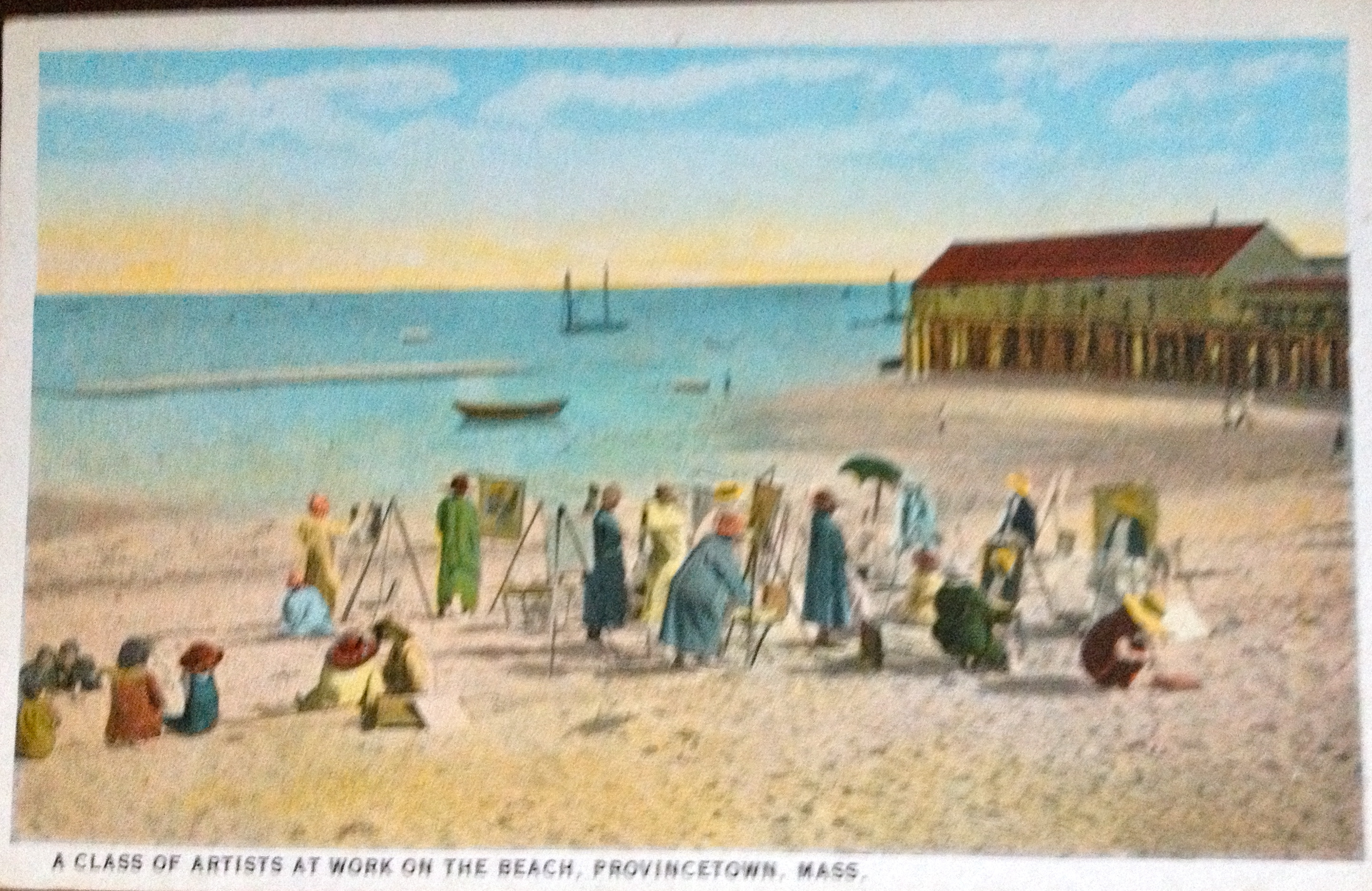
Provincetown Artists on the beach at low tide

antique postcard published by H.A. Dickerman & Son, Taunton Massachussetts

antique postcard published by H.A. Dickerman & Son, Taunton Massachussetts

You can see a sandbar and someone walking on the flats, but the artists on the Provincetown beach in this late 19th century antique postcard are focused on painting a portrait of a seated woman wearing a yellow straw hat. There were several art schools in Provincetown at the time this postcard was published. Artists, who often supplemented their income by teaching were attracted to the northern light reflected off the water, sand dunes, and beaches in the picturesque town located on the tip of Cape Cod in Massachusetts. Today the town is still filled with art galleries plus the Provincetown Art Association and Museum.  Plenty of writers have also made Provincetown their home. One of them just wrote a book, a mystery novel set in the 1990’s titled Remaining in Provincetown, which has been getting some very good reader reviews. Have you read it yet? You can buy it at Amazon.com online or if you are making a visit to Provincetown, there are signed copies at the Provincetown Book Shop.  The novel by S.N. Cook is available also as an ebook on kindle. Like us on Facebook. We’d love to hear from you.

Like our facebook fan page and you may be selected to receive a FREE advance cppy!

Like our facebook fan page and you may be selected to receive a FREE advance cppy!

Remaining in Provincetown  By S.N.Cook.  Truro Works. 306 pages  $12.95 Trade Paperback

Remaining in Provincetown
By S.N.Cook.
Truro Works. 306 pages
$12.95 Trade Paperback

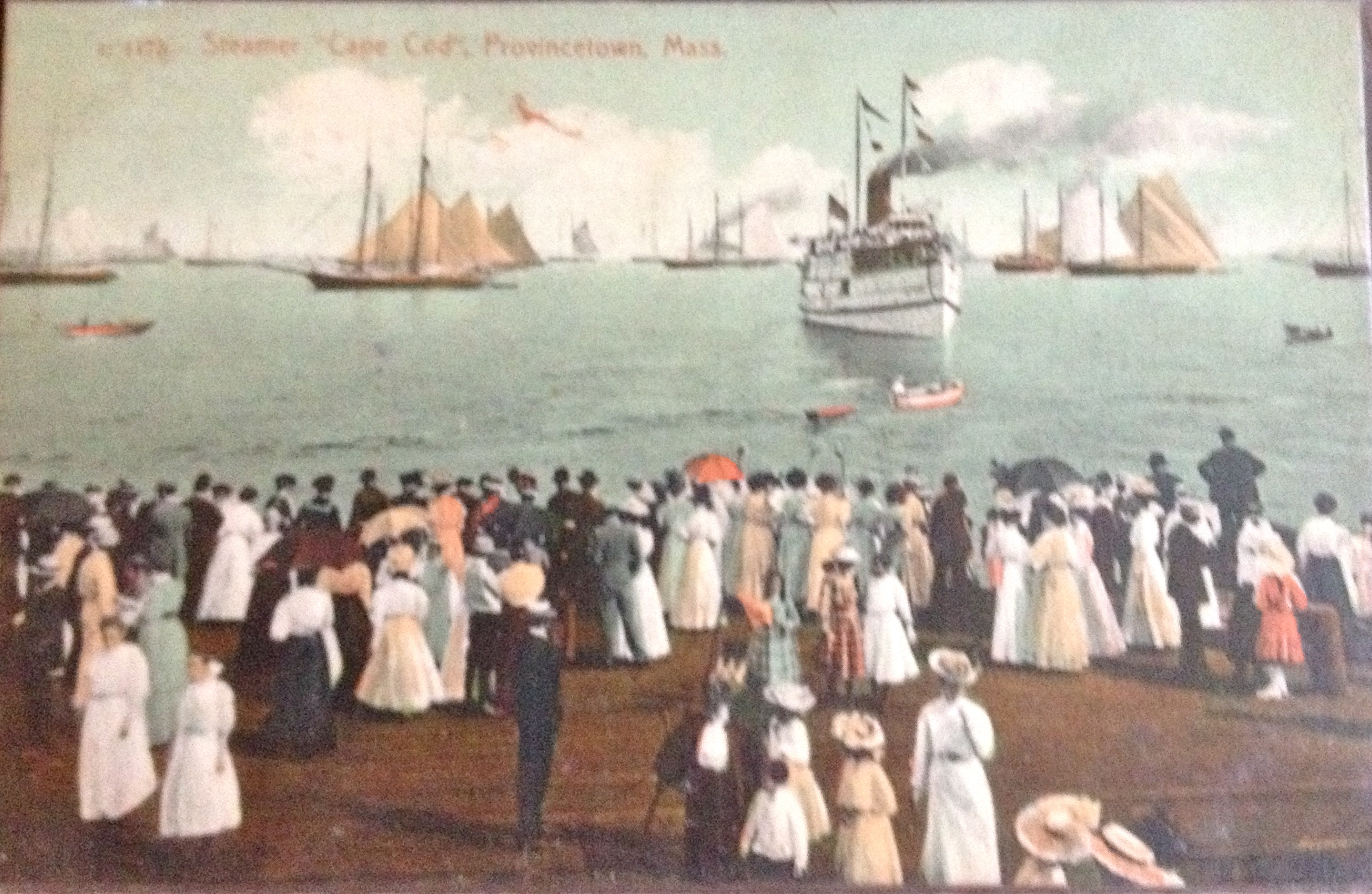
Boston Boat to Provincetown 1911

Boston Boat arriving in Provincetown, Cape Cod

Boston Boat arriving in Provincetown, Cape Cod

This antique postcard was mailed from Provincetown, Massachusetts to Binghamton, New York in 1911.  Provincetown harbor is filled with handsome sailing vessels. Awaiting the arrival of the steamer ferry from Boston are a host of tourists and residents, dressed for a summer’s day with broad brimmed hats and parasols.  Visitors still travel back and forth from Boston to Provincetown on the Fast Ferry.  Some of the characters in the new murder mystery novel Remaining in Provincetown once lived in Boston but decided to relocate to Provincetown. Why? Does it have anything to do with the mystery of who killed Sonny Carreiro? You’ll have to read the book to find out. Now available in bookstores and online. Purchase your copy in paperback or as an ebook. Like us on Facebook and keep the conversation going.

Provincetown Cape Cod Town Crier spreads news & gossip

Town Crier 40sThis Provincetown Town Crier is dressed in traditional pilgrim attire, and I’m not certain if he is based on one of the professional Town Criers that walked the streets of Provincetown during the 20th century when this postcard was published. By the car in the background, and style of the printing, this particular Cape Cod postcard was published by the Mayflower Sales Company in approximately 1950.  Titled, “Ye Old Town Crier, Provincetown, Cape Cod, Mass” the description on the back of the card says, “In keeping with the old colonial tradition, the custom of having a town crier walk up and down the streets cryng the news and events has been carried down through the years in quaint old Provincetown.”  Spreading the news in a personal way was certainly inspirational to a number of the characters in the new murder mystery novel, Remaining in Provincetown by S.N. Cook. Find out what everyone’s talking about. You can purchase a signed edition at the Provincetown Book Shop on Commercial Street or buy a copy online in trade paperback or kindle. Read all the reviews at Amazon.com. Like us on Facebook and keep the conversation going.

Like our facebook fan page and you may be selected to receive a FREE advance cppy!

Like our facebook fan page and you may be selected to receive a FREE advance cppy!

Remaining in Provincetown  By S.N.Cook.  Truro Works. 306 pages  $12.95 Trade Paperback

Remaining in Provincetown
By S.N.Cook.
Truro Works. 306 pages
$12.95 Trade Paperback