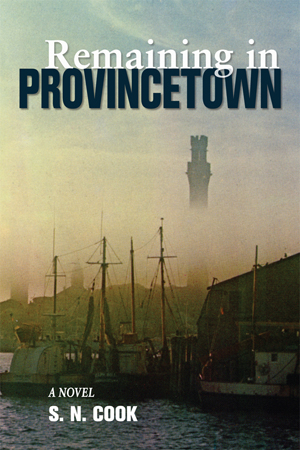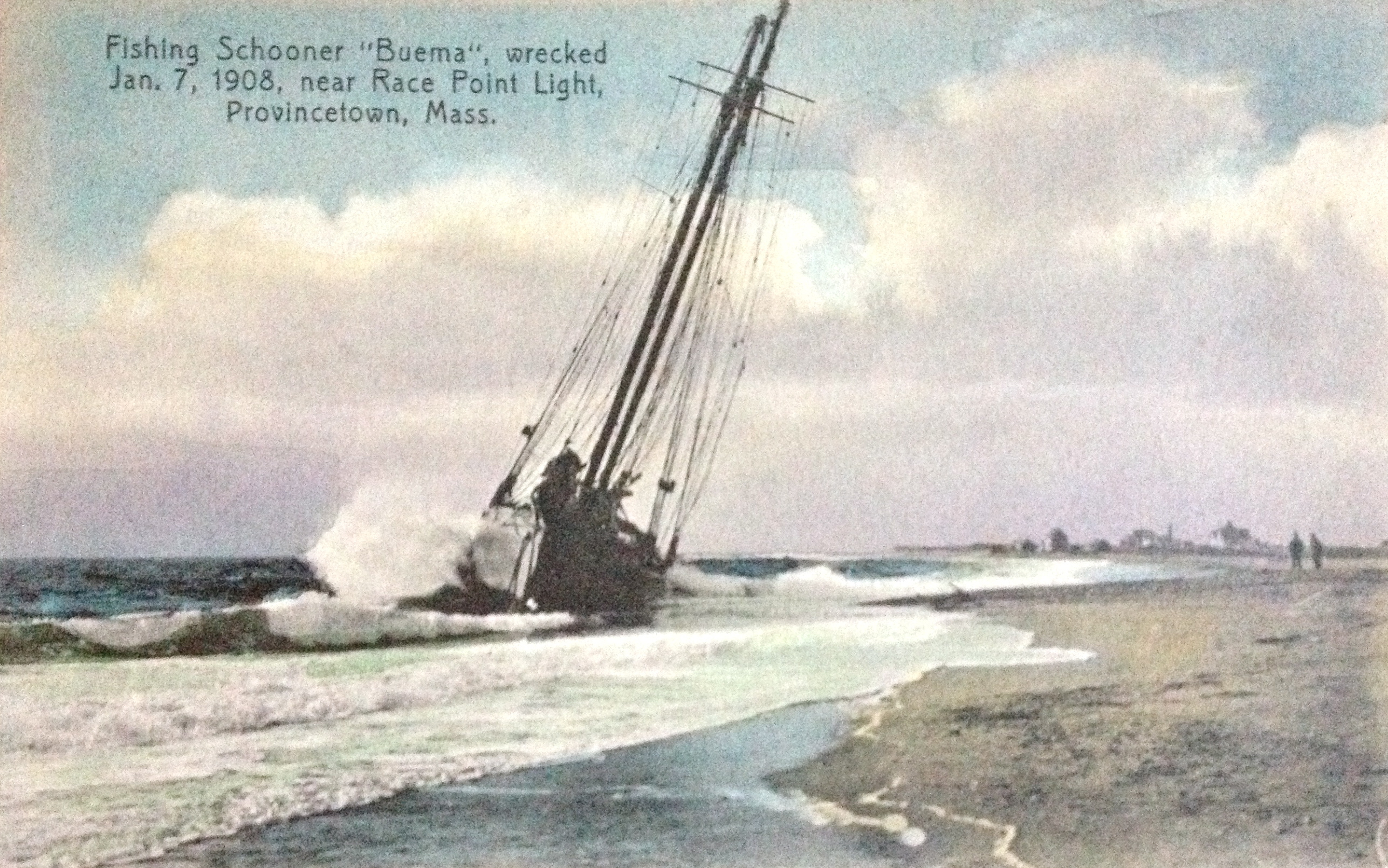
Race Point Beach in Provincetown, now a part of the National Seashore is a favorite spot for swimming, fishing, and nature watching where one might catch a glimpse of a seal or whale, depending on the season. But Race Point is also the site of many shipwrecks and between 1873 and 1902 had a Lifesaving station known as Race Point Station. Unfortunately the station was no longer in operation when the fishing schooner Buema crashed into the surf and was wrecked on January 7, 1908. The above postcard, purchased in 1924 tells the story. During the time the Race Point Station was in operation they had three surfboats which aided hundreds of seafarers. Among the names of men who served at the lifesaving station and lost their lives aiding others were Captain Dave Atkins and Frank Mayo. Is that where the name for the road Atkins Mayo, the dirt road where two characters in the mystery novel Remaining in Provincetown live, comes from? Curious to read the new murder mystery set in Provincetown, the book everyone’s talking about. You can pick up a signed copy at the Provincetown Book Shop while they last or buy a book online at Amazon.com in trade paperback or ebook. Like us on Facebook and keep the conversation going.
Tag Archives: Cape Cod Bay
Shipwreck on Provincetown sandbars averted
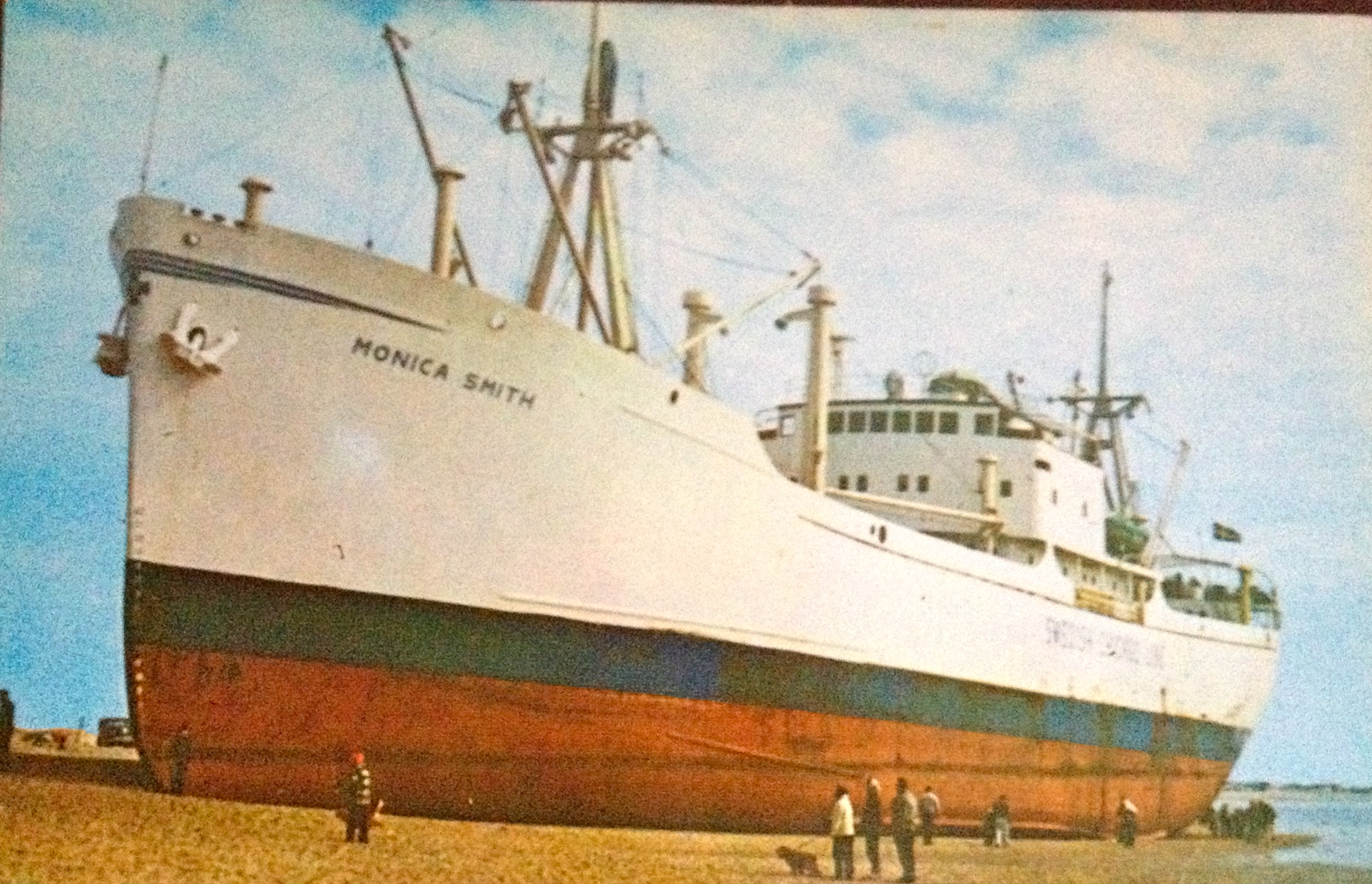
The sandbars off the tip of Cape Cod , even with the Provincetown lighthouses at Race Point, Woods Hole, and Long Point to alert passing ships can be treacherous. Fortunately in the case of the Swedish freighter, Monica Smith, enroute from New Bedford to Nova Scotia, no damage was done. This photograph was taken on February 23, 1960. A storm caused the vessel to be beached at Provincetown, Massachusetts, where the boat remained until tugboats could be assembled and then during high tide, with the help of her anchors, she safely floated out to sea and started up her engines.
When you live by the sea, you learn to deal with unexpected weather and unexpected events like a murder. What happens in a small town like Provincetown, economically dependent on tourism, when a crime takes place? Who had a motive to kill one of the town’s leading citizens? The ending may surprise you. Get your copy of the new novel Remaining in Provincetown by S.N. Cook in time for summer beach reading. Now in bookstores and online, in trade paperback and as an ebook. Like us on Facebook and keep the conversation going.
Boston boat to Provincetown a vacation experience
The above postcard was mailed in 1912, over 100 years ago, and shows the steamship the Dorothy May Bradford, pulling up to the dock in Provincetown harbor on the tip of Cape Cod. At the begiinning of the 20th century, taking what was referred to as the “Boston Boat” was the most efficient way to get from Boston to Provincetown and from Provincetown to Boston during the summer months. Back in those days the journey took a good half of the day, but today the Provincetown Fast Ferry makes the trip back and forth two and three times a day in 90 minutes. While the Dorothy Bradford was named after one of the first Pilgrim travelers who traveled across the ocean on the Mayflower and then drowned in Provincetown Harbor after she slipped and fell off the boat, the newest Provincetown Fast Ferry Salacia, is named after the Neptune’s wife and goddess of the sea. Salacia’s name, derived from the Latin word for salt, was thought to personify the calm and expansiveness of the sea. A beautiful sea nymph who bore three sons with Neptune, including Triton, she is usually personified in sculptures as having a crown of seaweed and driving alongside Neptune in a shell chariot drawn by dolphins. Certainly the sleek and fast Salacia looks quite different in contour and shape from the more stalwart Dorothy Bradford. But different time periods in history call for different experiences. If you like postcards, you may want to enter the Boston Harbor Cruise “Design Your Own Postcard Contest”
If reading a book during your vacation is more your idea of fun while relaxing on the beach, pick up a copy of Remaining in Provincetown, the new murder mystery everyone’s talking about. Now available at bookstores and online in trade paperback and ebook. Buy your copy today at Amazon .com or purchase a signed copy at the Provincetown bookshop while supplies last. Like us on Facebook and keep the conversation going.
Long Point Lighthouse Provincetown Fishing Colony
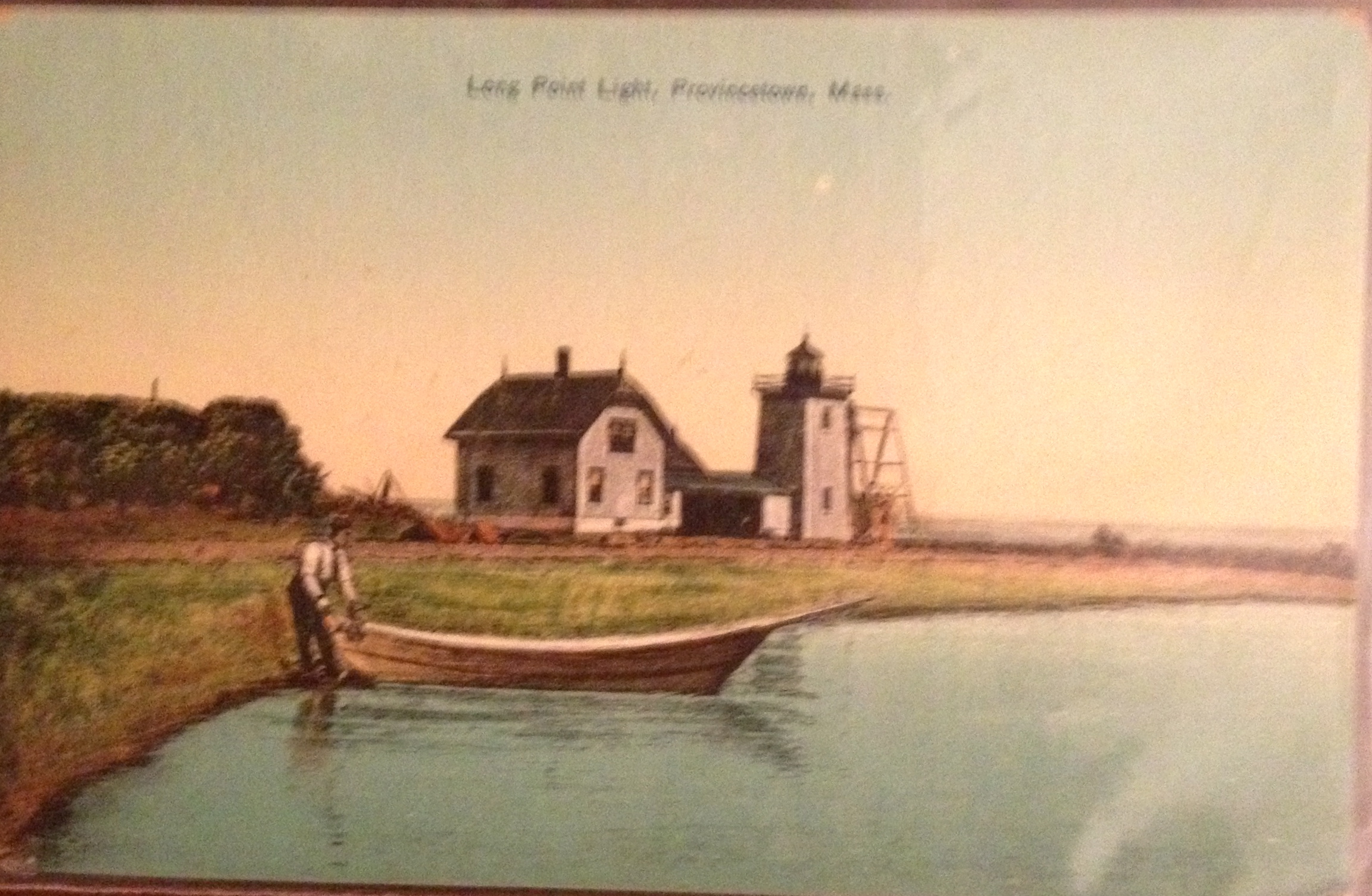
This handsome antique postcard showing Long Point Lighthouse in Provincetown Massachusetts on the tip of Cape Cod shows houses set back beyond a lighthouse keeper’s building and the lighthouse itself. If you hike across the Provincetown breakwater on the west end of town, just beyond the Provincetown Inn and hike across the sand or visit Long Point by boat, you won’t see any such buildings. The fishing village first settled in 1818, was at its height of prosperity in 1846. There were 200 residents and 38 houses. They used cisterns to gather water and had their own salt works for fish processing. The lighthouse itself was established in 1826 and the current tower built in 1875. Automated in 1952 and currently solar powered, it shines a fixed green signal and blasts out a fog alert every 15 seconds.
So what happened to the village of Long Point and all those houses? Most of them were floated across the bay during low tide on barrels and repositioned in Provincetown. Ceramic blue and white plaques identify some of the houses in town that were floated across the bay from Long Point.
There are many interesting stories about the town and if you were born in the town or have lived and worked in Provincetown for a number of years you learn thiings.. Curious to learn more? Read Remaining in Provincetown, the new mystery novel just released and available at bookstores, including the Provincetown Bookshop, and online in trade paperback and as an ebook at Amazon. Like us on Facebook and keep the conversation going.
Provincetown art students painting en plein air
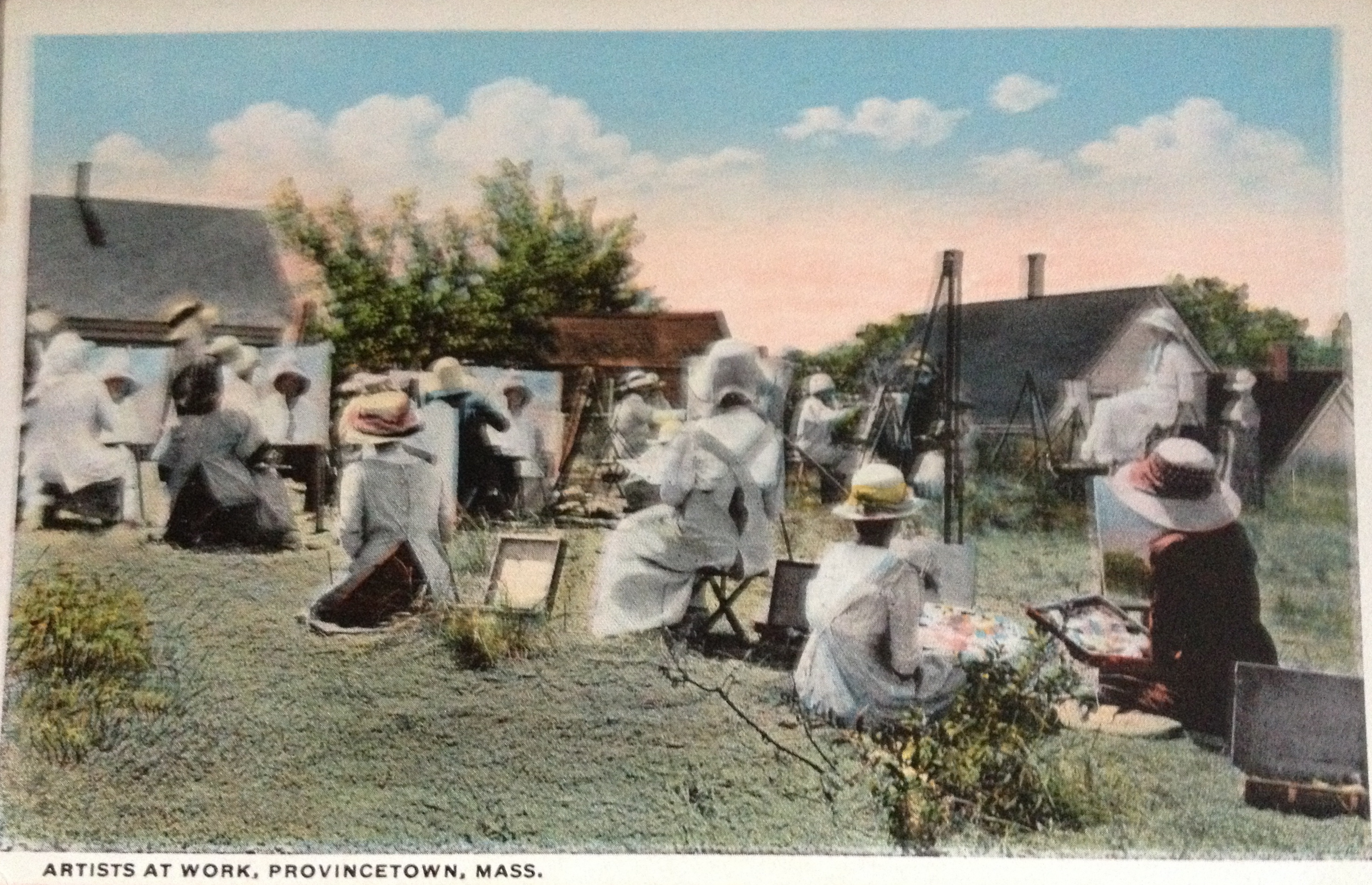
Painting in the open air, (en plein air in French), has been a favorite practice of artists in Provincetown, Massachusetts since Charles Hawthorne (1872- 1930) founded the Cape Cod School of Art in 1899. Given Provincetown’s waterfront setting, one might assume that Hawthorne’s students always set up their box easels on the beach. The sun’s reflection on the water, and the light and shadows on the sand, were perfect starting points to practice the concepts of Impressionism, which put an important emphasis on capturing on canvas, the artist’s impression of how light changes throughout the day. . Not true, as shown in this antique postcard published by H.A. Dickerman & Son, Taunton, Massachusetts in approximately 1900. The students, primarily female, are painting a portrait of the model positioned in the right, dressed in a while summer frock and hat with a long braid. Student artists often used local citizens as their models.
The availability of paints in tubes made painting en plein air, so much easier when compared to the practice of grinding and mixing pigment powders with linseed oil. Notice in the photograph that the boxes to hold paints and contain a palette, also made transporting equipment for painting outside so much easier. Artists came from all over the world. and still do, to live and work in what was originally a fishing village.
Creating art is important to Annie Tinker, a sculptor who first came to Provincetown as a student at the Fine Arts Work Center. One of the characters in the recently released novel, Remaining in Provincetown by S. N. Cook. She’s married to Beau Costa, the former business partner of Sonny Carreiro who has been murdered. Could Beau be a suspect? Haven’t read the book yet? Signed copies are available at the Provincetown Bookshop downtown on Commercial Street or you can buy a trade paperback or ebook online at a variety of sites including Amazon. Visit our Facebook page , like us and join the conversation.
Provincetown Lighthouse at Wood End
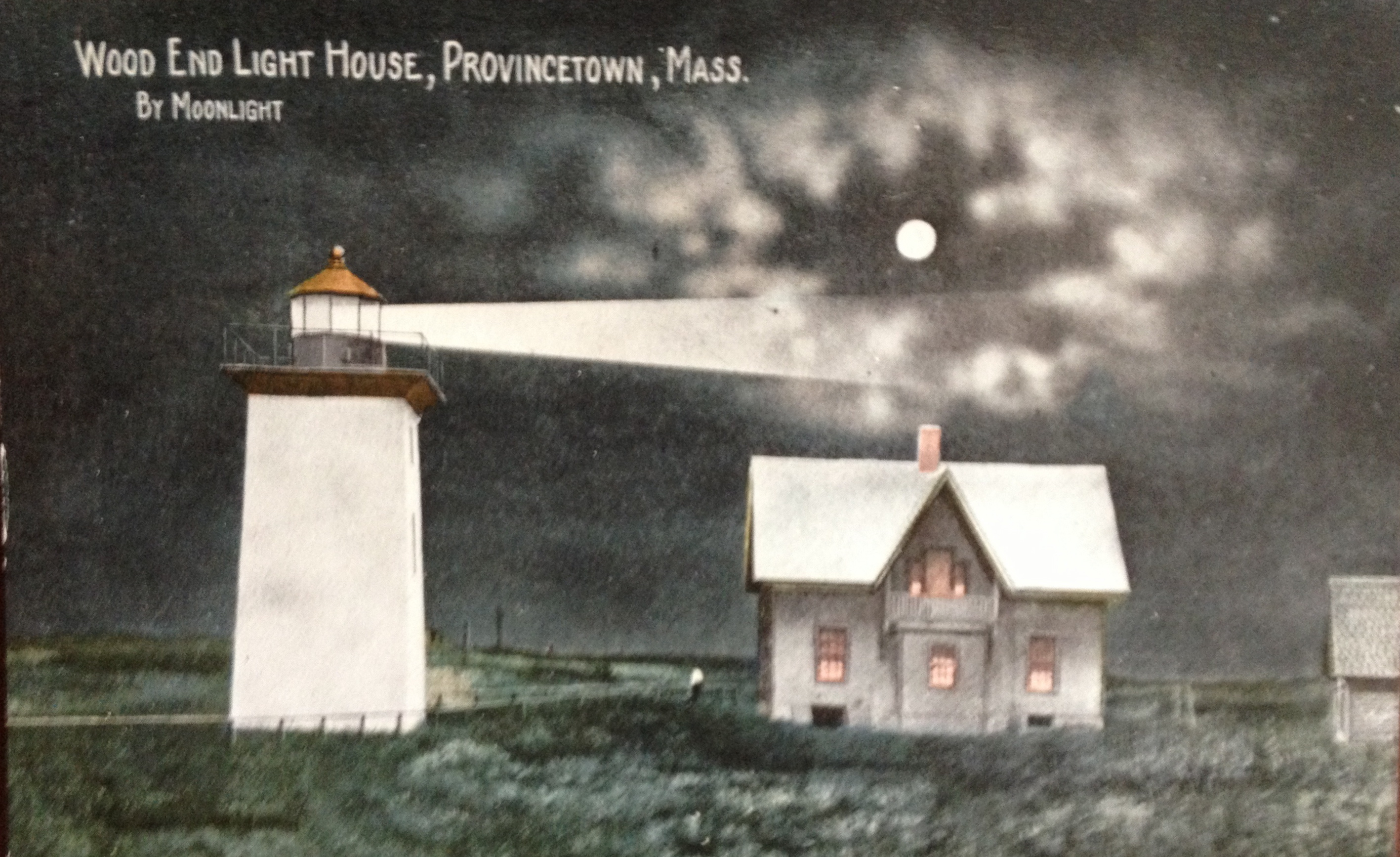
These two antique postcards show Wood End Lighthouse in Provincetown at the tip of Cape Cod by night and by day. Completed in 1872, joining nearby Long Point lighthouse and Race Point Lighthouse., which were both established in 1826. Before the 30 foot tall brick tower was erected, there was a pyramidal beacon established in its location in 1864. The new lighthouse put into service in 1872 had a Fresnel lens that flashed every 15 seconds along with an adjacent light keepers dwelling. Congress had appropriated $25,000 in the 1872 federal budget for Wood End lighthouse to help stem the number of ships being wrecked off the furthermost tip of Cape Cod.
Not accessible by any road, one way to visit the Wood End Lighthouse is to walk across the breakwater by the Provincetown Inn. This past October the Cape Cod chapter of the Lighthouse Foundation, repainted the handsome antique lighthouse which was automated in 1961 and was converted to solar power in 1981.
Despite the establishment of three lighthouses on the tip of Cape Cod, ships still were wrecked on the sand bars near Provincetown. In 1872 a life saving station was set up at Race Point and another one added at Wood End in 1896. If you have read the book Remaining in Provincetown, you might remember that postcard collector Sonny Carreiro was particularly interested in antique postcards related to the Lifesaving stations. Haven’t read the book? It’s available at the Provincetown Bookshop and online at Amazon and other booksellers in trade paperback and as an ebook. Like us on Facebook and become part of the conversation about this new mystery novel where Provincetown plays the starring role.
Provincetown Cape Cod view from the beach
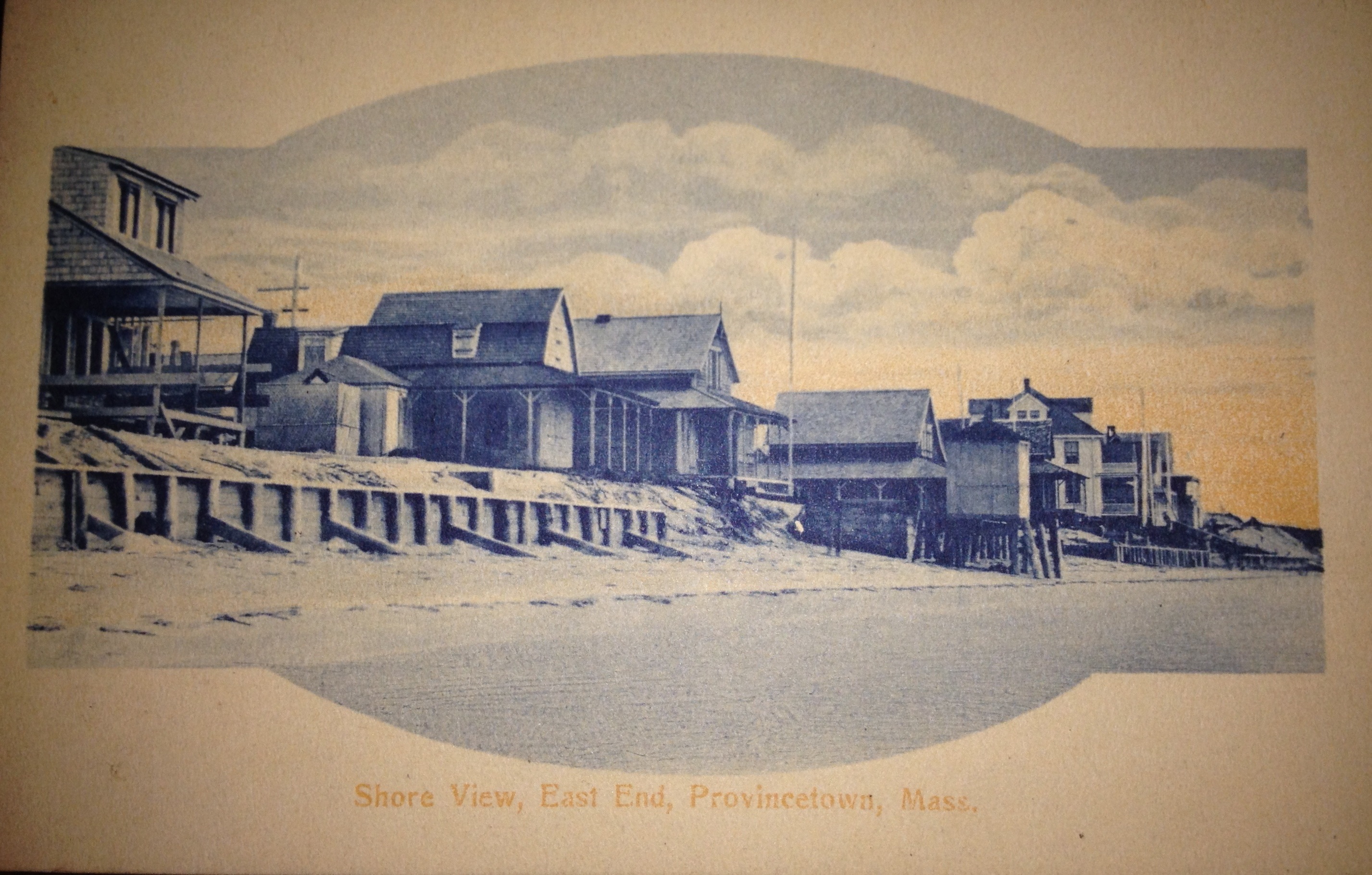
As shown in this antique postcard of Provincetown, Cape Cod, the waterfront houses were boarded up in the off-season. Primarily owned by summer residents, they offer a beautiful view of Cape Cod Bay looking out towards the Long Point Lighthouse. Many of the buildings have retained their charm, and look similar to the way they appeared in the late 19th century when this postcard was printed in Germany. While many visitors like to walk along Commercial Street so they can poke their heads into art galleries and shops, a wonderful way to soak up the beauty of the town is to walk along the beach at low tide. (When the tide is high you may not have a place to walk.) Plus you never know what might wash ashore.
Roz SIlva, the female protagonist in the new murder mystery Remaining in Provincetown, frequently walks along the beach to clear her head and think. As publisher and editor of the town’s weekly newspaper she has a lot on her plate, particularly because she is trying to figure out who killed real estate entrepreneur Sonny Carreiro, just as spring is beginning to arrive and the town is getting ready for the summer season. Want to find out more, check out the new novel by S.N. Cook, now available at local bookstores and online at Amazon.com in trade paperback and as an ebook. Like us on Facebook. Keep the conversation going.
Mayflower Heights and Horses in Provincetown
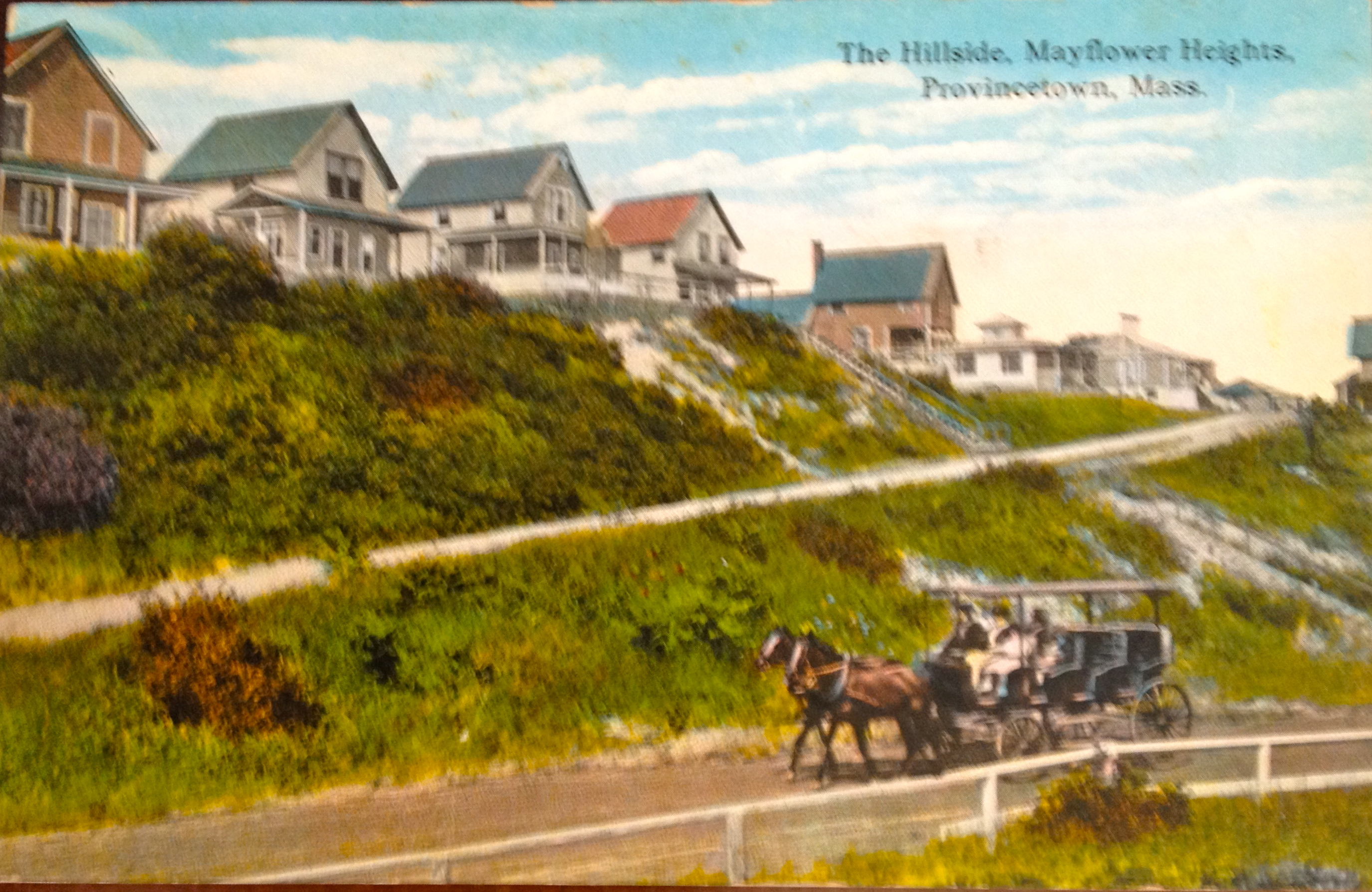
The geography of Mayflower Heights in Provincetown certainly looks different in this antique postcard when you are approaching by horse and carriage! Not that many people living in Provincetown, on the tip of Cape Cod actually owned horses. A boat was a more practical means of transportation, for this small town overlooking the Cape Cod Bay. As written in The Log of Provincetown and Truro on Cape Cod Massachusetts by M.C.M. Hatch, published in 1939:
“In 1829, a Provincetown minister could write to a friend: –“would you believe that there is a town in the United States with eighteen hundred inhabitants and only one horse with one eye? Well that town is Provincetown and I am the only man in it that owns a horse, and he is an old white one with only one eye.”
There’s all different sorts of interesting things you can read about Provincetown written in the past. Or you can read a brand new murder mystery, Remaining in Provincetown by S.N. Cook now available in bookstores, online, and at Amazon.com. Like us on Facebook. Thank you!
Provincetown Sand Dunes for love and recreation
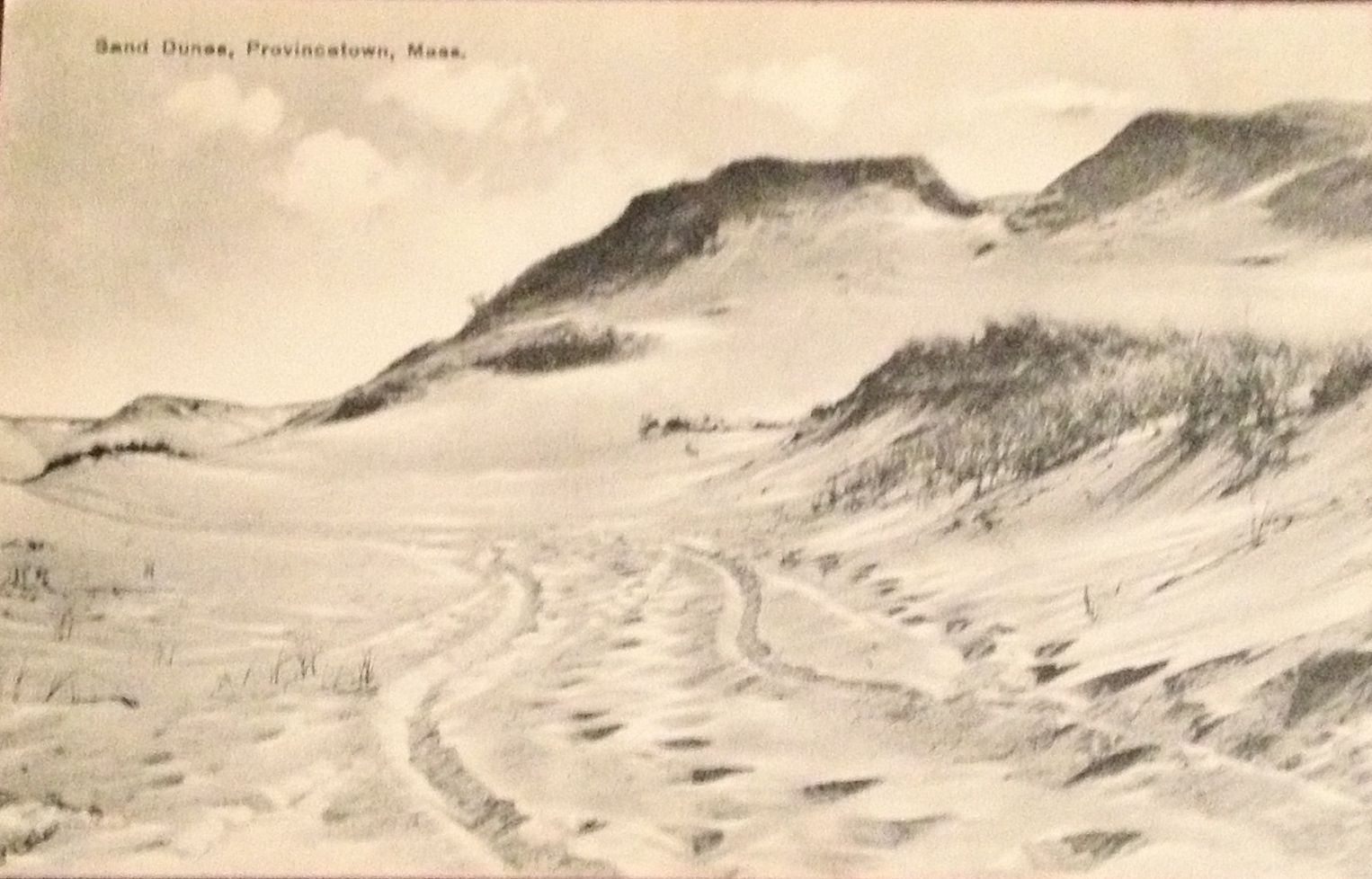
The sand dunes at the tip of Cape Cod, between Bay and Ocean have shifted with the wind, but the dunes have always been a secret place for hikes and love trysts. You can get across the sand on foot, horseback, or four wheel drive vehicle (with a special license) . Their beauty has inspired scores of artists and photographers. Are the Provincetown sand dunes a special meeting place for lovers? Where are the secret places two star crossed lovers might rendez-vous? It’s stories you’ll read about in the soon-to-be-released novel Remaining in Provincetown.