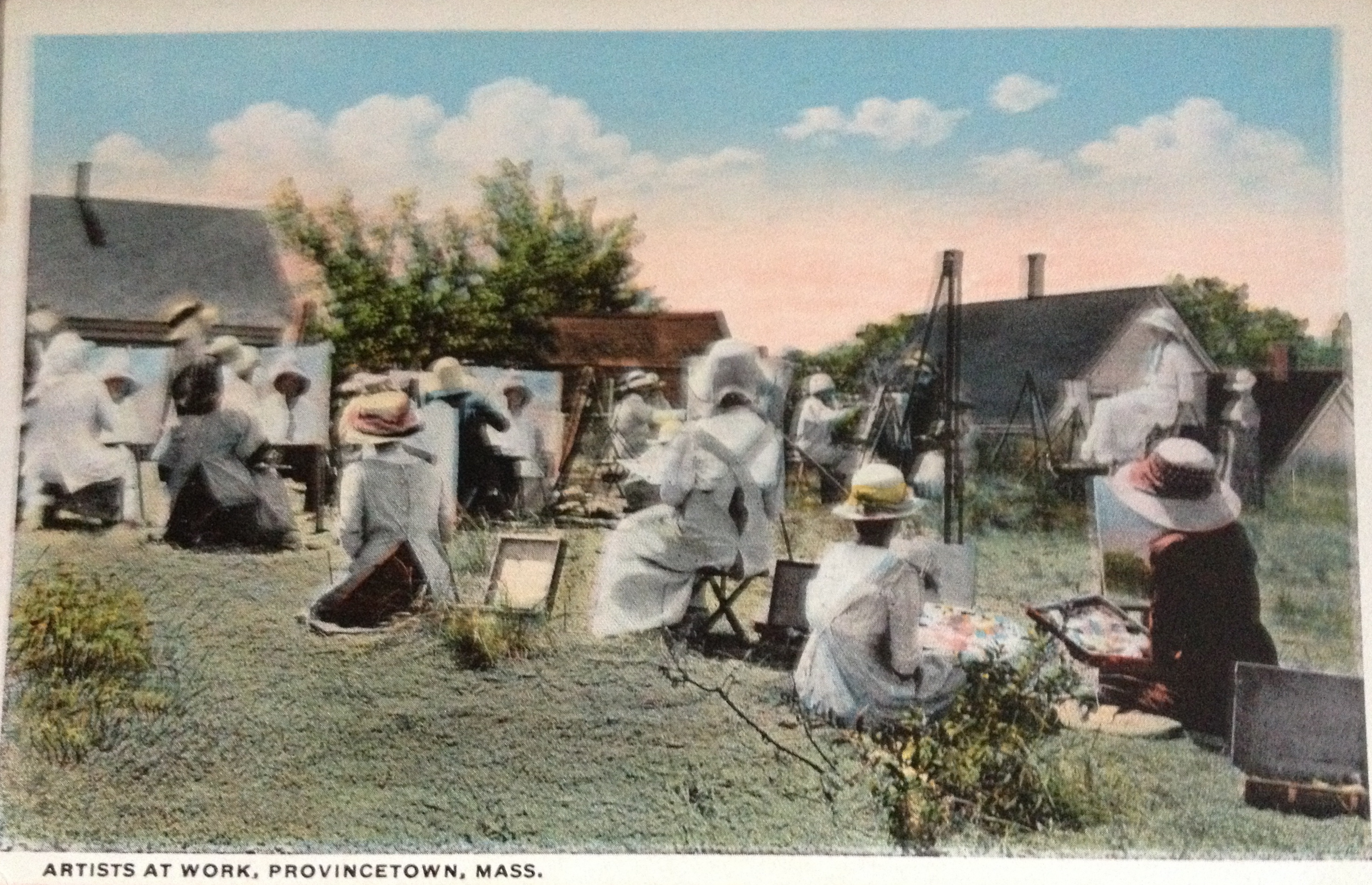
Provincetown art students painting en plein air

Artists at Work, Provincetown Cape Cod

Artists at Work, Provincetown Cape Cod

Painting in the open air, (en plein air in French), has been a favorite practice of artists in Provincetown, Massachusetts since Charles Hawthorne (1872- 1930) founded the  Cape Cod School of Art in 1899. Given Provincetown’s waterfront setting, one might assume that Hawthorne’s students always set up their box easels on the beach.  The sun’s reflection on the water, and the light and shadows on the sand, were perfect starting points to practice the concepts of Impressionism, which put an important emphasis on capturing on canvas, the artist’s impression of how light changes throughout the day. . Not true, as shown in this antique postcard published by H.A. Dickerman & Son, Taunton, Massachusetts in approximately 1900.  The students, primarily female, are painting a portrait of the model positioned in the right, dressed in a while summer frock and hat with a long braid. Student artists often used local citizens as their models.

The availability of paints in tubes made painting en plein air, so much easier when compared to the practice of grinding and mixing pigment powders with linseed oil.  Notice in the photograph that the boxes to hold paints and contain a palette, also made transporting equipment for painting outside so much easier.  Artists came from all over the world. and still do, to live and work in what was originally a fishing village.

Creating art is important to Annie Tinker, a sculptor who first came to Provincetown as a student at the Fine Arts Work Center. One of the characters in the recently released novel, Remaining in Provincetown by S. N. Cook.  She’s married to Beau Costa, the former business partner of Sonny Carreiro who has been murdered. Could Beau be a suspect?  Haven’t read the book yet? Signed copies are available at the Provincetown Bookshop downtown on Commercial Street or you can buy a trade paperback or ebook online at a variety of sites including Amazon.  Visit our Facebook page , like us and join the conversation.
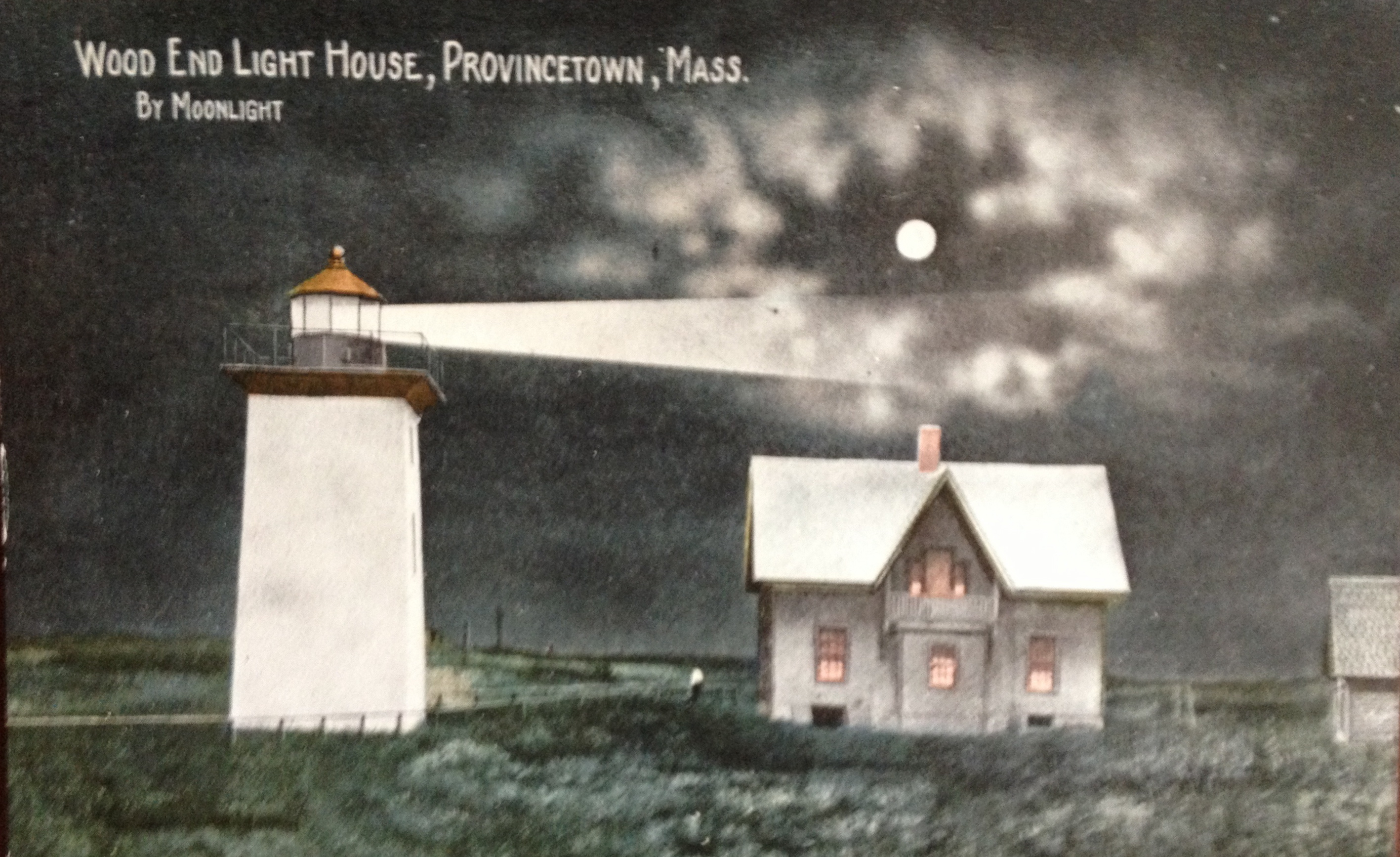
Provincetown Lighthouse at Wood End

Wood End Lighthouse Provincetown, Cape Cod By Moonlight

Wood End Lighthouse
Provincetown, Cape Cod
By Moonlight

     These two antique postcards show Wood End Lighthouse in Provincetown at the tip of Cape Cod by night and by day.  Completed in 1872, joining nearby Long Point lighthouse and Race Point  Lighthouse., which were both established in  1826.   Before the  30 foot tall brick tower was erected, there was a  pyramidal beacon established in its location in 1864. The new lighthouse put into service in 1872 had a Fresnel lens that flashed every 15 seconds along with an adjacent light keepers dwelling. Congress had appropriated $25,000 in the 1872 federal budget for Wood End lighthouse to help stem the number of ships being wrecked off the  furthermost tip of Cape Cod.

     Not accessible by any road, one way to visit the Wood End  Lighthouse is to walk across the breakwater by the Provincetown Inn. This past October the Cape Cod chapter of the Lighthouse Foundation, repainted the handsome antique lighthouse which was automated in 1961 and was converted to solar power in 1981.

     Despite the establishment of three lighthouses on the tip of Cape Cod, ships still were wrecked on the sand bars near Provincetown. In 1872 a life saving station was set up at Race Point and another one added at Wood End  in 1896. If you have read the book Remaining in Provincetown, you might remember that postcard collector Sonny Carreiro was particularly interested in antique postcards related to the Lifesaving stations. Haven’t read the book? It’s available at the Provincetown Bookshop and online at Amazon and other booksellers in trade paperback and as an ebook.  Like us on Facebook and become part of the conversation about this new mystery novel where Provincetown plays the starring role.

Antique Postcard of Wood End Lighthouse in Provincetown, Massachusetts

Antique Postcard of Wood End Lighthouse in Provincetown, Massachusetts

New Provincetown Book inspired by Town Crier history

Provinetown, Cape Cod vintage postcard

Provinetown, Cape Cod vintage postcard

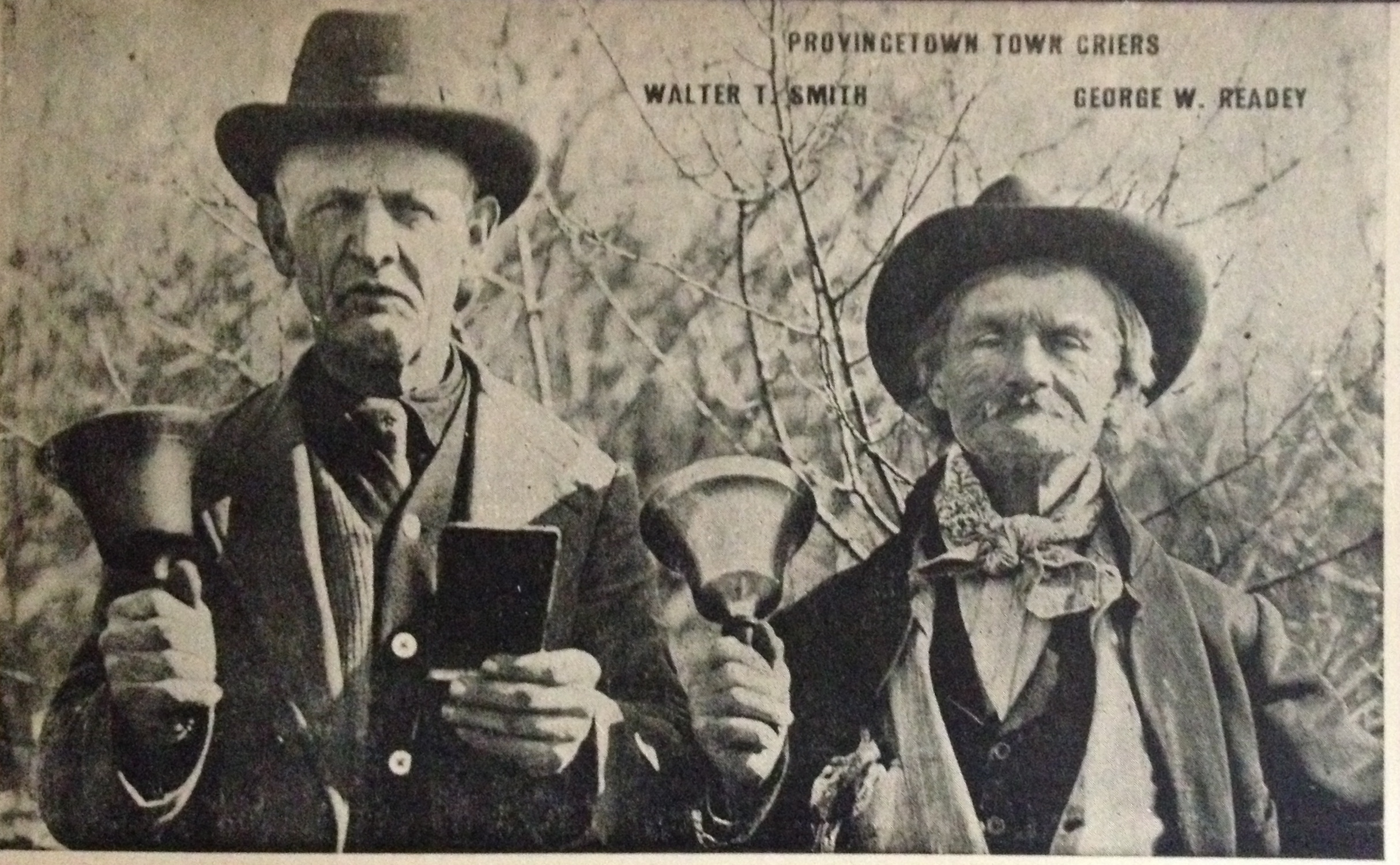
A rare antique postcard shows two of Provincetown’s early 20th century Town Criers together in one photograph: George W. Ready and Walter T. Smith. George Washington Ready wore regular street clothes while practicing his profession, clothes that gradually became more old and dilapidated as he advanced in age.  He was known to have a remarkable vocabulary, but in his official capacity as Town Crier, restricted his language to what he was contracted to recite.

Walter T. Smith, known as “Hoppy” Smith served as the Provincetown Town Crier for 27 years and at age 78 resigned his post due to lameness in 1927.   (Perhaps he walked with a hopping gait and thereby the nickname?) The July 16, 1927 Farmers Advocate newspaper published in their weekly issue that “he is believed to be the last Town Crier in the country”  But of course her was not the last Town Crier, because Amos Kubik went on to succeed him, as documented in a 1938 Provincetown Advocate article about Kubik making a trip from Provincetown, Massachusetts to Washington D.C.  to perform at the National Folk Festival on the Mall.

In the 1980s Gene Poyant went on to revive the Town Crier Tradition on Cape Cod and now the calling of being a Town Crier has been revived in many cities globally. There is a World Invitational Town Crier Championship from August lst to August 5, 2013 in Kingston Ontario.

And while Provincetown doesn’t currently have a Town Crier it might have been an inspiration for the name of a local magazine because freedom of the press and breaking up the monopoly of one small town newspaper is a big issue with the characters in the new Provincetown book Remaining in Provincetown by S.N. Cook.   Antique postcards are also important in the story. Native son Sonny Carreiro is an obsessive collector.  Haven’t read the book yet? Signed copies are for sale at the Provincetown Bookshop and copies are also available online  in trade paperback and on kindle.  Find out what people are talking about on our Facebook page.

Like our facebook fan page and you may be selected to receive a FREE advance cppy!

Like our facebook fan page and you may be selected to receive a FREE advance cppy!

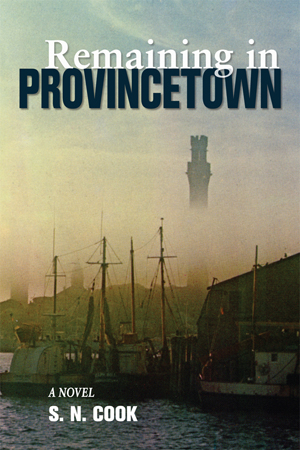
Remaining in Provincetown  By S.N.Cook.  Truro Works. 306 pages  $12.95 Trade Paperback

Remaining in Provincetown
By S.N.Cook.
Truro Works. 306 pages
$12.95 Trade Paperback

Provincetown, Cape Cod postcard puts the emphasis on quaint

Vintage chrome postcard.

Vintage chrome postcard.

Greeting from Quaint Cape Cod, says the vintage 1960s postcard. So exactly what does quaint mean? Well it depends on which dictionary you consult. In the “Free online dictionary” the primary definition of the word quaint is:“Charmingly odd, especially in an old-fashioned way. “Miriam Webster’s primary definition is: obsolete and their secondary definition is:  “marked by skillful design or marked by beauty and elegance.” Other meanings of the word quaint emphasize the uniqueness of the person, item, or place. Call something quaint and not only is it a little different, but possibly it takes you out of your comfort zone.

How do you describe a place like Cape Cod, rich in history, beautiful, unique, and yes different—particularly Provincetown, the town on Cape Cod’s very tip ? And if you write a book about the town, how do you capture all the different nuances and various types of people who call Provincetown their home. Remaining in Provincetown, the new mystery novel released in April, doesn’t always follow the rules when it comes to traditional mystery stories. There are lots of characters and lots going on, as there is with a town as “quaint” as Provincetown. Want to find out more? Pick up a copy of Remaining in Provincetown by S.N. Cook at your local bookstore (now in stock at Provincetown Bookshop) or online at various sites at Amazon.com in trade paperback and as  an ebook. Like us on Facebook. Keep the conversation going.


Provincetown Cape Cod view from the beach

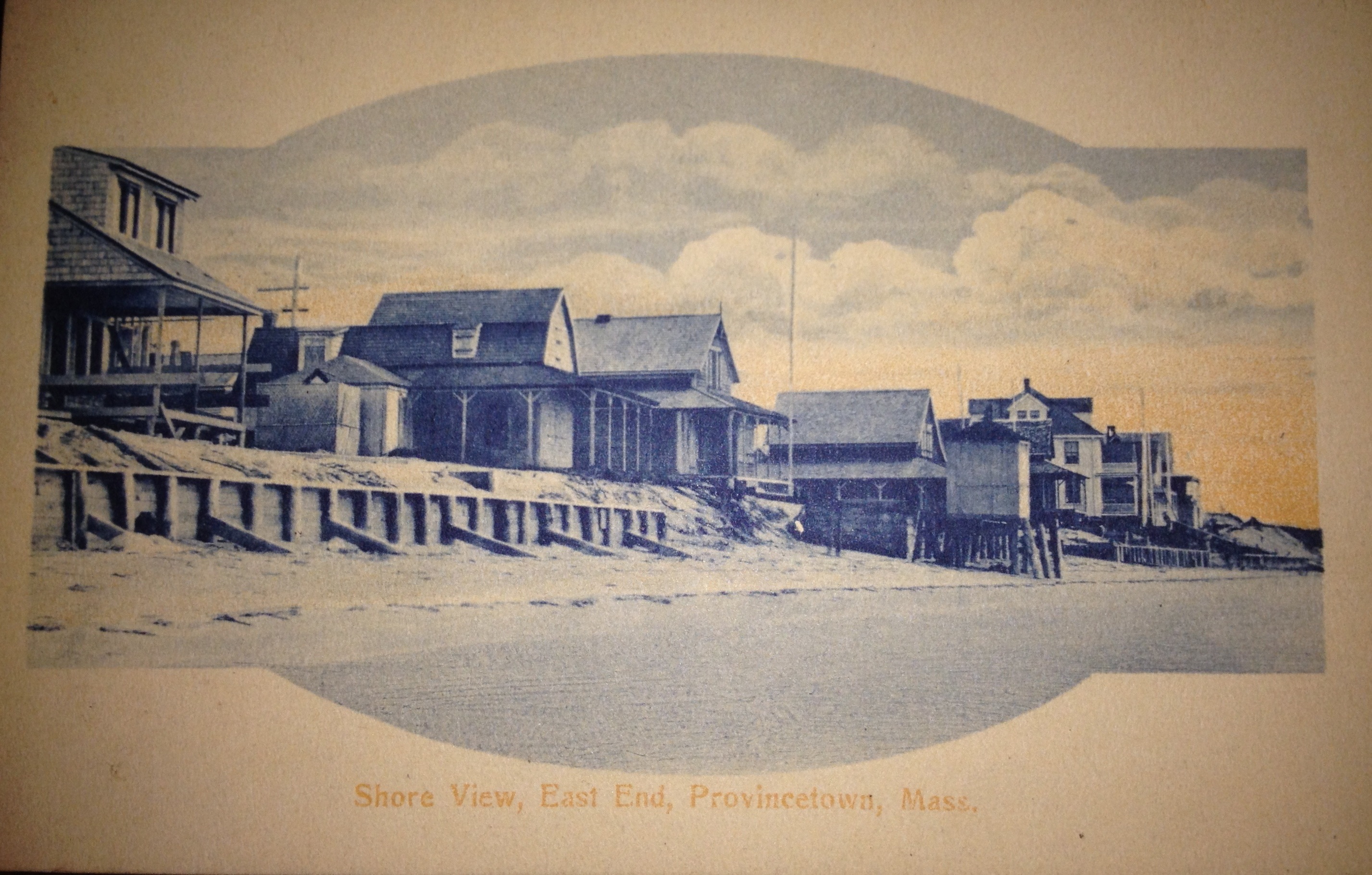
A view from the shore of Provincetown, Cape Cod's East End

A view from the shore of Provincetown, Cape Cod’s East End

As shown in this antique postcard of Provincetown, Cape Cod, the waterfront houses were boarded up in the off-season. Primarily owned by summer residents, they offer a beautiful view of Cape Cod Bay looking out towards the Long Point Lighthouse.   Many of the buildings have retained their charm, and look similar to the way they appeared in the late 19th century when this postcard was printed in Germany. While many visitors like to walk along Commercial Street so they can poke their heads into art galleries and shops, a wonderful way to soak up the beauty of the town is to walk along the beach at low tide. (When the tide is high you may not have a place to walk.) Plus you never know what might wash ashore.

Roz SIlva, the female protagonist in the new murder mystery Remaining in Provincetown, frequently walks along the beach to clear her head and think. As publisher and editor of the town’s weekly newspaper she has a lot on her plate, particularly because she is trying to figure out who killed real estate entrepreneur Sonny Carreiro, just as spring is beginning to arrive and the town is getting ready for the summer season.  Want to find out more, check out the new novel by S.N. Cook, now available at local bookstores and online at Amazon.com in trade paperback and as  an ebook. Like us on Facebook. Keep the conversation going.

Like our facebook fan page and you may be selected to receive a FREE advance cppy!

Like our facebook fan page and you may be selected to receive a FREE advance cppy!

Provincetown artists instrumental in starting Cape Cod museum

Provincetown Art Association and Museum  original building

Provincetown Art Association and Museum original building purchased in 1919

The above vintage postcard shows what the Provincetown Art Association and Museum (PAAM) looked like before the addition of the Charles Hawthorne Gallery and the subsequent addition of the Contemporary glass wing visitors see today. The veteran institution, located at 460 Commercial Street in the town’s East End,  was founded in 1914 by artists who were seeking both exhibition space and an institution that would be supportive  of the artists who had made the small town on the tip of Cape Cod their home. Oscar Gierberich, Gerrit Beneker, E. Ambrose Webster, Charles Hawthorne, and William Halsail are credited in the history books as being  the founding artists who were supported in their efforts by a number of local businesspeople at the time.The building was initially purchased and renovated in 1919.

PAAM has had a long tradition of organizing a number of exhibitions, some open to members and others juried, during the year. With the addition of more space, a larger permanent collection has been established and a variety of  programs and classes for all ages are offered trhroughout the year, with more going on during the summer season when there is a larger audience. 1914 is almost 100 years ago, and PAAM will thus be celebrating their 100th anniversary next year. Check the PAAM website to find out what is scheduled for this summer and read the new mystery novel Remaining in Provincetown by S.N. Cook  to fully appreciate that importance of how artists have contributed to the community. (Writers are artists too!) The book, just released in April is available at local bookstores, and online at Amazon.com in trade paperback or ebook. Like us on Facebook. Keep the conversation going.

The Smells of Cape Cod and Provincetown

Color version of the dunes

Color version of the dunes

Cape Cod  Sand Dunes

Cape Cod Sand Dunes

Provinetown Sand Dunes 100 years ago

Provinetown Sand Dunes 100 years ago

New state road

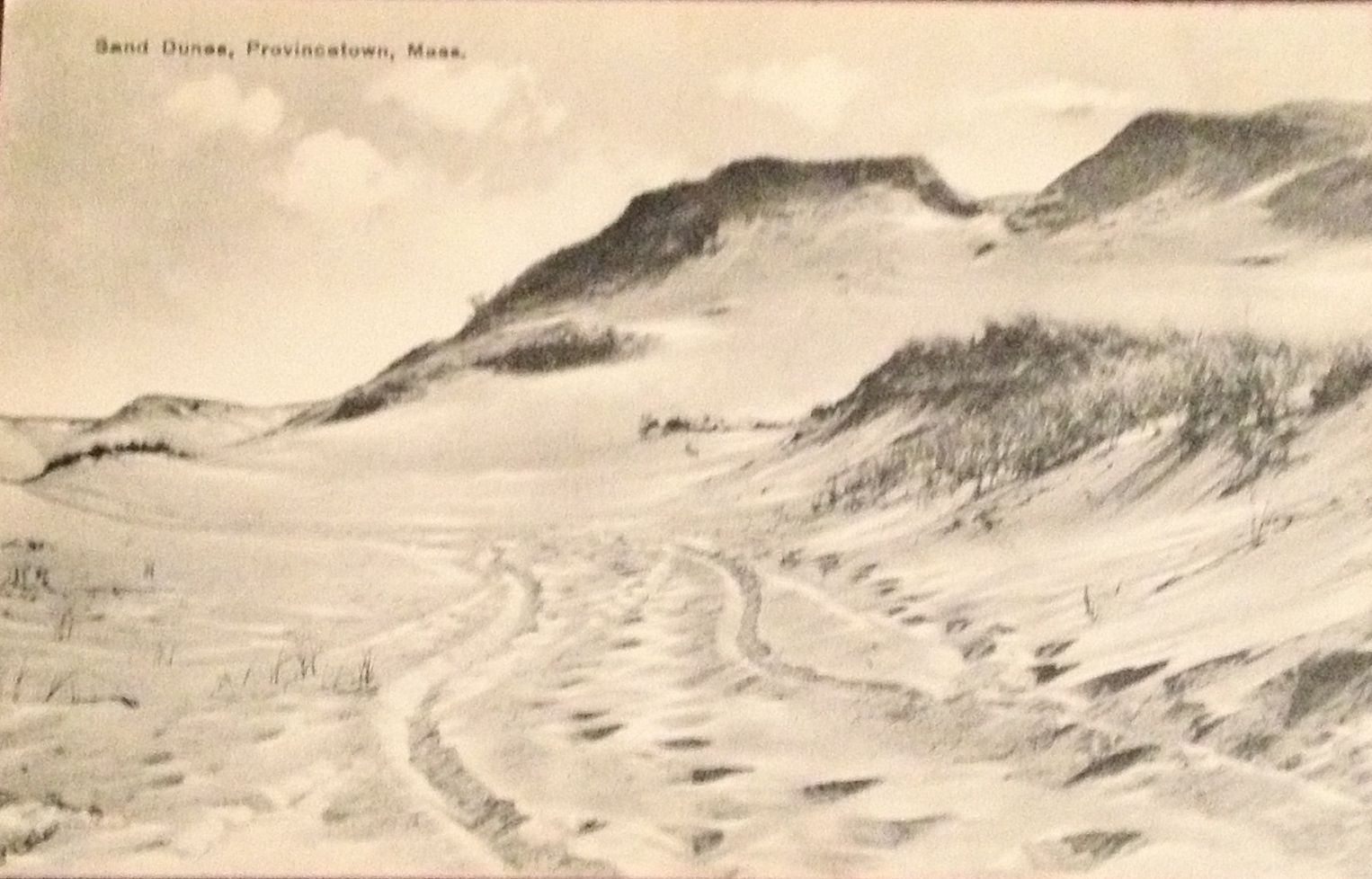
“Cape Cod has a fragrance all its own”, writes Wainwright J. Wainwright in his book “Cape Cod in Picture and Story” published in 1954,  “characteristic, delightful, hard to describe. It is composed of the salt tang of the sea, the odor of the marshland, the redolence of pines on hot summer afternoons, the scent of sweet fern and bayberry and the sweetness of many flowers.”  Scents help to evoke the feeling of being in a place.  Remaining in Provincetown is about a place, a town– Provincetown, Cape Cod. The new murder mystery is available online, at bookstores, and at Amazon.com. Like us on Facebook.


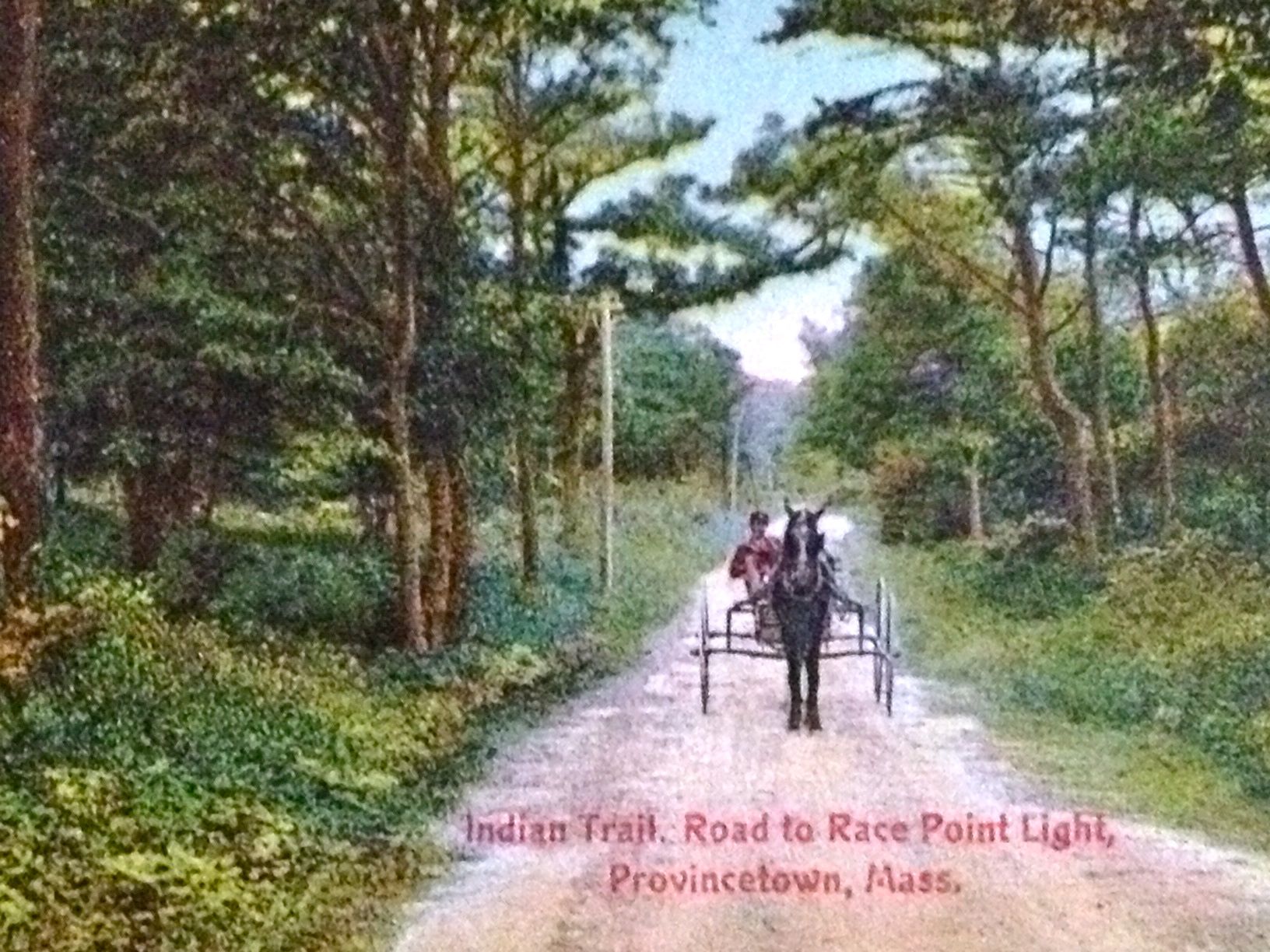
The Indian trail road to Race Point Light

The Indian trail road to Race Point Light

Provincetown Cape Cod Commercial Street

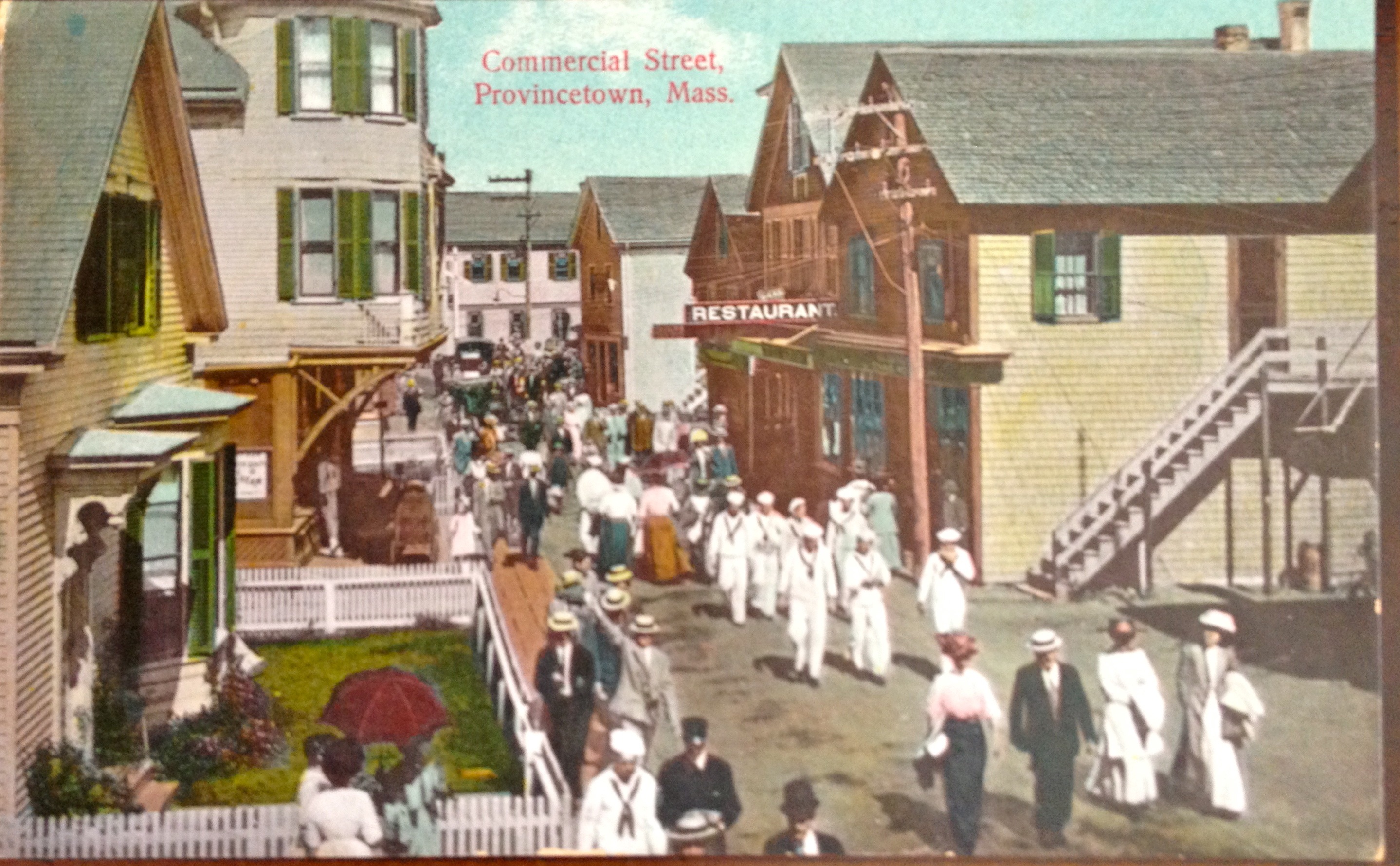
downtownThe title of this vintage postcard from approximately 1910 says Commercial Street. Do you recognize those buildings? What are they like today? Not so totally different, than today and just as crowded, just with different people. They are all on there way somewhere. Perhaps to the theater, a bar, a restaurant? There were always plenty of businesses to choose from, even 100 years ago. What’s the town like  when it’s not so busy? Take a look at Remaining in Provincetown. Now available at bookstores, online, and at Amazon.com. Like us on Facebook.

St. Peters Church in Provincetown

St Peter's Church in Provincetown

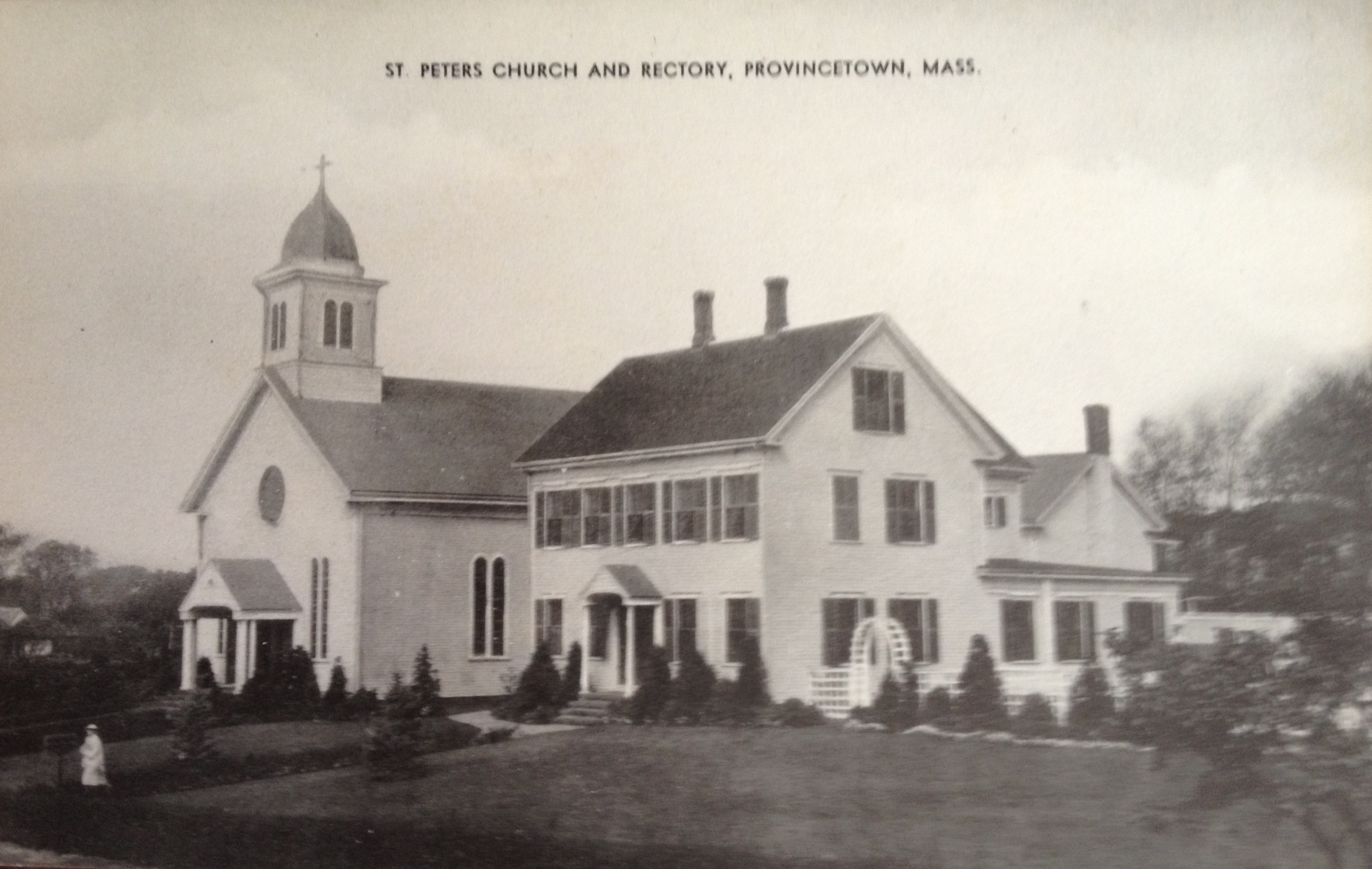
Visit St. Peter’s Church today, and you’ll be visiting the new church dedicated in July 2008. The original church was destroyed by fire in January 2005 and only one stained glass window was saved. But the church, dedicated in October 1874 is very much integral to the Provincetown community. Initially when the church was opened,  the majority of the parishioners were Portuguese fishermen and their families, according to the church’s website, they comprised well over 50 percent of the town’s population. The church figures into the storyline of the new murder mystery released in April, Remaining in Provincetown. Many of the characters are parishioners. Want to read more? Now on sale online and at bookstores as well as at Amazon.com. Like us on Facebook.

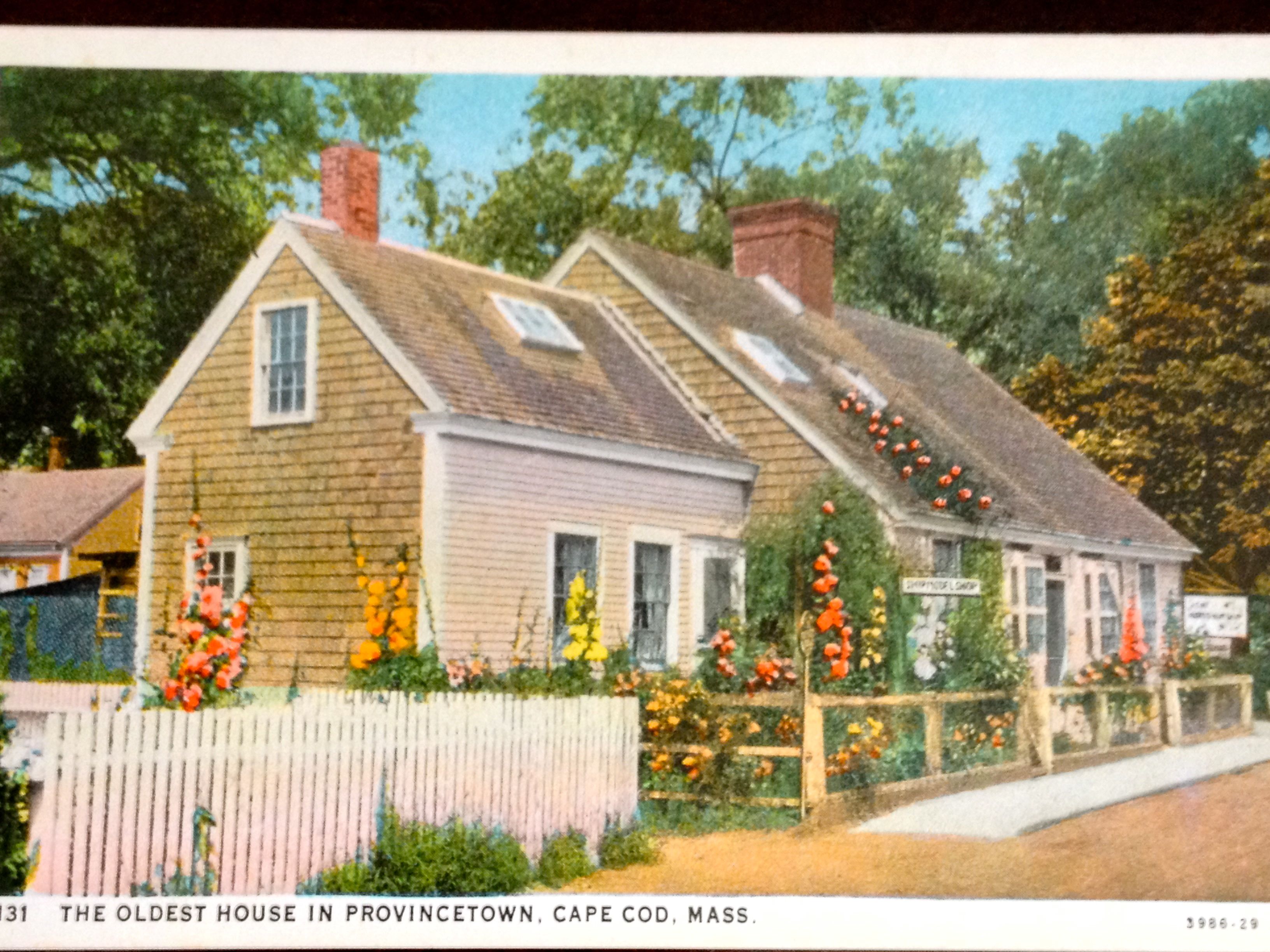
Provincetown’s Oldest House, a full cape

Built in approximately 1746 Provincetown's Oldest House

Built in approximately 1746 Provincetown’s Oldest House

Located on Commercial Street on the West End of Provincetown, the house purported to be the oldest house was once open to tourists but now is privately owned. As you can see in this antique postcard, the house was once a shop.  Artists Elizabeth and Coulton Waugh ran the Ship Model Shop and Hooked Rug Shop in the Cape Cod cottage built in approximately 1746.  In the front of the house was an arch made of a whale’s jawbone.

Architecturally a full Cape, said to have been built by Seth Nickerson, a ship’s carpenter. Two front windows flank a central doorway and  the windows abut the eaves.  Inside are wide-board floors. It is said that Nickerson built the house from wood salvage from shipwrecks.

Painter and photographer John Gregory, and Adelaide Gregory, a concert pianist, bought the house in 1944. They opened the house to the public, on occasion, but today you’ll just have to imagine its interior as you walk past. Just as you’ll have to imagine just what happens behind closed doors, unless you read Remaining in Provincetown, the new murder mystery released this month, available at stores, online and at Amazon.com. Like us on Facebook.

Like our facebook fan page and you may be selected to receive a FREE advance cppy!

Like our facebook fan page and you may be selected to receive a FREE advance cppy!